Why soybean futures traders are leaning long as Brazil planting speeds up
CFTC data shows speculative traders holding a net-long position in soybean futures as Brazil's critical planting season progresses.
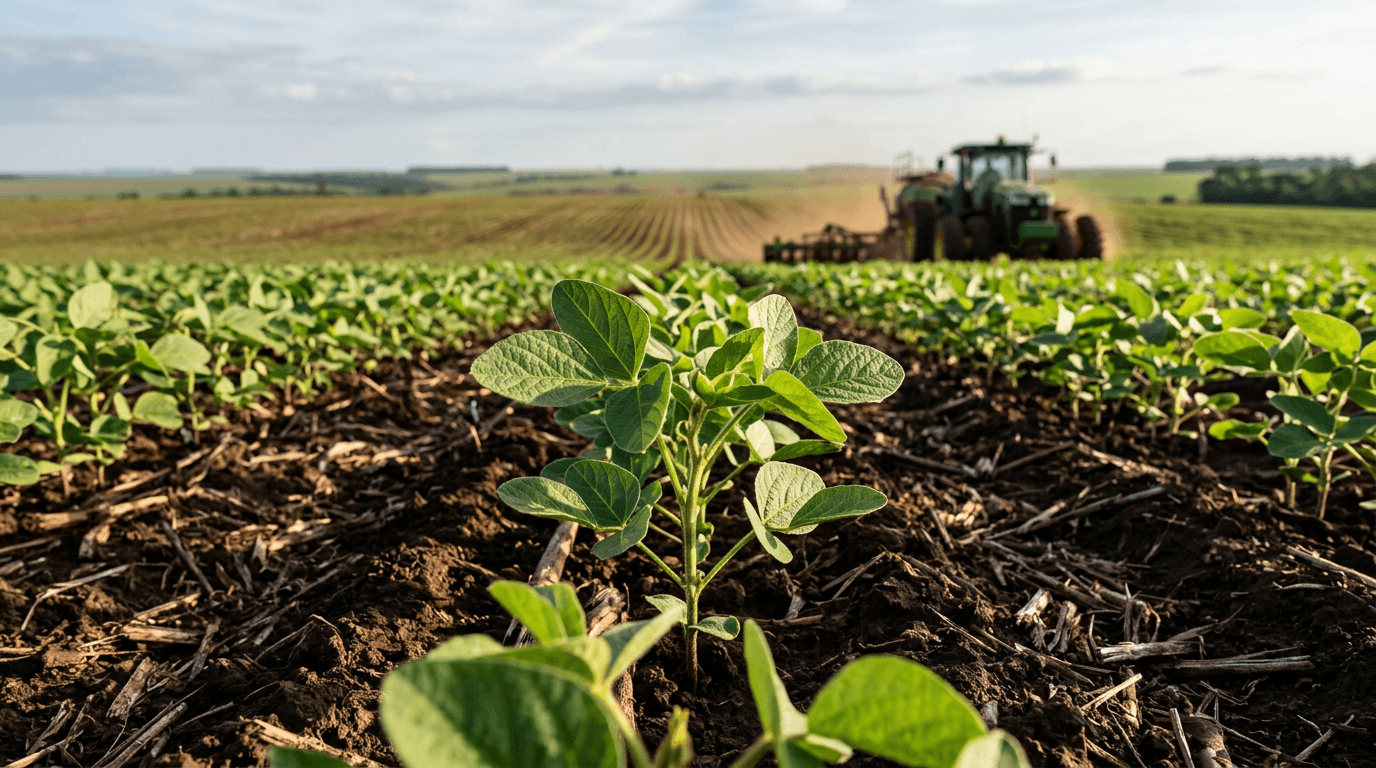
For retail investors tracking commodity-linked exchange-traded funds or agricultural equities in their portfolios, the sentiment of major market participants provides crucial context. According to the U.S. Commodity Futures Trading Commission (CFTC), large non-commercial traders held a net-long position in Chicago Board of Trade (CBOT) soybean futures (contract 005602) as of November 3, 2026.
The weekly Commitments of Traders report showed that non-commercial traders held 239,253 long contracts compared to 75,635 short contracts, resulting in a net-long position of 163,618 contracts. Total open interest across the market stood at 959,576 contracts. While these figures reflect a bullish bias among speculative traders on that specific observation date, historical positioning serves as an indicator of market sentiment rather than a reliable price forecast.
This speculative positioning comes at a critical time for global agricultural supply, which is heavily anchored in South America. Brazil is the world's largest exporter of soybeans, and its planting progress dictates the seasonal price swings on the Chicago Board of Trade. In early November, Brazilian farmers typically race to get seeds in the ground, with the speed of their progress directly affecting the timing of the upcoming harvest and the subsequent export window that competes with American farmers.
For global investors, the health of Brazil's agricultural sector acts as a primary driver for the country's broader economic performance. Decisions made by Brazil's Ministry of Agriculture and state-backed financial institutions regarding subsidized farm credit and infrastructure logistics heavily influence local production costs. When Brazilian supply projections shift due to weather patterns or domestic policy changes, international grain traders adjust their exposure in Chicago, creating ripple effects across global food supply chains and multinational agribusiness stocks.
In your brokerage app
Adecoagro S.A. is a farming company listed in New York that operates extensive agricultural landholdings across Brazil and Argentina. JBS N.V. is a global protein giant listed in New York that is integrated into the South American grain and feed supply chain. Broad exposure to the country's corporate sector is available through the iShares MSCI Brazil ETF, an exchange-traded fund that tracks large- and mid-sized Brazilian equities.