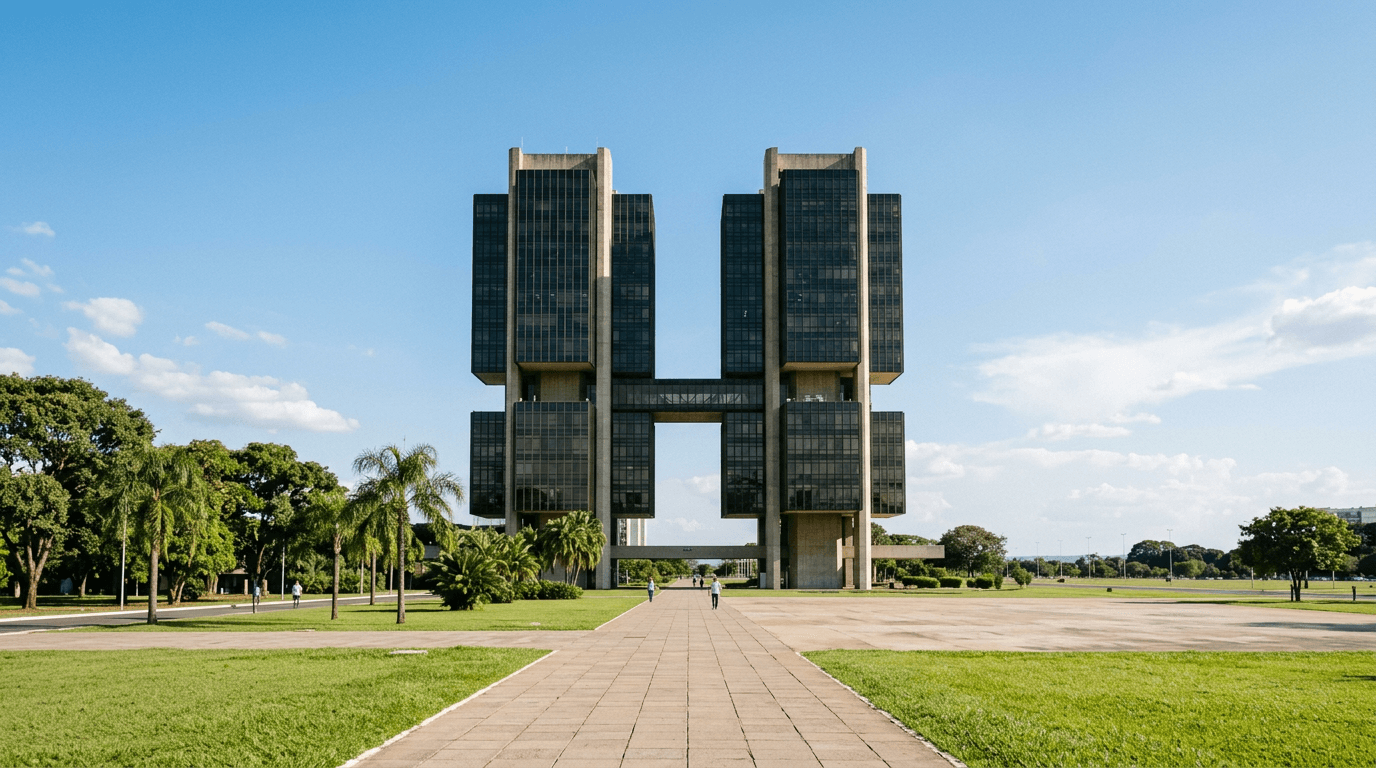
Why Brazil's post-election pivot is soothing Wall Street funds
President Lula's fiscal reassurance and key judicial closures ease political risk, stabilizing Latin American assets for global retail investors.

If you hold a diversified emerging markets mutual fund or a Latin American exchange-traded fund in your brokerage account, your portfolio likely felt a sudden wave of relief this week. Global investment managers had spent weeks pricing in political risk and fiscal uncertainty across South America's largest economy. However, a sudden shift in government rhetoric has triggered a sharp reversal, sending a wave of relief through international asset prices.
The catalyst for the market upswing was a national address by Brazilian President Luiz Inácio Lula da Silva. The veteran leftist leader, who recently secured re-election in late October 2026, sought to calm nervous global markets by explicitly reaffirming his administration's commitment to fiscal responsibility and debt control. For foreign investors, political risk in Brazil is heavily tied to the government's fiscal framework; any sign that the administration might bypass spending caps historically triggers capital flight. Following the address, Brazil's benchmark Ibovespa index surged 2.22% to close at 172,236.05 points on November 9, 2026, according to market data reported by Poder360.
Easing institutional friction and regulatory risk
Beyond the presidency, Brazil's judicial branch is also moving to lower the political temperature in Brasília. On November 9, 2026, Supreme Court President Edson Fachin ordered the definitive archiving of Inquiry 4781, widely known as the "Fake News Inquiry". The controversial, seven-year-old probe had become a primary source of friction between the judiciary and Congress, raising concerns among foreign observers about the country's institutional stability and the rule of law. By dismantling this mechanism, the judiciary is actively removing a flashpoint of systemic friction, clearing a path for more predictable policy debates around tax and fiscal reforms.
However, the fiscal battle is far from over. A new spending push from the nation's elite legal class is threatening the federal government's delicate consolidation targets. The Federal Justice Council (CJF) and the Prosecutor General's Office (PGR) are demanding an extra R$ 533 million ($92 million) to fund retroactive bonuses and benefits for judges and prosecutors, petitioning the Supreme Court on November 6, 2026, to resolve the budget dispute. Because these judicial bodies lack the funds in their approved 2026 budgets, they are demanding that the executive branch bypass the country's strict fiscal framework by issuing "extraordinary credits"—a mechanism legally reserved for emergencies like war or natural disasters.
Shorter workweeks squeeze retail margins
While the macro picture stabilizes, corporate operations face new structural headwinds. A newly published constitutional amendment mandates a gradual decrease in the maximum legal workweek, falling to 42 hours in December 2026 and 40 hours in December 2027, without salary reductions. For labor-intensive retailers maintaining store opening hours and service levels, the transmission mechanism is additional staffing, overtime, or schedule redesign. Wholesale giant Assaí Atacadista is highly exposed to this transition due to its massive store network and more than 90,000 employees. At unchanged weekly compensation, these changes are expected to increase the cost per available labor hour by approximately 4.8% in late 2026 and 10% in late 2027, squeezing margins for thin-margin retail businesses.
In your brokerage app
For retail investors holding the iShares MSCI Brazil ETF, a prominent exchange-traded fund listed in New York that tracks the country's largest publicly traded companies, these political and regulatory shifts are key drivers of portfolio volatility. Meanwhile, volatile growth plays like financial technology provider StoneCo, listed in New York, are bracing for high-stakes earnings reports. According to Bloomberg options data compiled on November 5, 2026, the options market is pricing in an implied price move of 6.8% for StoneCo Class A shares ahead of its third-quarter earnings release on November 12, 2026.