Global Sugar Prices Surge 29% as Brazil Harvest Disruptions Tighten Supply
A sharp 6.6% October jump in global sugar prices, driven by heavy rains in Brazil, pushes the commodity's annual gain to nearly 29% and pressures food sector margins.
American retail investors holding shares in global food conglomerates or agricultural commodity exchange-traded funds (ETFs) are facing a sudden squeeze on profit margins. While the broader cost of global food imports has begun to cool down, the cost of sweetening those products is rapidly heading in the opposite direction.
According to a report released on November 6, 2026, by the United Nations Food and Agriculture Organization (FAO), the global sugar price index surged 6.6% in October. This marked the commodity's fourth consecutive monthly increase, pushing sugar prices to their highest level since December 2024. Over the past twelve months, sugar has accumulated a massive 28.8% price increase, starkly contrasting with the overall FAO Food Price Index, which fell 1.2% in October as grains, dairy, and meat prices weakened.
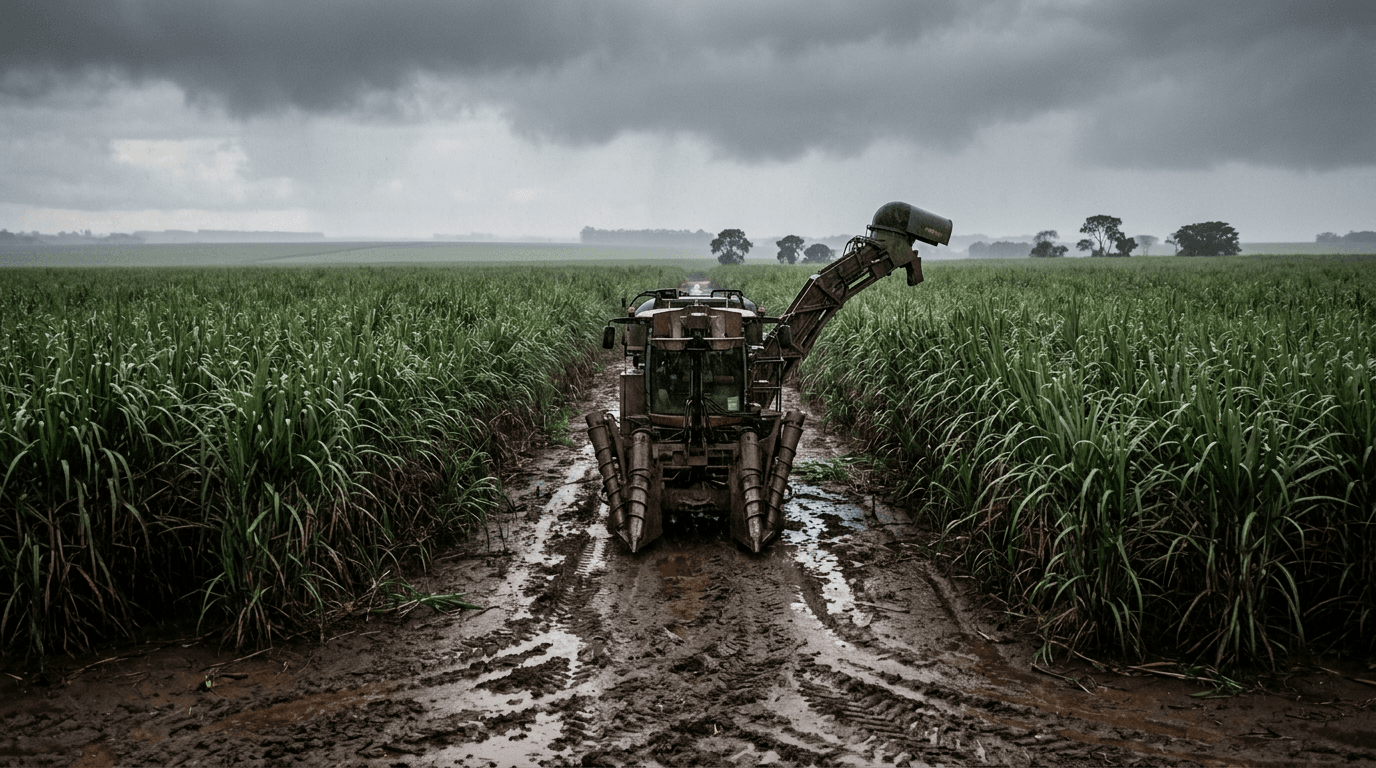
The primary catalyst for this global price spike is thousands of miles away in Brazil's Centre-South region. This vast agricultural belt, which accounts for the vast majority of Brazil's sugarcane output, has been battered by excessive and persistent rainfall. The wet weather has severely disrupted both the harvesting of sugarcane in the fields and the crushing operations at local milling facilities, choking off the immediate supply of the world's largest sugar exporter.
Global Supply Pressures Mount
The supply bottleneck in South America is compounding agricultural anxieties in other parts of the world. The FAO noted that a weaker and highly uneven monsoon season in India has raised serious concerns about crop yields there, while producers in Thailand and the European Union are also forecasting lower output for the 2026/2027 agricultural season.
For global consumer packaged goods companies, this persistent upward march in sugar costs threatens to erode the margin relief they had recently enjoyed from falling wheat and corn prices. While grain prices fell 4.5% in October due to strong harvests in the United States and Argentina, food processors must now contend with an expensive raw ingredient that is nearly 29% pricier than it was at this time last year.
In your brokerage app
For investors looking at the agricultural supply chain, Adecoagro S.A. is a prominent farmland and sugar producer operating in South America, listed in New York. Additionally, retail investors tracking broader agricultural commodity trends often hold the Teucrium Sugar Fund, a specialized exchange-traded fund listed in New York that tracks the benchmark prices of sugar futures.