
Why Big Soybean Bets in Chicago Are Colliding With Brazil's Weather
Speculative traders hold a massive net-long position in Chicago soybeans, but emerging weather patterns in Brazil's key farming regions may soon test their optimism.
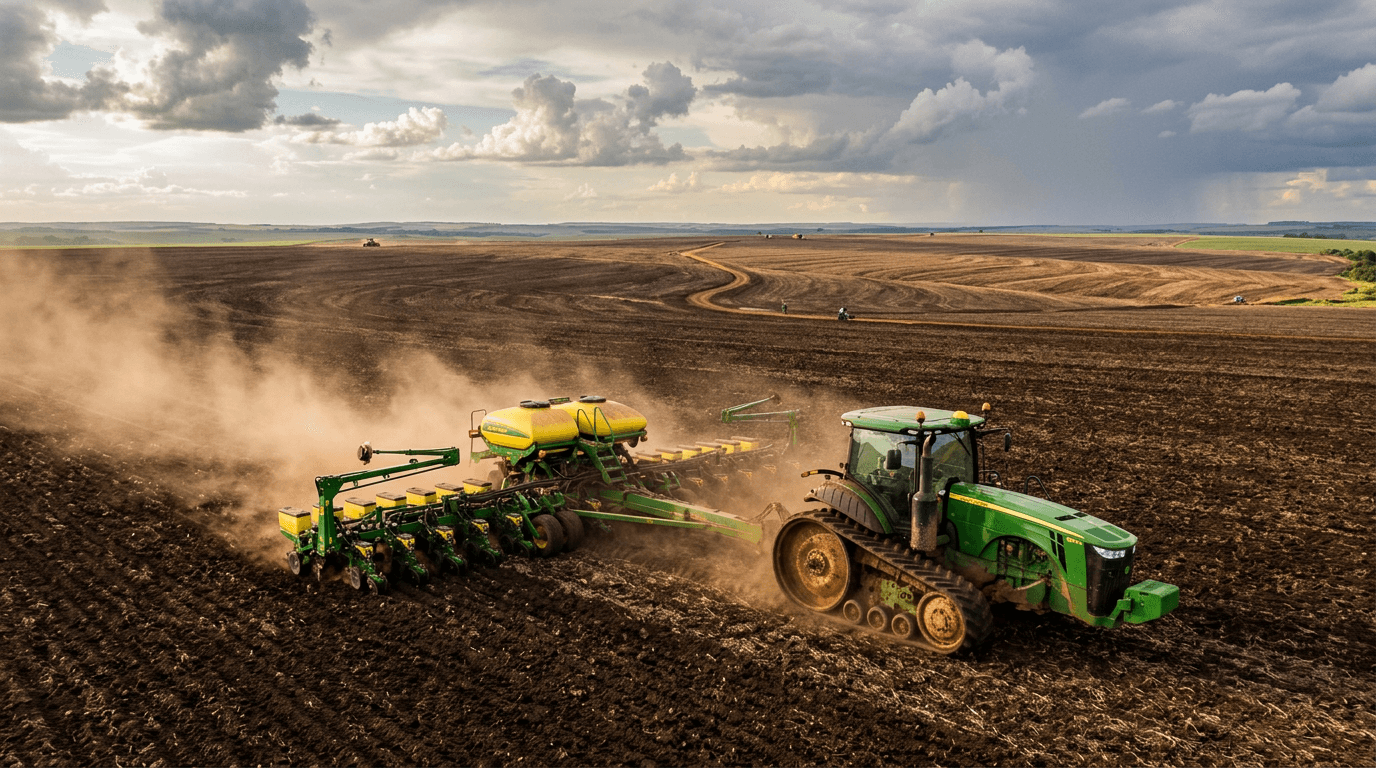
Speculative traders in Chicago are holding onto a massive net-long position in soybean futures, betting on a market turnaround even as the physical supply chain prepares for a flood of new supply. Weekly trader positioning data provides a snapshot of market sentiment rather than a guaranteed price forecast, but the current concentration of financial bets is setting up a high-stakes collision with real-world weather in South America.
According to the U.S. Commodity Futures Trading Commission (CFTC) Commitments of Traders report for the observation date of October 13, 2026, non-commercial traders held 356,266 long contracts compared to 85,167 short contracts in the Chicago Board of Trade's soybean market (Contract 005602). This left speculative funds with a net-long position of 271,099 contracts, out of a total contract open interest of 1,072,235. While spec funds trimmed some exposure leading up to that date, they continue to maintain historically elevated seasonal net-long positions.
The ultimate fate of those financial bets lies largely in Brazil, the world's largest soybean exporter. Brazilian farmers are currently planting their 2026/27 crop, and any disruption to their progress acts as a direct catalyst for price swings in Chicago. Brazil's National Supply Company (Conab) projected on October 15, 2026, that the country's soybean production could reach a record 181.6 million metric tons, despite registering its slowest acreage expansion in 20 years due to high borrowing costs and elevated fertilizer prices.
A Tale of Two Weather Patterns
For global investors, the immediate variable to watch is the onset of the South American wet season. The planting progress across Brazil's agricultural heartland is highly sensitive to regional moisture thresholds, which are currently diverging.
In the Center-West state of Mato Grosso—Brazil's dominant grain-producing region—planting reached 33% completion by October 9, 2026, running roughly 8 percentage points ahead of its historical average thanks to timely early-October rains. However, meteorologists warn that rainfall coverage across central Brazil remains sparse, and young plants could face heat stress if regular precipitation fails to lock in soil moisture.
Meanwhile, the opposite problem is plaguing the south. In states like Paraná and Rio Grande do Sul, excessive rainfall exceeding 100 millimeters (4 inches) has soaked fields, threatening to delay machinery access and increase disease pressure. Conversely, northeastern agricultural frontiers like Bahia remain bone dry, keeping the planting window firmly shut there.
Because global soybean supplies increasingly rely on Brazilian yield optimization rather than expanding farmland, any persistent weather extremes in November will quickly test the heavy net-long positions held by Chicago speculators.
In your brokerage app
For retail investors looking to track this agricultural cycle without trading volatile futures contracts, Adecoagro S.A. is listed in New York and owns extensive farmland assets across South America. Additionally, the iShares MSCI Brazil ETF is the primary exchange-traded fund tracking the broader Brazilian equity market, which remains highly sensitive to the export revenues generated by the country's massive agricultural sector.