
TCU Auditors Challenge R$ 24 Billion Railway Extension Deal with VLI
Brazil's Federal Court of Accounts questions the 30-year renewal of the Ferrovia Centro-Atlântica, demanding justifications over a competitive auction.
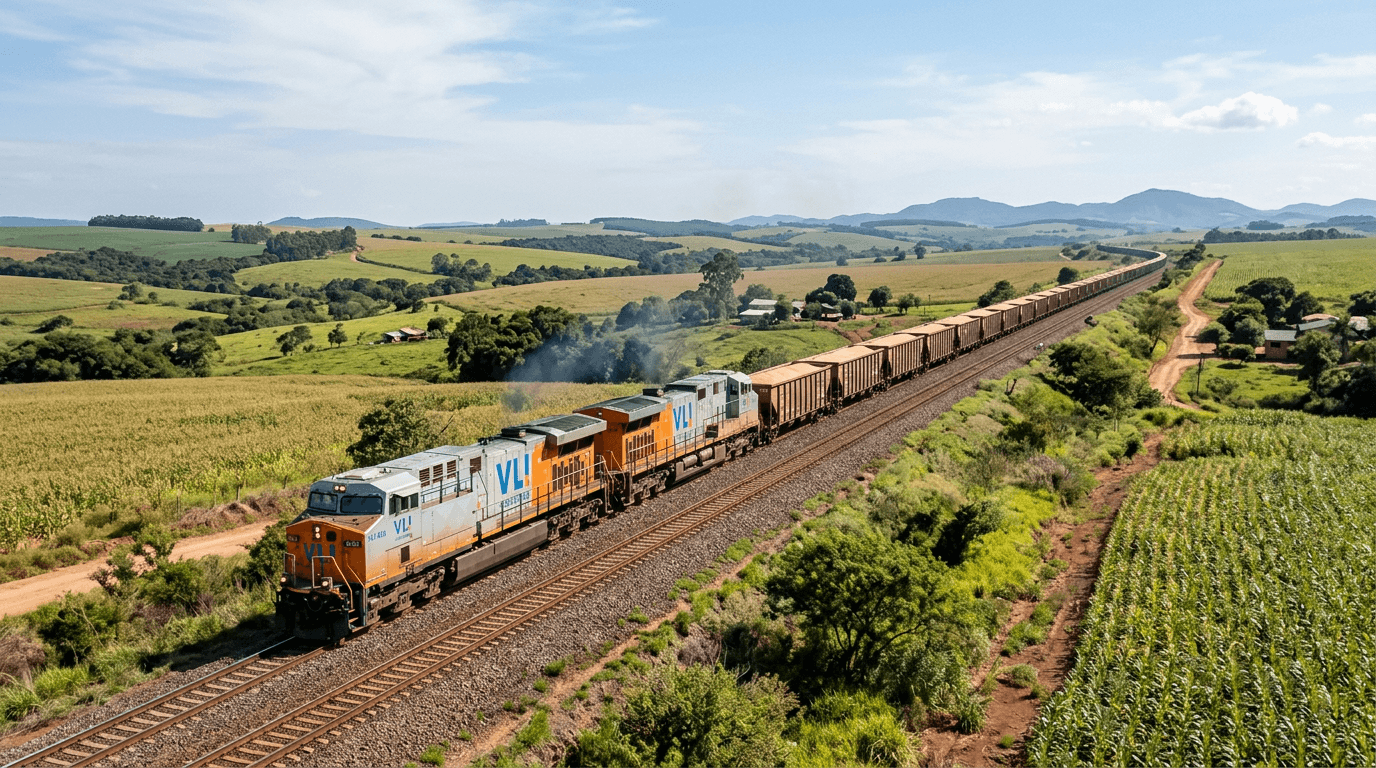
Auditors at Brazil’s Federal Court of Accounts (TCU) are demanding that the National Land Transport Agency (ANTT) justify its decision to grant a 30-year early renewal for the country's largest railway network instead of holding a competitive public auction. The TCU is the federal audit court responsible for overseeing public spending and infrastructure contracts, and its objections could stall billions of dollars in planned logistics investments.
The dispute centers on the Ferrovia Centro-Atlântica (FCA), a massive 7,220-kilometer railway network operated by VLI Logística. The network spans seven states and the Federal District, serving as a vital transport corridor for Brazilian commodities like grains, sugar, minerals, and fuels. The proposed R$ 23.4 billion (approximately R$ 24 billion) early renewal deal would extend VLI’s operating rights for another three decades. In exchange, VLI would return 3,110 kilometers of underutilized, uneconomical tracks to the state and pay an estimated R$ 4.2 billion in compensation.
However, the TCU's audit department has raised several red flags. Federal auditors are questioning the government’s criteria for comparing the early renewal against a brand-new public bidding process. They argue that some of the advantages presented by the government to justify the renewal—such as resolving legal disputes and returning idle tracks—would also occur under a new public auction. Furthermore, auditors expressed concern that the R$ 4.2 billion compensation fee might be used to cover basic maintenance that VLI was already legally obligated to perform, rather than funding network expansions.
Because negotiations between the Ministry of Transportation, ANTT, and VLI dragged on past the original contract expiration in August 2026, the government signed a temporary two-year extension. This "regulatory bridge" keeps the trains running under VLI's management until August 2028 while the TCU reviews the long-term deal. The delay threatens to disrupt the government's broader logistics pipeline, as the Ministry of Transportation planned to auction off some of the returned, inactive tracks to new operators as early as December 2026.
VLI, which is backed by major shareholders including Brookfield, Mitsui, and Brazilian mining giant Vale, defends the early renewal. The company argues that a 30-year extension avoids the severe operational risks of transitioning a critical supply chain to a new operator. It also points out that a new auction would force the federal government to pay massive amortized indemnities to VLI for previous investments made on the line. ANTT has stated it will cooperate with the court's review as the audit continues.
What it touches
The regulatory bottleneck directly impacts Vale SA (VALE3; NYSE: VALE), which holds a significant equity stake in VLI Logística and relies heavily on the FCA network to transport mineral wealth to Brazil's eastern ports. Continued delays in the TCU's approval could postpone crucial capacity upgrades, affecting logistics efficiency and capital expenditure plans for major commodity exporters reliant on the corridor.