
Soybean traders turn net long as Brazil kicks off planting season
Speculative funds built a substantial net-long position in Chicago soybean contracts as Brazil begins its crucial 2026/27 planting campaign.
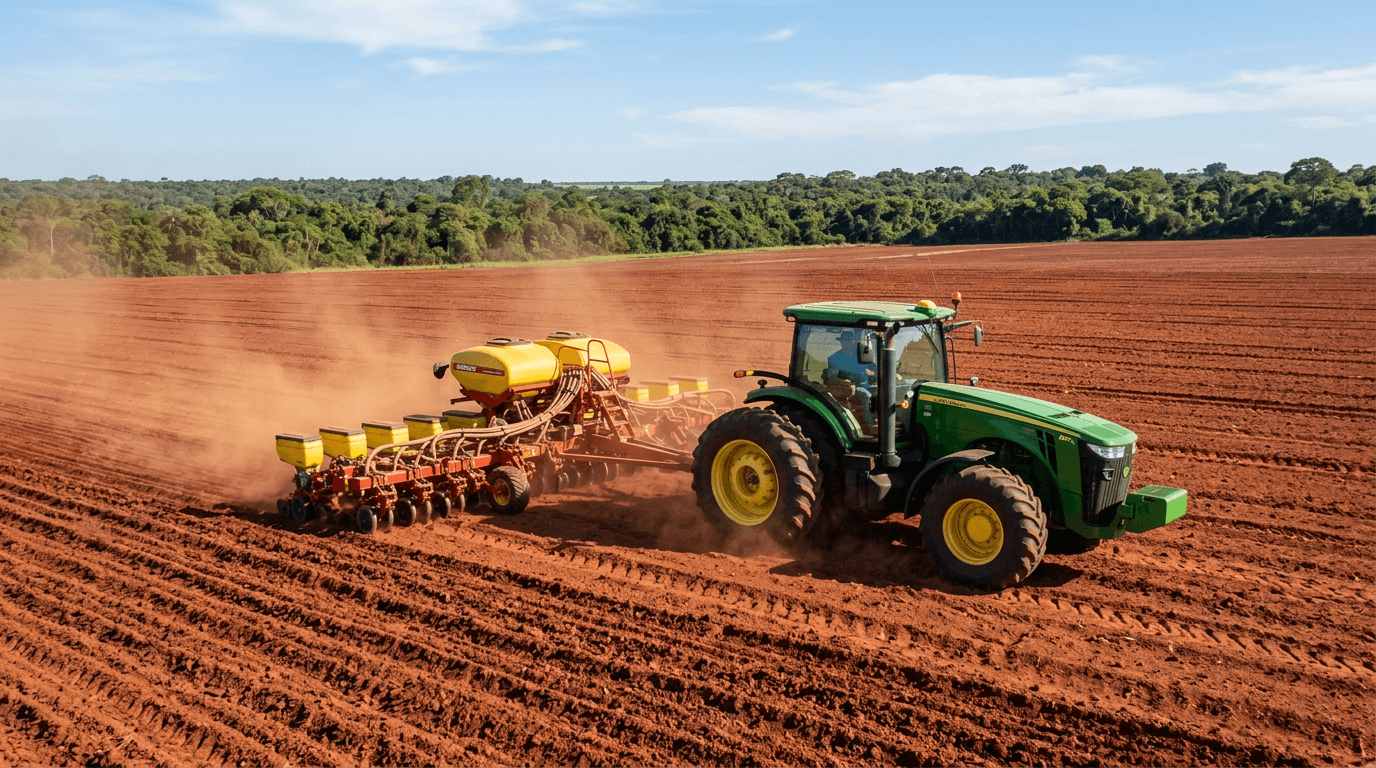
Speculative financial funds built a substantial net-long position in Chicago soybean contracts as of early October, positioning themselves for potential price increases just as Brazilian farmers rev up their tractors for the crucial 2026/27 planting season.
According to the U.S. Commodity Futures Trading Commission (CFTC), non-commercial traders—a category dominated by hedge funds and speculative money managers—held 360,967 long contracts (bets that prices will rise) against 87,071 short contracts (bets that prices will fall) in Chicago Board of Trade soybeans as of October 6, 2026. This resulted in a net-long position of 273,896 contracts, carved out of a total open interest of 1,121,298 contracts.
While weekly trader positioning reports offer a snapshot of market sentiment rather than a definitive price forecast, the data highlights the intense focus on South American weather. Brazil is the world's largest exporter of soybeans, and its agricultural cycle dictates global food inflation and shipping patterns. The wet season is arriving on schedule across Brazil’s primary agricultural heartland, including the central-west state of Mato Grosso, allowing farmers to begin sowing seeds under favorable soil conditions.
Industrial expansion meets global supply
The optimism in the soybean complex is also being supported by structural changes within Brazil's domestic economy. On October 6, 2026, the Brazilian Association of Vegetable Oil Industries (Abiove) reported that the country's soybean crushing capacity jumped 13% over the past year to 86.4 million metric tons. This expansion is driven by surging domestic demand for soybean oil, which is the primary feedstock for Brazil's mandated biodiesel blending program, as well as soybean meal used in animal feed.
However, the international market remains highly sensitive to supply shocks. Agricultural consultancy StoneX recently maintained its projection for a record-breaking Brazilian soybean harvest of 183.36 million tons for the 2026/27 cycle. With such massive volumes expected to hit the global market, any sudden weather disruptions in South America or unexpected shifts in U.S. export estimates could trigger sharp swings for speculative traders holding large long positions.
What it touches
The shifting dynamics in global grain markets directly impact large-scale agricultural producers listed on international exchanges. Companies with significant exposure to South American farmland and crop processing, such as Adecoagro S.A. (NYSE: AGRO) and global protein giant JBS N.V. (NYSE: JBS), are highly sensitive to these price fluctuations, as soybean costs directly dictate margins for animal feed and land valuations.