
Stellantis Warns of Job Cuts in Brazil Amid Labor Reform Debate
Stellantis South America President Herlander Zola warns that ending the 6x1 workweek and rising Chinese EV competition could force regional job cuts.
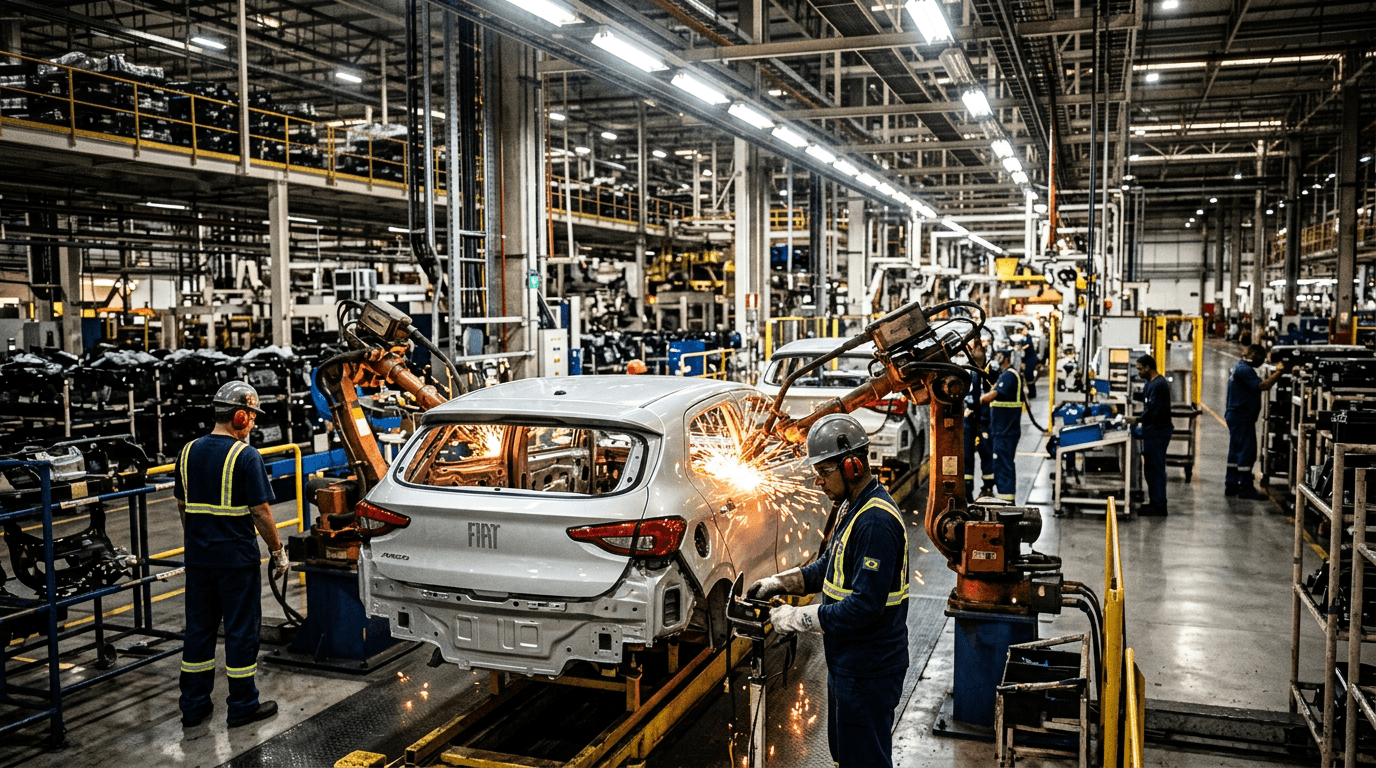
Major multinational corporations are reassessing their long-term industrial investments in Brazil as political momentum builds to abolish the country’s traditional six-day workweek. During an industry briefing in São Paulo on October 6, 2026, Herlander Zola, the president of Stellantis South America, warned that the proposed labor reform, combined with aggressive competition from Chinese electric vehicle (EV) manufacturers, could force the automotive giant to reduce its regional workforce.
The debate centers on a proposed constitutional amendment (PEC) currently under discussion in the Senate, which seeks to eliminate the traditional "6x1" work shift—six days of work followed by one day of rest. The reform aims to reduce Brazil’s standard weekly working hours from 44 to 40 without any corresponding reduction in wages. Business confederations and industrial leaders have warned that the sudden transition could fuel inflation, escalate manufacturing costs, and severely dent the country's industrial competitiveness.
For Stellantis—the parent company of major brands including Fiat, Jeep, Peugeot, and Citroën—the labor reform represents a major structural risk. Zola noted that the company is already preparing contingency plans to mitigate the financial impact of the potential legislation. He emphasized that reducing the legal workweek would widen the competitive gap with China, where factory employees work significantly longer weekly hours. The warning comes as Chinese brands rapidly expand their footprint in Brazil, capturing over 25% of the local automotive market in September 2026, up from just 9% in 2025.
Recalculating the Regional Strategy
The labor debate is forcing Stellantis to carefully evaluate where it allocates capital across South America. The automaker operates a massive industrial hub in Betim, Minas Gerais, which relies on a highly localized supply chain. However, Zola pointed out that the company is closely monitoring the post-election regulatory landscape, specifically regarding Completely Knocked Down (CKD) and Semi-Knocked Down (SKD) import rules. Under these regimes, vehicles are imported in parts and merely assembled locally. Stellantis argues that current rules do not sufficiently incentivize deep local manufacturing, making it increasingly attractive for competitors to bypass full-scale domestic production.
The company's struggles in neighboring Argentina highlight how quickly high labor costs and market liberalization can erode industrial viability. Following the economic opening under President Javier Milei, an influx of cheaper imported cars caused Peugeot’s market share in Argentina to plummet from 9% to 5% over two years, forcing production cuts at its El Palomar plant. Zola revealed that labor costs in Argentina are literally double those in Brazil. He warned that if Brazil's labor costs rise and regulatory protections fail to support deep local integration, the company may have to scale back its regional manufacturing footprint and cut jobs.
What it touches
The outcome of the labor reform and the government’s stance on import tariffs will directly impact the domestic auto parts sector and industrial employment. While Stellantis (NYSE: STLA) remains the market leader in South America, its regional margins are under pressure. A shift toward importing vehicle kits (CKD/SKD) rather than manufacturing them locally would expose the extensive network of Brazilian auto parts suppliers, while potentially benefiting Chinese EV importers.