
Brazil soybean planting lags as farmers face uneven weather start
Brazilian farmers have planted 7.3% of the projected 2026/27 soybean crop, trailing last year's pace as uneven early rains delay sowing in key regions.
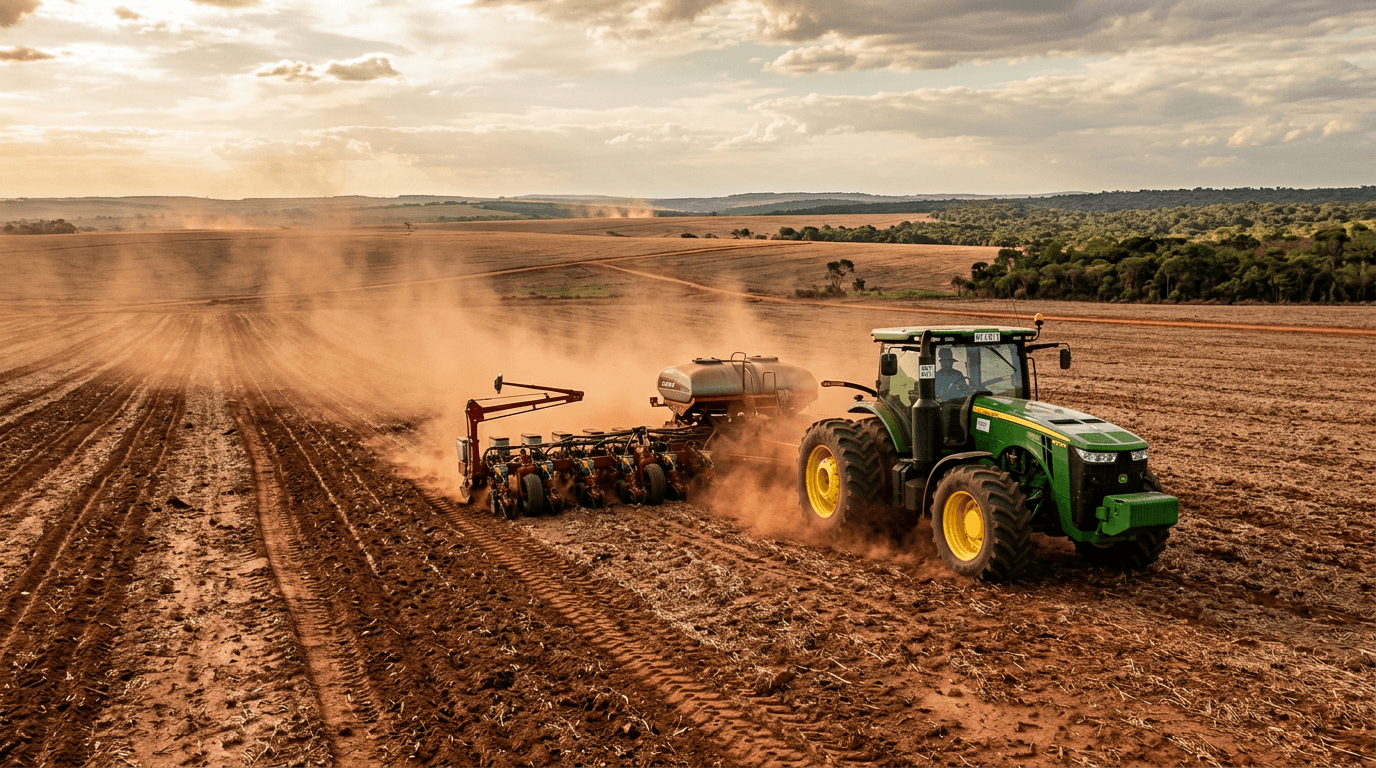
Brazilian farmers are facing a slow and uneven start to the 2026/27 soybean planting season, raising the stakes for global food supplies and the country's export-driven economy. According to data released on October 5, 2026, by the private agricultural consultancy AgRural, farmers had sown 7.3% of the projected soybean area. This progress represents a jump from 3.4% the previous week but lags behind the 9.0% pace recorded at the same point last year.
The slow start reflects highly inconsistent weather across South America's agricultural powerhouse. While southern states like Paraná have benefited from early moisture to push fieldwork forward, key central-west regions have grappled with irregular rainfall. In Mato Grosso, the country’s top soybean-producing state, many farmers have chosen to wait for more consistent precipitation before committing seeds to dry soil.
Despite the sluggish start, overall production expectations for the season remain exceptionally high. AgRural updated its crop forecast on October 6, 2026, projecting a record-breaking national harvest of 182.7 million metric tons, driven by a projected planted area of 49.159 million hectares. Meanwhile, Brazil's national supply agency, Conab, released its own forecast projecting a harvest of 181.6 million metric tons. Conab noted that the projected 1.4% year-on-year expansion in planted area represents the slowest growth rate for Brazil's soybean footprint in two decades, indicating that the era of rapid land conversion is giving way to a focus on yield optimization.
Global Supply Chains and Domestic Impact
The progress of Brazil's soybean crop is a critical variable for global food security and international trade. As the world's largest exporter of soybeans, Brazil's agricultural output dictates global prices for animal feed, cooking oil, and biodiesel. The U.S. Department of Agriculture (USDA) currently holds an even higher projection for the Brazilian harvest, estimating it at 186 million metric tons. If dry weather or prolonged planting delays in the central-west eventually force analysts to scale back these lofty expectations, global commodity markets could face renewed price volatility.
For ordinary Brazilians, the soybean harvest is a cornerstone of national economic health. Agricultural exports generate massive foreign exchange inflows, which support the value of the Brazilian real against the U.S. dollar. A strong harvest helps keep domestic food inflation in check, as soy is a primary ingredient in local animal feed and cooking oil production. Conversely, a delayed or damaged crop can quickly ripple through local supply chains, leading to higher prices at domestic supermarkets.
What it touches
The planting delays and fluctuating production forecasts directly affect major global agribusinesses operating in South America. Companies with extensive logistics networks and processing facilities in Brazil, such as global protein giant JBS N.V. (NYSE: JBS) and agricultural land developer Adecoagro S.A. (NYSE: AGRO), are highly sensitive to regional yield outcomes and local raw material costs. Additionally, the broader Brazilian equity market, tracked by the US-listed iShares MSCI Brazil ETF (NYSE Arca: EWZ), remains highly exposed to the overall health of the country's agricultural export engine.