
Soybean speculative bets fall as global trade jitters hit markets
Speculators reduced their net-long positions in Chicago soybean futures as of late September, reflecting cautious sentiment amid global trade and crop updates.
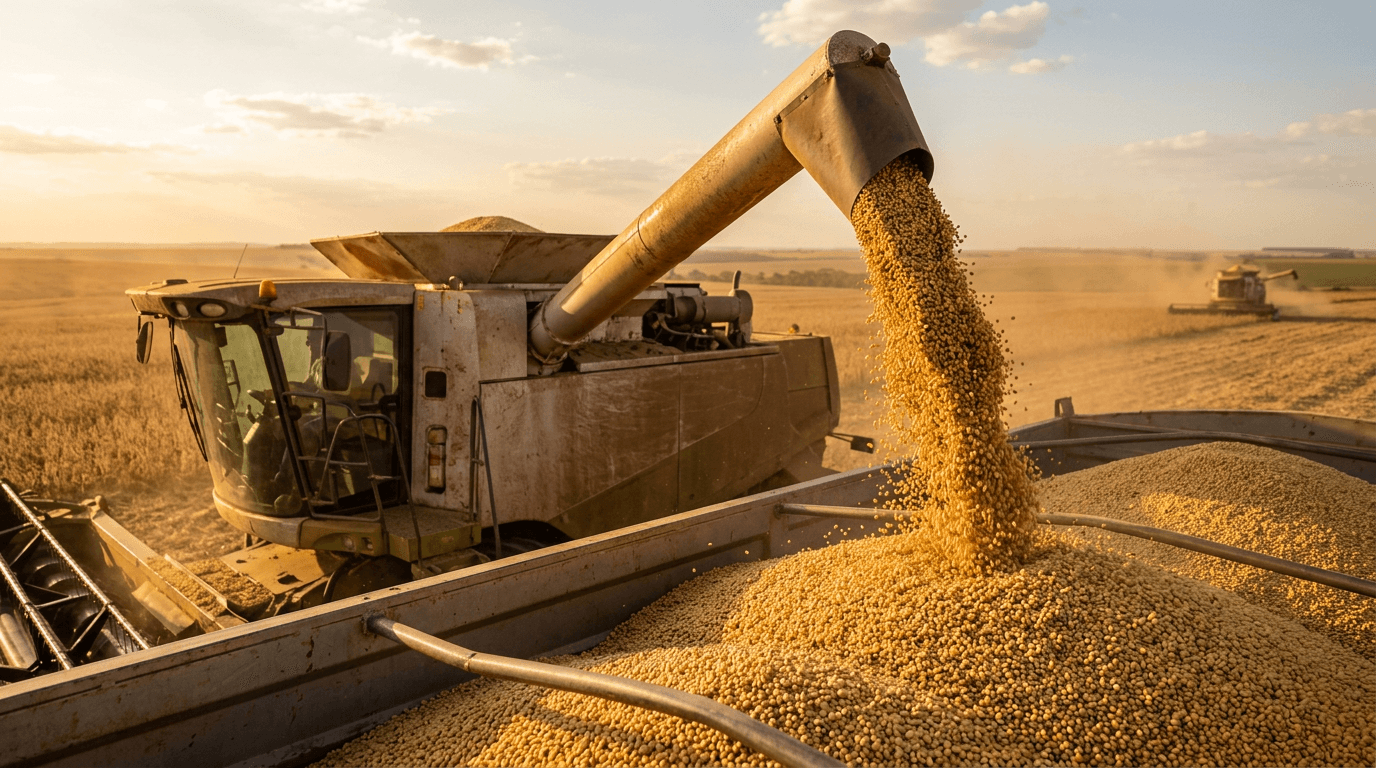
Speculative financial players trimmed their bullish bets on Chicago soybeans in late September, highlighting a shift toward caution as global trade dynamics and agricultural supply expectations keep the market on edge. According to data from the U.S. Commodity Futures Trading Commission (CFTC), non-commercial traders—primarily hedge funds and large investment managers—moderated their exposure to the oilseed, stepping back from previous high-conviction positions.
For the weekly observation period ending September 29, 2026, the CFTC disaggregated report for Chicago Board of Trade (CBOT) soybean futures (contract 005602) showed that non-commercial traders held 345,383 long contracts (buying bets) compared to 88,511 short contracts (selling bets). This resulted in a net-long position of 256,872 contracts, down by 24,709 contracts from the previous week. Total open interest across the market stood at 1,090,227 contracts.
While weekly positioning data provides valuable sentiment context rather than a direct price forecast, the reduction in net-long positions reflects a broader market reality. International buyers and agricultural producers are navigating a delicate period. The recent high-level diplomatic summit between the U.S. and China yielded modest progress on reciprocal tariff reductions, but failed to deliver the specific agricultural purchasing guarantees that grain traders had hoped to see.
The South American Connection
This shift in speculative positioning directly impacts the outlook for the Brazilian economy, as Brazil is the world’s largest producer and exporter of soybeans. What happens on the CBOT trading floor in Chicago sets the benchmark price for farmers in Mato Grosso and Paraná. A less aggressive stance from global funds suggests that the market is bracing for a period of consolidation, especially as South American planting gets underway.
In Brazil, local agricultural agencies are monitoring early-season weather closely. Planting for the 2026/2027 crop cycle has begun in the key Center-South region, running at a pace comparable to the previous year. Because global soybean prices dictate the revenue of Brazilian agribusiness conglomerates, any sustained retreat in speculative demand could squeeze profit margins for local producers and affect the country's trade balance.
What it touches
The unwinding of extreme bullish speculative positions in agricultural commodities directly influences major agribusiness players traded on global exchanges. Companies with significant exposure to South American farmland and logistics, such as Adecoagro S.A. (NYSE: AGRO) and global protein giant JBS N.V. (NYSE: JBS), are sensitive to these benchmark shifts. While a reduction in speculative net-longs is not a definitive signal of a market downturn, it indicates that institutional capital is de-risking, which can lead to increased volatility for related equities in the broader Brazil stock market.