
Global Climate and Geopolitical Risk Solidify Brazil’s Role as the World’s Indispensable Breadbasket
Brazil's agribusiness sector is positioning itself as the critical stabilizer for global food supply amidst climate change and geopolitical shocks.
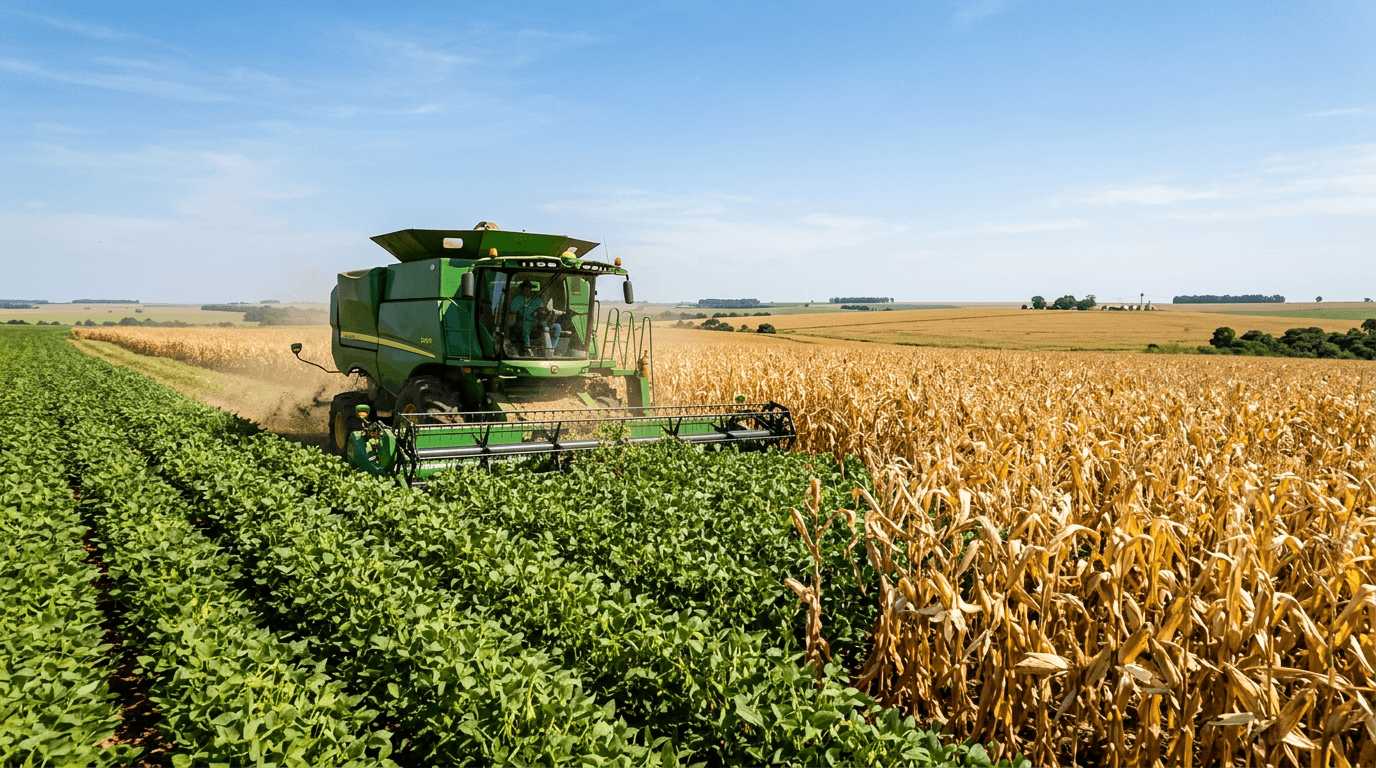
Brazil’s vast and technologically advanced agribusiness sector is solidifying its position as the indispensable pillar of global food security, providing a crucial hedge against intensifying climate change and geopolitical risk worldwide. While other major food-producing regions face supply disruptions from droughts or conflict, Brazil’s combination of high-tech tropical agriculture, abundant water, and inherent political distance from critical geopolitical flashpoints positions it to regulate global supply and inflation. By 2033, the country is projected to become the world's largest exporter of both beef and chicken meat, securing 27.5% and 35.5% of global market share, respectively, as the planet’s population heads toward 9.7 billion.
The foundation of this leadership rests on what economists call the "Land-Saving Effect," a phenomenon that allows Brazil to boost agricultural output without expanding its cultivated area significantly, thus sparing natural ecosystems. This high productivity is the result of decades of investment in tropical agricultural science, particularly through the Brazilian Agricultural Research Corporation (Embrapa), which developed robust, high-yield crops and cattle adapted to local conditions. Farmers in key regions now routinely practice double-cropping—such as planting soybeans followed by corn on the same plot in a single year—a competitive advantage over competitors in temperate climates who are limited to a single annual harvest. An analysis by Insper Agro Global estimated that the increased efficiency between 1997 and 2022 saved an area equivalent to more than 200 million hectares, which otherwise would have been needed to achieve the national production volume.
Brazil’s stability in the face of external shocks has proven its value as a crucial counterweight to global supply crises. When the war in Ukraine disrupted global grain and oilseed exports from the Black Sea region, or when severe droughts impacted harvests in the US Midwest, Brazil’s reliable and growing production helped mitigate widespread price spikes and shortages. Additionally, Brazil holds around 12% of the planet's surface reserves of fresh water, a resource increasingly valuable as climate change stresses water availability in other agricultural hubs across the globe.
This rising profile means Brazil is assuming a regulatory role in global food inflation, stepping in to balance supply whenever climate or conflict shocks affect other major producers. This leadership, however, comes with continued pressure to ensure that the "Land-Saving Effect" remains the driving force, managing the balance between agricultural expansion and environmental preservation to maintain its standing as a reliable, sustainable supplier to a growing world.
What it touches The prominence of Brazilian agribusiness directly impacts the global market for soft commodities, including soybeans and corn, and the shares of major protein exporters. This includes US-listed companies like the global meatpacking giant JBS S.A. (JBS), which trades at $13.03, and Adecoagro S.A. (AGRO), an agricultural producer trading at $11.77, which saw a 1.47% gain today, reflecting continued investor focus on the long-term outlook for Brazilian-sourced agricultural goods.