
Prosus subsidiary iFood acquires Caju to disrupt corporate benefits
Food delivery giant iFood agrees to buy Brazilian corporate benefits startup Caju for an estimated 1 billion reais, targeting a shifting $27 billion voucher market.
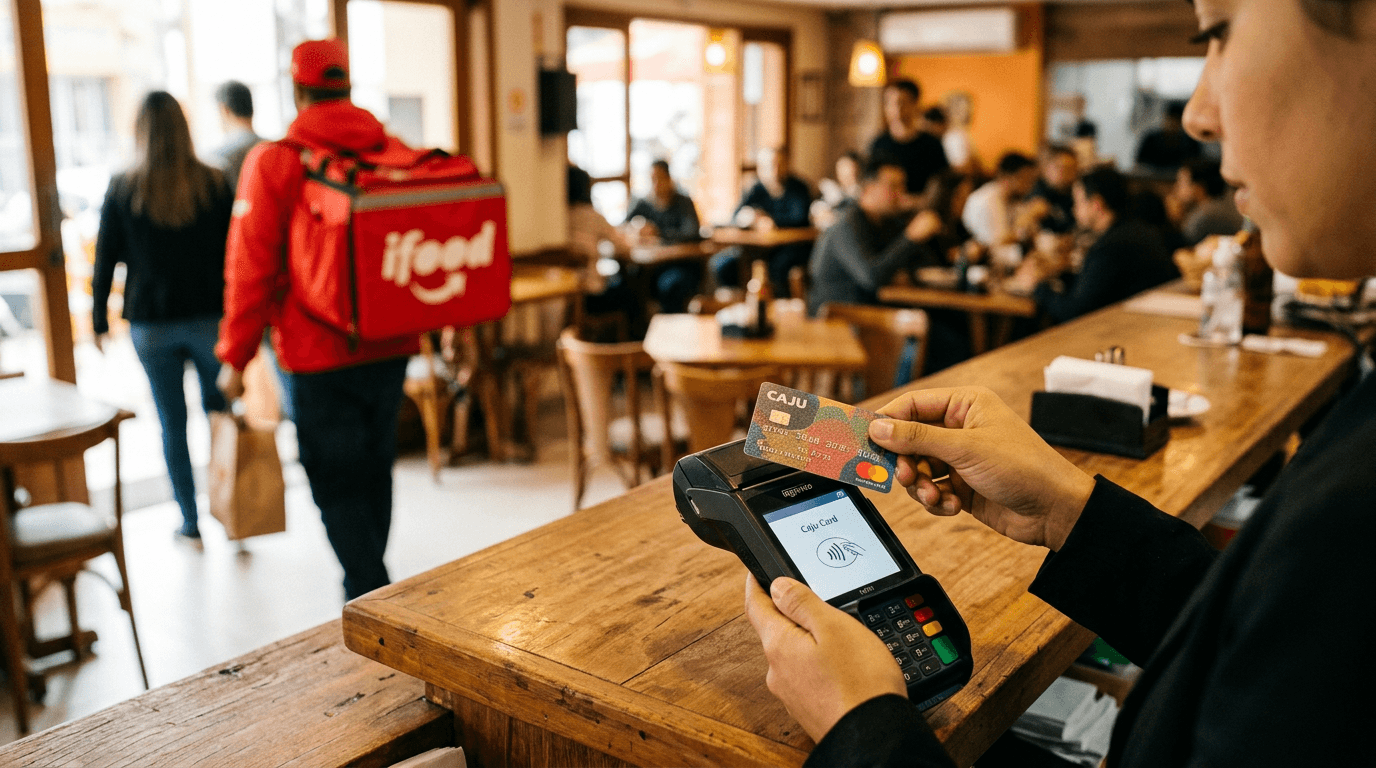
The corporate benefits market is undergoing a structural shift that is directly impacting global payment processors and tech conglomerates. On October 20, 2026, Dutch-listed technology investor Prosus announced that its Brazilian food delivery subsidiary, iFood, agreed to acquire corporate benefits startup Caju. While the financial terms were not officially disclosed, financial market sources cited by local media valued the transaction at approximately 1 billion reais ($180 million to $200 million USD equivalent).
The acquisition positions iFood to aggressively expand into Brazil’s massive employee voucher market, which moves an estimated 150 billion reais ($27 billion USD) annually across more than 20 million consumers. Caju currently serves over 70,000 corporate clients and has 1.3 million active users. By combining Caju's human resources and expense management platform with iFood's existing benefits division, the unified entity will process roughly 2.6 billion reais in monthly transactions and serve 3 million active users.
Regulatory Overhaul Levels the Playing Field
This consolidation comes at a critical regulatory juncture for Brazil's Workers' Food Programme (PAT), a government initiative that provides tax incentives to companies offering meal and grocery vouchers. Historically, the Brazilian voucher market has been dominated by established players like French giants Edenred (Ticket) and Pluxee (formerly Sodexo), alongside local bank-backed operators like Alelo. These legacy firms relied on closed-loop payment networks, forcing restaurants and supermarkets to maintain multiple card terminals.
However, a sweeping regulatory overhaul under Decree No. 12,712/2025 is dismantling these monopolies. By November 2026, the government is mandating full card interoperability across the PAT ecosystem. This means any benefits card must be accepted at any merchant terminal, regardless of the card issuer or the payment processor. Additionally, the new rules cap merchant discount rates at 3.6% and ban the practice of "rebates"—discounts that benefits operators previously offered to corporate employers to lock in contracts.
A Shield Against Global Competitors
For iFood, which dominates the consumer food delivery sector in Brazil, the acquisition of Caju is also a defensive play. The company is facing intensifying competition in its core delivery business following the recent entry of Keeta, a food delivery platform owned by Chinese technology giant Meituan. Diversifying into corporate benefits provides iFood with a highly predictable, pre-funded revenue stream that is less vulnerable to consumer discretionary spending cycles.
The transaction is still subject to regulatory approvals from Brazil's antitrust authority, the Administrative Council for Economic Defense (Cade), and the Central Bank of Brazil. Until these approvals are finalized, which is expected to occur in 2027, both companies will continue to operate independently.
In your brokerage app
Investors looking for exposure to this transaction can monitor Prosus N.V., which is listed on the Euronext Amsterdam stock exchange under the ticker PRX. Prosus is the majority owner of iFood and is funding this expansion as part of a larger 24 billion reais investment plan in Brazil running through March 2027. Global investors can also access Prosus through international technology and emerging market exchange-traded funds (ETFs) that hold European tech equities.