Chicago soybean bets show heavy net-long bias despite autumn selloff
Speculators hold a net-long position of 163,618 contracts in Chicago soybeans as of November 3, 2026, even as Brazil's rapid planting pace pressures global prices.
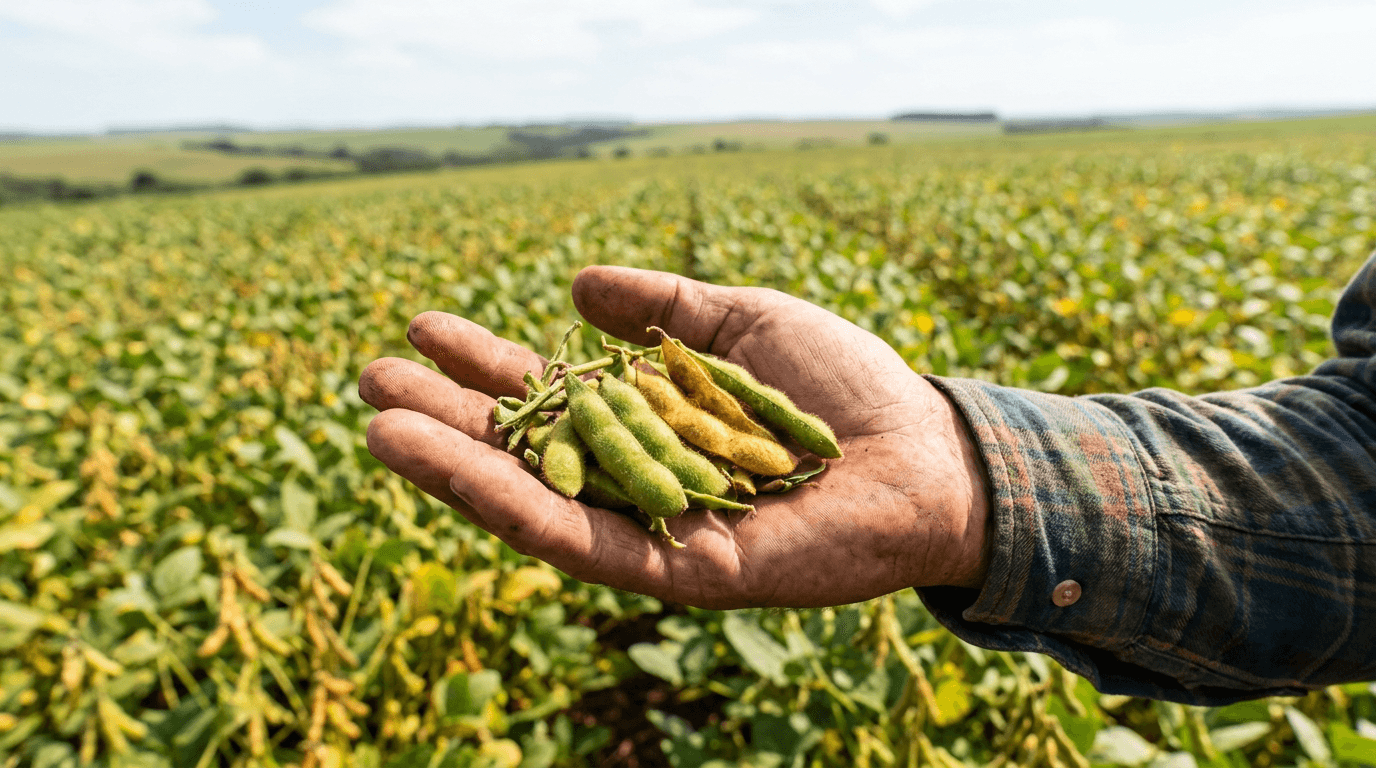
American retail investors tracking agricultural commodities or broad commodity exchange-traded funds (ETFs) are watching a classic tug-of-war between paper positioning and physical reality. According to the weekly Commitments of Traders report released by the U.S. Commodity Futures Trading Commission (CFTC) on November 6, 2026, non-commercial speculators—often consisting of hedge funds and managed money—maintained a substantial net-long position in Chicago Board of Trade (CBOT) soybean futures. For the weekly observation ending November 3, 2026, these speculative traders held 239,253 long contracts compared to 75,635 short contracts, resulting in a net-long position of 163,618 contracts.
This heavy speculative backing persists despite a sharp seasonal correction in the physical market. In Brazil, the world’s largest exporter of soybeans, farmers are aggressively planting what is expected to be another massive harvest, which has historically acted as a heavy lid on global prices. The South American agricultural powerhouse dictates the global export cycle, and its supply outlook directly influences the margins of major multinational agribusinesses. While paper traders in Chicago maintain a bullish bias, physical grain markets have trended downward through the autumn of 2026 due to strong global yield prospects and slowing export demand.
The divergence highlights why weekly trader positioning is a measure of market sentiment rather than a reliable price forecast. Total open interest for the CBOT soybean contract (code 005602) stood at 959,576 contracts as of November 3, 2026, down slightly by 19,838 contracts from the previous week. While speculative funds are still net-long, commercial hedgers—the actual producers and merchants who handle the physical crop—held a net-short position of 143,478 contracts, reflecting their ongoing need to hedge against falling prices as the South American crop progresses.
For global investors, the health of the soybean market is a critical bellwether for international trade and corporate earnings. Brazil's dominant role in this sector means that any shift in Chinese import demand or South American weather patterns quickly reverberates through the financial statements of major agricultural landholders and food processors.
In your brokerage app
Adecoagro S.A. provides exposure to South American agriculture and the global grain trade. The company, which operates extensive farming and land development businesses across South America, is listed in New York. It is a prominent holding in specialized agribusiness funds, such as the VanEck Agribusiness ETF, which tracks global companies involved in agri-chemicals, equipment, and crop production.