
Brazil’s Regulator Schedules First Battery Energy Storage Auctions with Potential R$20 Billion Investment
Energy regulator ANEEL has set dates for two BESS auctions in December to stabilize the power grid and curb renewable waste.
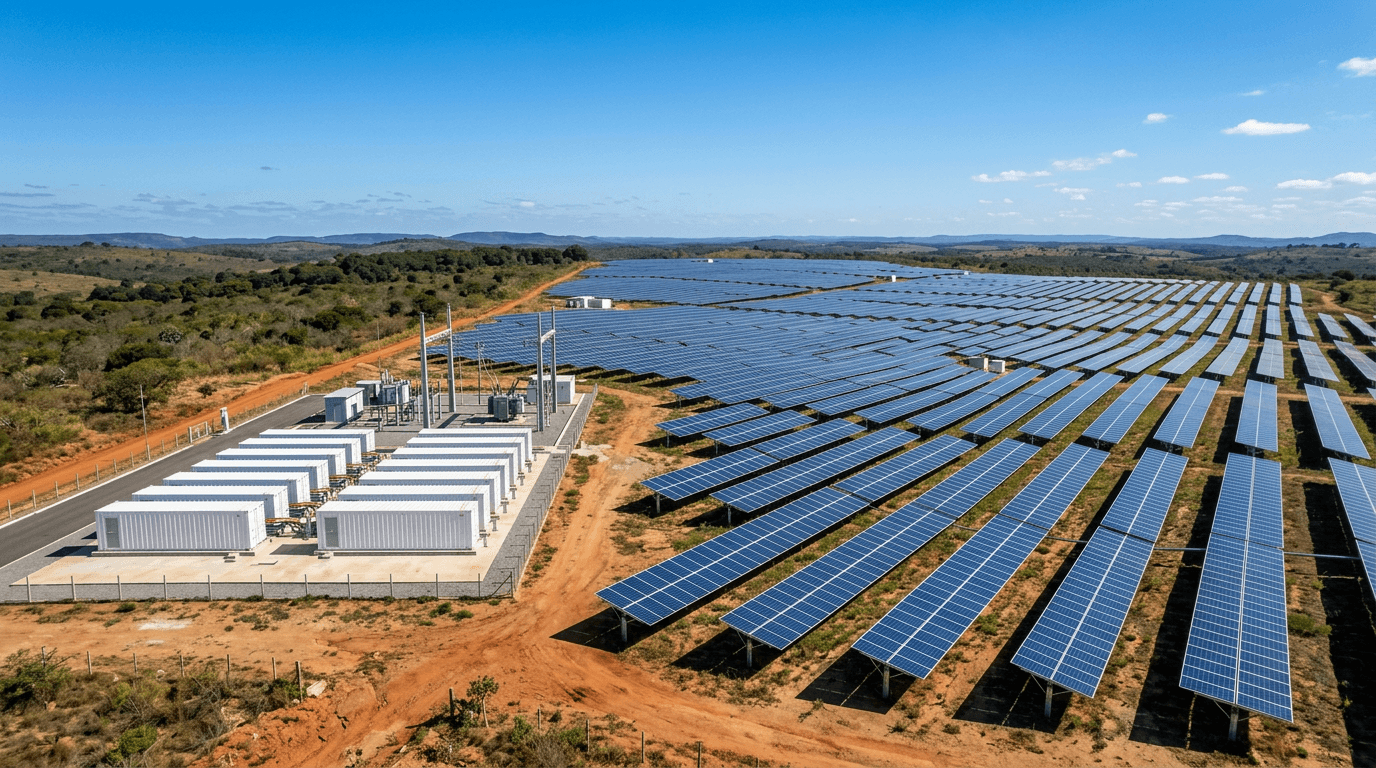
Brazil’s National Electric Energy Agency (ANEEL), the country’s primary electricity regulator, has scheduled its first-ever large-scale auctions for Battery Energy Storage Systems (BESS) on December 2 and 4, seeking to contract capacity that could attract up to R$20 billion in investment, or approximately $3.8 billion USD. The initiative marks the creation of a massive new infrastructure market designed to inject flexibility into the power grid, which is increasingly strained by the rapid expansion of intermittent sources like wind and solar power across the country.
The two separate auctions aim to solve the critical problem of "curtailment"—the forced reduction and waste of clean energy generation when the transmission grid cannot absorb the power, a phenomenon that wasted 20.7% of Brazil’s potential wind and solar power in 2025 due to network limitations. The storage systems will enable the grid operator to bank power generated during peak sun and wind periods and release it later when demand is high or generation is low, a move intended to reduce reliance on costly thermal power plants and address a projected power deficit.
The structure of the auctions is a key mechanism for industrial policy: one event, termed "Armazenamento Nacional" (National Storage), will be restricted to systems that meet minimum domestic content requirements, certified by the National Bank for Economic and Social Development (BNDES). This carve-out is intended to kickstart a domestic supply chain for BESS technology in Brazil. The second auction, however, will be open to international suppliers and projects using imported components, ensuring competitive pricing and access to the necessary scale of technology.
While the regulatory framework is now largely set, a significant debate over cost-sharing—known as the Encargo de Reserva de Capacidade (ERCAP)—still clouds the sector. The current regulation attributes the cost of contracting this new capacity exclusively to power generators, a point of major contention that sector stakeholders fear could jeopardize the financial viability of the projects and increase the risk of legal challenges. ANEEL and the Ministry of Mines and Energy are under pressure to resolve this regulatory uncertainty quickly to ensure the December auctions draw strong investor interest and a competitive price for the contracted power.
What it touches The auctions create a direct market for global BESS manufacturers and technology providers, while significantly impacting Brazilian power generators (especially those in solar and wind like Engie Brasil, who have expressed interest in the space) and electric utilities, whose grid stability will be directly enhanced by the new assets. The outcome of the encargo debate will determine the ultimate financial structure for all participants in the power sector.