
Brazil Water Utility Stocks Face Refinancing Risks on $27 Billion Debt
A new study reveals Brazil's sanitation sector holds $27 billion in debt, led by newly privatized Sabesp and Aegea, raising refinancing hurdles.
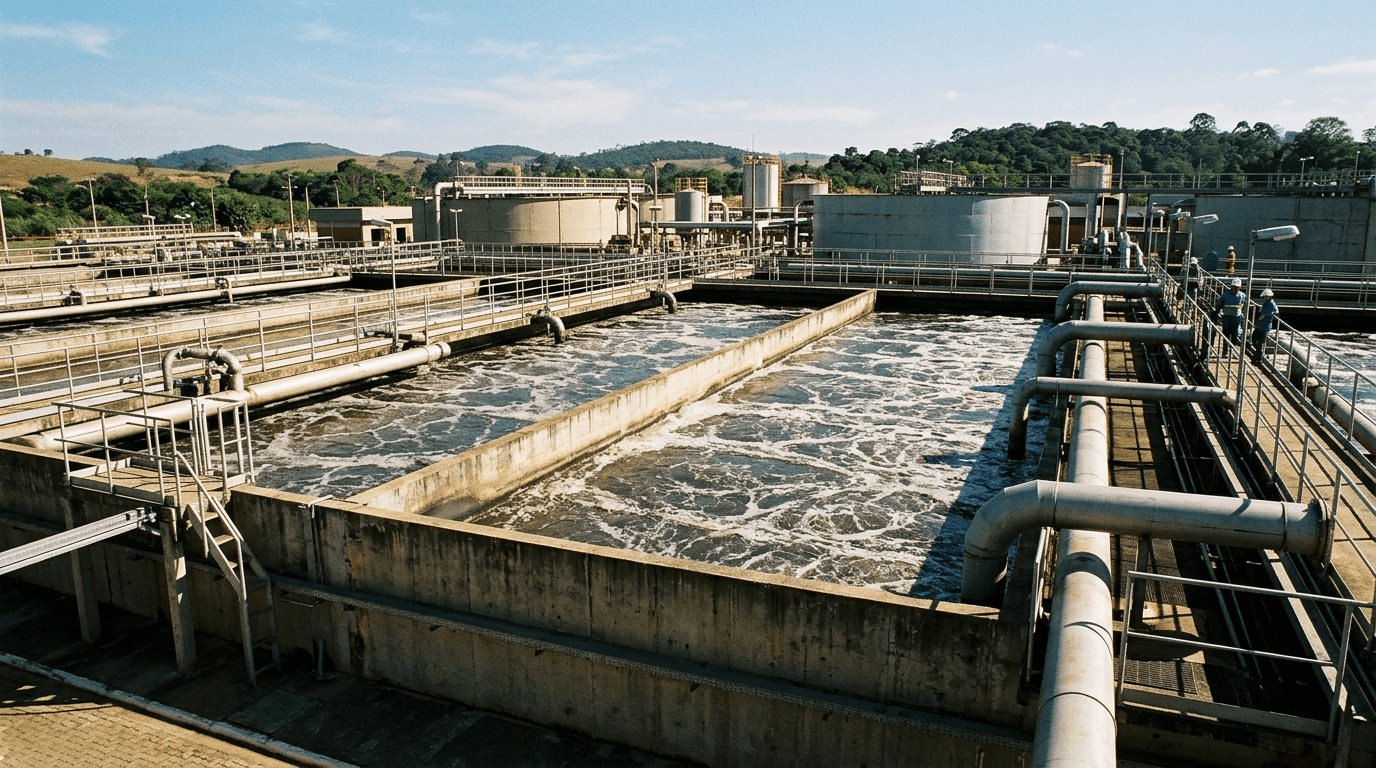
Global investors holding shares in major utilities are facing a new reality in emerging market infrastructure. A comprehensive mapping of Brazil’s sanitation sector has revealed that the country's water and waste operators are carrying a massive R$147.3 billion ($27 billion) debt pile. The disclosure highlights growing refinancing risks for companies tasked with meeting ambitious government-mandated infrastructure targets.
The study, conducted by private credit data platform Vitrify and published on October 15, 2026, analyzed 187 operations and 242 financial instruments across the sector. It found that the debt is highly concentrated, with just two major players accounting for more than half of the total liabilities. Newly privatized water giant Sabesp holds R$28 billion ($5.1 billion) in debt, while private operator Aegea Saneamento carries R$55.1 billion ($10.1 billion).
This leverage comes at a critical moment for Brazil’s water utilities. Under the country’s landmark 2020 sanitation legal framework, operators face a strict legal mandate to achieve universal water and sewage coverage by 2033. Meeting these targets—providing 99% of the population with drinking water and 90% with sewage treatment—will require an estimated R$700 billion ($128 billion) in fresh capital expenditure over the coming years.
Compounding the challenge is the structure of the debt itself. Approximately 40% of the sector's outstanding debt, or R$59.5 billion, is held in tax-exempt infrastructure debentures (debentures incentivadas). While these local bonds have historically been a popular way to fund projects, Vitrify's data showed that 68 of the analyzed financial instruments had zero secondary market trading activity, signaling low liquidity that could make refinancing more expensive.
For international observers, the situation represents a classic emerging-market regulatory test. While the privatization of Sabesp by the state government of São Paulo was highly cheered by foreign capital as a milestone for private-sector efficiency, the company must now balance its massive investment obligations with a high interest-rate environment in Brazil, where the benchmark Selic rate remains in double digits.
In your brokerage app
Investors can gain direct exposure to this sector through Companhia de Saneamento Básico do Estado de São Paulo (Sabesp), which is listed in New York. The utility's performance remains highly sensitive to local interest rates, regulatory tariff reviews, and its ability to roll over its R$28 billion debt load as it works toward its 2033 universalization targets.