
Brazil Markets Surge on Flávio Bolsonaro's Fiscal Promise
Investors cheer a proposed R$ 250 billion spending cut, but economists warn of a lack of concrete details to stabilize Brazil's rising gross public debt.
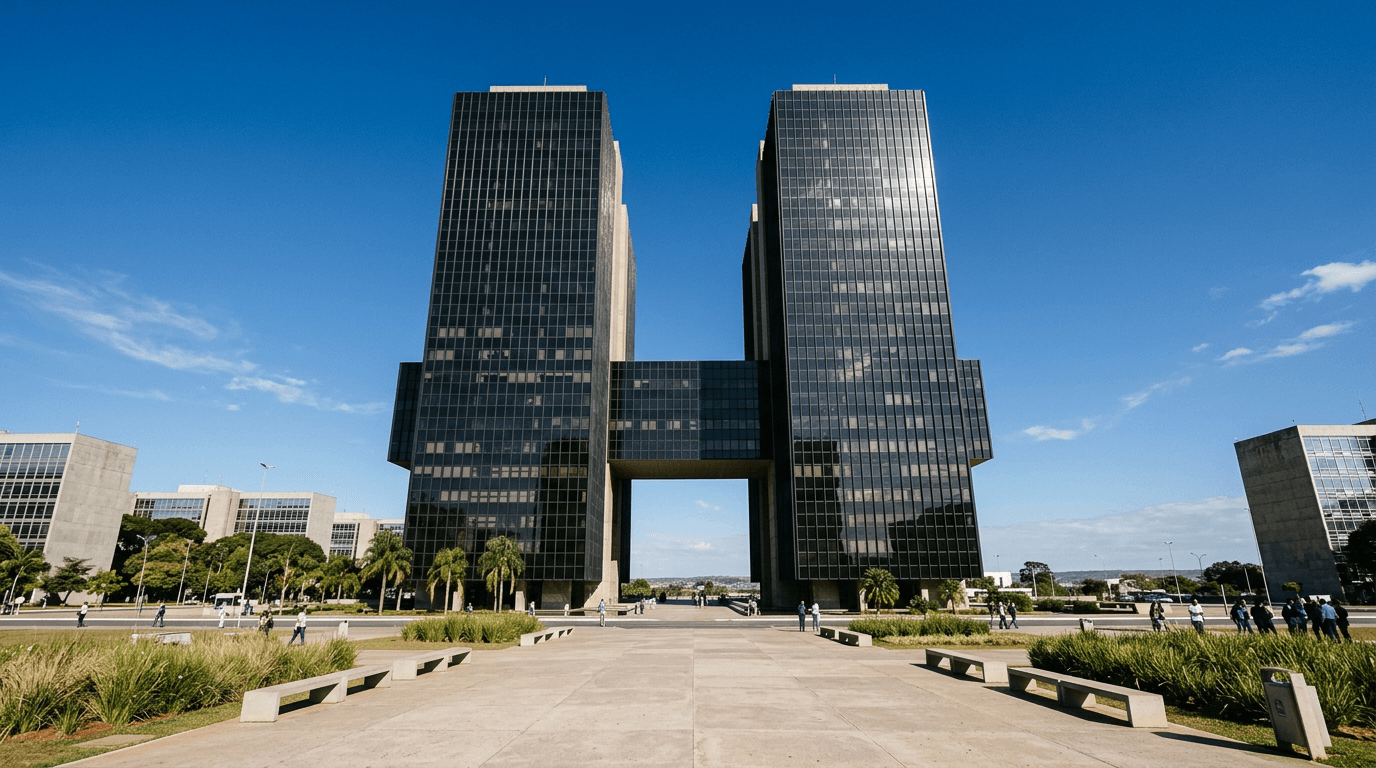
The Brazilian financial market experienced a historic wave of optimism following the first round of the country's presidential election on October 4, 2026. The benchmark stock index, the Ibovespa, surged past the unprecedented 200,000-point mark, closing at a record high of 206,911 points—a massive 7.7% single-day jump. The market rally was triggered by election results showing conservative challenger Senator Flávio Bolsonaro leading incumbent leftist President Luiz Inácio Lula da Silva with 47.03% of the valid votes against Lula’s 45.16%. The two candidates are set to face off in a highly anticipated second-round runoff on October 25, 2026.
International investors and local asset managers are closely watching the political shift, driven by Flávio Bolsonaro's pledge to implement a sweeping fiscal adjustment program dubbed the "Tesouraço" (the big scissors). The candidate, who is the eldest son of former President Jair Bolsonaro, has built his economic platform around enshrouding the state bureaucracy, promising to cut at least ten federal ministries, eliminate thousands of political appointments, and target an initial spending reduction of up to 2% of GDP—equivalent to roughly R$ 250 billion ($45 billion).
However, behind the initial market euphoria, economists and policy analysts are urging caution. While the "Tesouraço" has captured the imagination of the business community, the candidate's team has simultaneously ruled out cuts to major, highly sensitive social programs like the Bolsa Família cash-transfer initiative. Critics and market analysts point out that the campaign has yet to detail the exact legislative and structural mechanisms required to achieve such massive savings without touching these core expenditures. This lack of specificity leaves a cloud of uncertainty over how a new administration would stabilize Brazil’s gross public debt, which is projected to end 2026 at a heavy 83.7% of GDP.
The political stakes of the upcoming runoff are exceptionally high, with both campaigns presenting diametrically opposed visions for South America's largest economy. While the Bolsonaro camp argues that enchaining public spending and reducing the tax burden will unlock 4% annual GDP growth, the Lula administration warns that the proposed cuts will gut public education, the national healthcare system (SUS), and constitutional spending floors. For foreign observers, the ultimate test of the post-election market rally will be whether the eventual winner can present a credible, politically viable fiscal framework to the newly elected Congress to prevent a long-term debt crisis.
What it touches
The political realignment directly impacts major Brazilian equities and state-controlled entities traded on both local and international exchanges. Large state-backed enterprises and major financial institutions stand at the forefront of this volatility, with Brazil's largest lenders—including Itaú Unibanco (ITUB4), Banco Bradesco (BBDC4), and state-controlled Banco do Brasil (BBAS3)—experiencing double-digit surges in the immediate aftermath of the first-round vote. State-run oil giant Petrobras (PETR4) is also highly sensitive to the election's outcome, as a Bolsonaro victory could revive prospects for the federal privatization program.