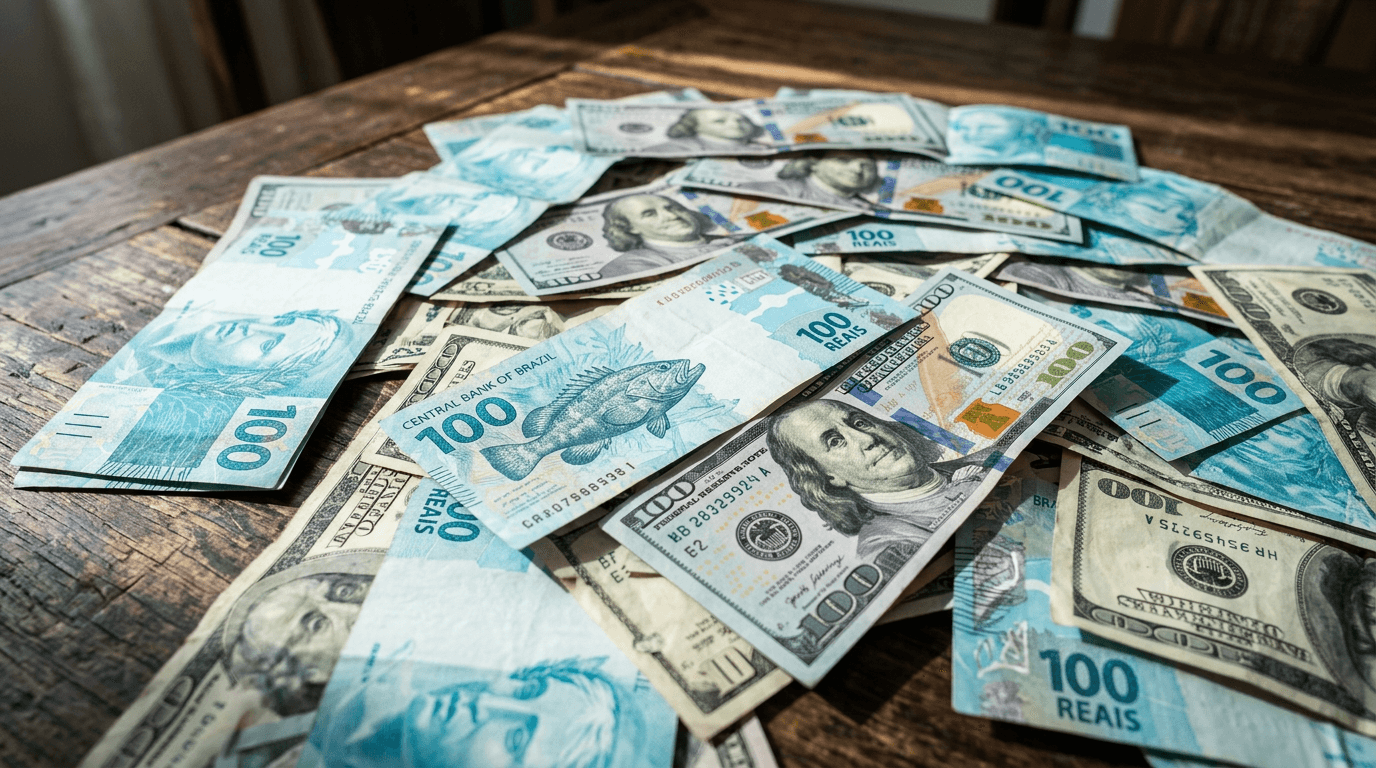
How the Federal Reserve-Selic Rate Differential Weighs on the Brazilian Real
The 9.75 percentage point interest rate gap between the U.S. and Brazil significantly influences capital flows as fiscal risks keep the real under pressure.
For American retail investors holding cash in brokerage accounts, the Federal Reserve's interest rate policy remains the primary benchmark for low-risk returns. According to official data from the Federal Reserve Board, the Federal Open Market Committee maintained the federal funds target range at 3.75% to 4.00% at its October 2026 meeting. While this target keeps domestic yields attractive, it stands in sharp contrast to the double-digit benchmarks offered in major emerging markets.
In Brazil, the central bank's benchmark interest rate—known as the Selic—stands at 13.75%. This rate was established by the Monetary Policy Committee, Copom, during its September 16, 2026, meeting. The resulting 9.75 percentage point gap between the upper U.S. policy rate and the Brazilian benchmark significantly influences the flow of global capital and directly impacts the exchange rate between the Brazilian real and the U.S. dollar.
Under classic macroeconomic theory, this wide interest rate spread should fuel the "carry trade," where institutional investors borrow in low-yield currencies like the greenback to invest in high-yielding Brazilian assets. However, despite a nominal yield near 14%, the Brazilian real has faced persistent downward pressure, trading near 5.50 real per dollar as of November 3, 2026. The currency's struggle highlights how domestic fiscal and political risks can erode the appeal of high nominal yields.
Domestic policy decisions have further complicated the currency outlook following the October 25, 2026, reelection of left-wing President Luiz Inácio Lula da Silva. In early November, speculation arose that the administration might consider a proposal by economist André Lara Resende to aggressively slash interest rates to lower the government's debt service costs. To calm anxious financial markets, Finance Minister Dario Durigan publicly clarified on November 3, 2026, that no such proposal was under consideration, emphasizing that the government is focused on a gradual and balanced fiscal adjustment.
For foreign investors, the high yields on Brazilian debt instruments represent a delicate balance between return and currency risk. While the 9.75-point rate differential provides a substantial buffer, persistent concerns over public spending and inflation expectations—which private-sector economists revised upward in the weekly Focus survey on November 3, 2026—continue to weigh on the real. Any sudden depreciation of the local currency can quickly offset the interest gains when converted back into U.S. dollars.