Why the 9.75-Point Yield Gap Between the Fed and Brazil Matters
The massive interest rate gap between the Federal Reserve and Brazil's central bank shapes global capital flows but carries severe risks for retail portfolios.

For American retail investors holding cash in a brokerage account, the Federal Reserve's benchmark rate determines the baseline return. With the federal funds target range upper limit sitting at 4.0% as of October 2026, according to the Federal Reserve Board, low-risk domestic yields remain modest. However, across the hemisphere, a massive yield differential is quietly driving global currency flows and shaping the performance of international funds that many retail portfolios already hold.
Brazil’s central bank, known as the Banco Central do Brasil, is paying a benchmark Selic target rate of 13.75%, according to the Banco Central do Brasil's SGS database. This leaves a wide gap of exactly 9.75 percentage points between the two central bank rates. This spread represents the premium global investors demand to hold Brazilian debt over ultra-safe U.S. Treasuries.
The Mechanics of the Carry Trade
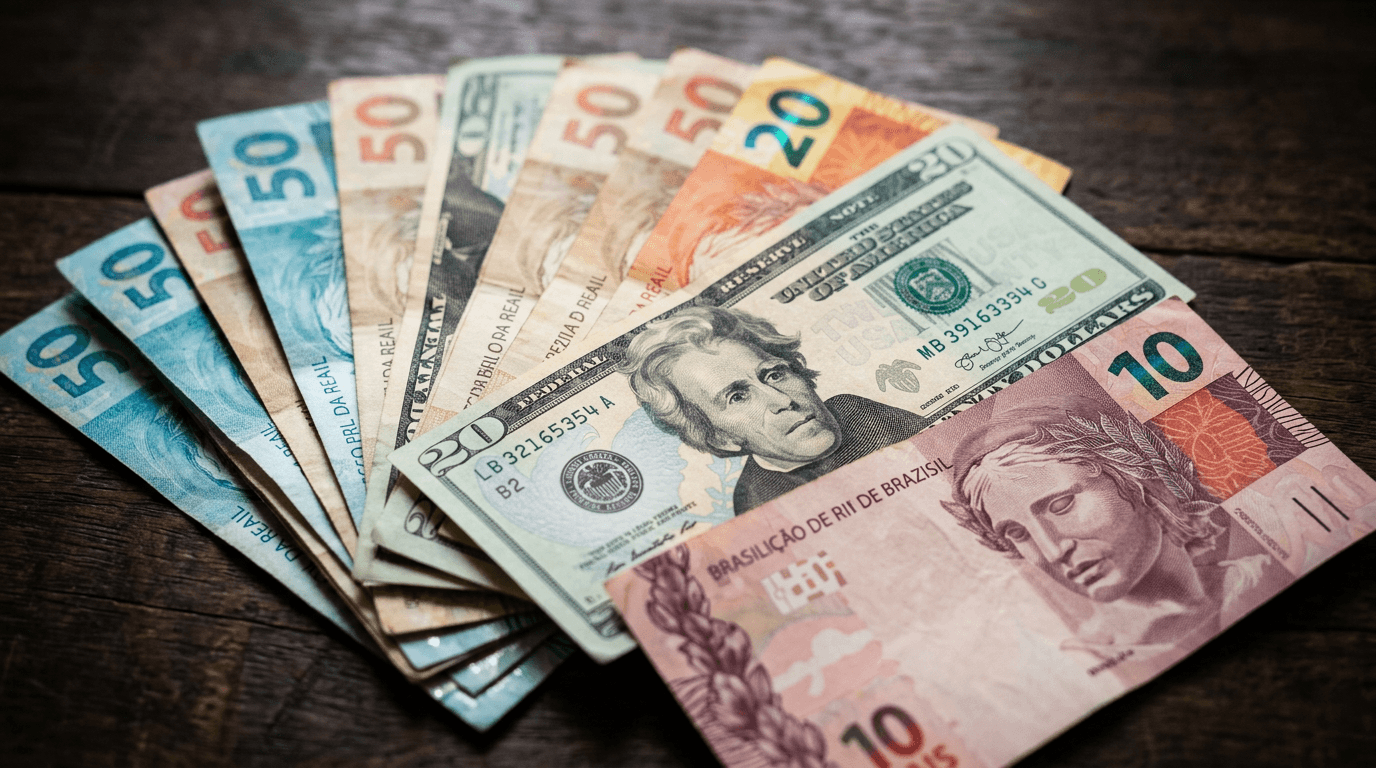
This interest rate gap is the fundamental engine behind the "carry trade," a strategy where institutional investors borrow dollars at low interest rates to buy high-yielding assets denominated in the Brazilian real. When the gap is wide, it acts as a magnet for foreign capital, supporting the Brazilian real vs. USD exchange rate. Conversely, if the Fed raises rates or Brazil's central bank cuts them too aggressively, that gap narrows, prompting investors to pull their money out of South America and sending the Brazilian real vs. dollar exchange rate tumbling.
The Banco Central do Brasil’s monetary policy committee, Copom, lowered the Selic target rate to 13.75% on September 16, 2026, marking its fifth consecutive 0.25-percentage-point cut as local inflation showed signs of cooling. However, Brazil's policymakers must tread carefully. If they lower rates too quickly, they risk triggering capital flight, which would weaken the currency and import inflation back into the country.
For global investors, this high-yield environment comes with acute political and currency risks. Brazil's fiscal trajectory and the upcoming electoral cycles remain under close scrutiny. Any unexpected shifts in government spending can quickly de-anchor inflation expectations, forcing the central bank to halt its rate-cut cycle or even raise rates again to defend the currency. For any investor attempting to capture this yield differential, these volatile currency fluctuations, local liquidity constraints, and political shifts can fully offset or exceed the nominal interest rate advantage.
In your brokerage app
One instrument that tracks this market is the iShares MSCI Brazil ETF, a fund listed in New York. Because this fund holds local assets but trades in U.S. dollars, its performance is highly sensitive to the Brazilian real vs. USD exchange rate. Furthermore, because the fund is heavily concentrated in domestic, rate-sensitive sectors—with financials alone accounting for approximately 37.6% of its market value as of late October 2026, according to BlackRock portfolio data—its underlying valuations are deeply affected by shifts in the Selic rate and local credit demand.