Why Brazil's 13.75% Selic Rate Cushions the Real Against Fiscal Risk
Despite central bank easing, Brazil's double-digit interest rates maintain a massive yield gap over the Federal Reserve, protecting the real.
When the U.S. Federal Reserve voted 10–2 to maintain its benchmark interest rate target range at 3.75% to 4.00% on October 28, 2026, it signaled that the era of ultra-low borrowing costs remains firmly in the past. For global portfolio managers, the Fed's hawkish stance—which included a 25-basis-point rate hike in September 2026—typically squeezes the yield margins required to justify investing in emerging markets. Yet, Latin America's largest economy has managed to preserve a massive yield cushion that continues to shield its currency from deeper selloffs.
On September 16, 2026, the Banco Central do Brasil (BCB) unanimously lowered its benchmark Selic rate by 25 basis points to 13.75%. Although this marked the fifth consecutive reduction in an easing cycle that began in March 2026, the country's monetary policy remains highly restrictive. With a benchmark rate standing nearly 10 percentage points above the Fed's policy rate, Brazil offers a robust safety margin that helps absorb the shocks of local political instability and fiscal concerns.
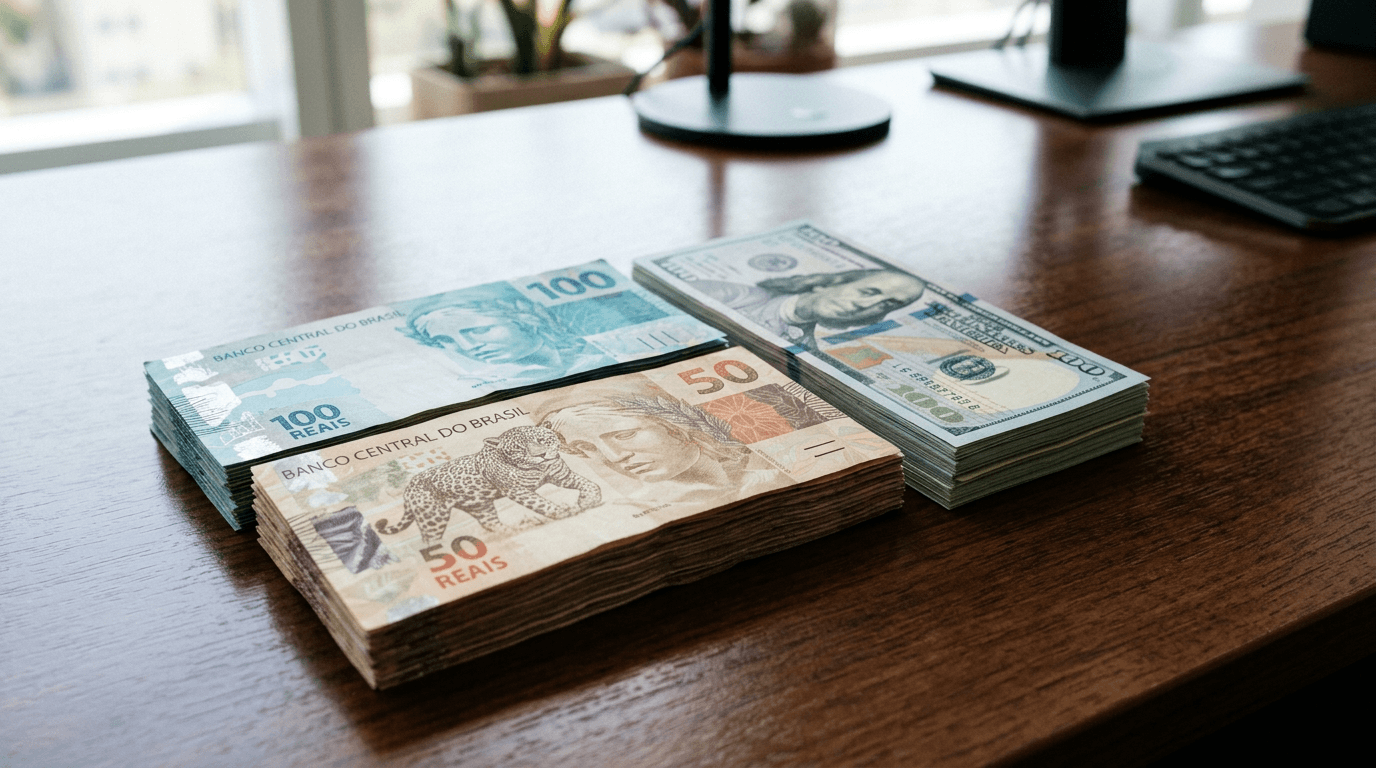
This vast rate differential is a critical anchor for foreign capital. The carry trade—a transaction where investors borrow in low-yielding currencies like the U.S. dollar to purchase higher-yielding assets—thrives on the gap between U.S. and Brazilian rates. Even as the central bank cautiously trims the Selic, Brazil's real interest rate—the nominal rate adjusted for inflation—remains near 9.5%, ranking among the highest in the world and providing a structural buffer for the Brazilian real.
The Battle Over the Selic Rate
This high-yield defense comes amid intense domestic friction. Left-wing President Luiz Inácio Lula da Silva has repeatedly criticized the central bank, pushing for faster interest rate cuts to stimulate economic growth. Lula's administration is balancing high social spending demands with a difficult fiscal outlook, as government debt hovered around 82% of GDP in mid-2026. This fiscal tightrope has kept local bond markets on edge and elevated the country's political risk premium.
However, the central bank has prioritized keeping inflation under control. While twelve-month consumer inflation stood at 4.58% in September 2026—just above the official target ceiling of 4.5%—expectations remain sensitive. Under incoming Governor Gabriel Galípolo, who has vowed to maintain the institution's strict operational independence, the monetary authority has taken a highly cautious approach to its easing cycle.
For global investors, this institutional tug-of-war highlights the political risk premium embedded in Brazilian assets. Because the central bank has refused to compromise its inflation-fighting mandate to appease political demands, the real has maintained its structural yield advantage. This institutional credibility has helped prevent the rapid capital flight that often plagues emerging economies during fiscal disputes.
Understanding Carry-Trade Exposure
For retail investors, the dynamics of high-yield emerging market currencies are typically accessed through broad international bond funds or specialized currency exchange-traded products. These instruments allow investors to capture the yield differentials generated by central banks like the BCB.
However, these strategies carry distinct risks. While a 13.75% benchmark rate provides a substantial cushion, any unexpected acceleration in domestic inflation, a sudden deterioration in Brazil's fiscal balance, or aggressive rate hikes by the Federal Reserve can quickly erode the profitability of the carry trade, leading to volatile swings in currency-exposed portfolios.