How Brazil's post-election currency swing affects US portfolios
Following the October 2026 presidential runoff, a volatile Brazilian real shows how foreign exchange translation impacts US dollar-denominated assets.
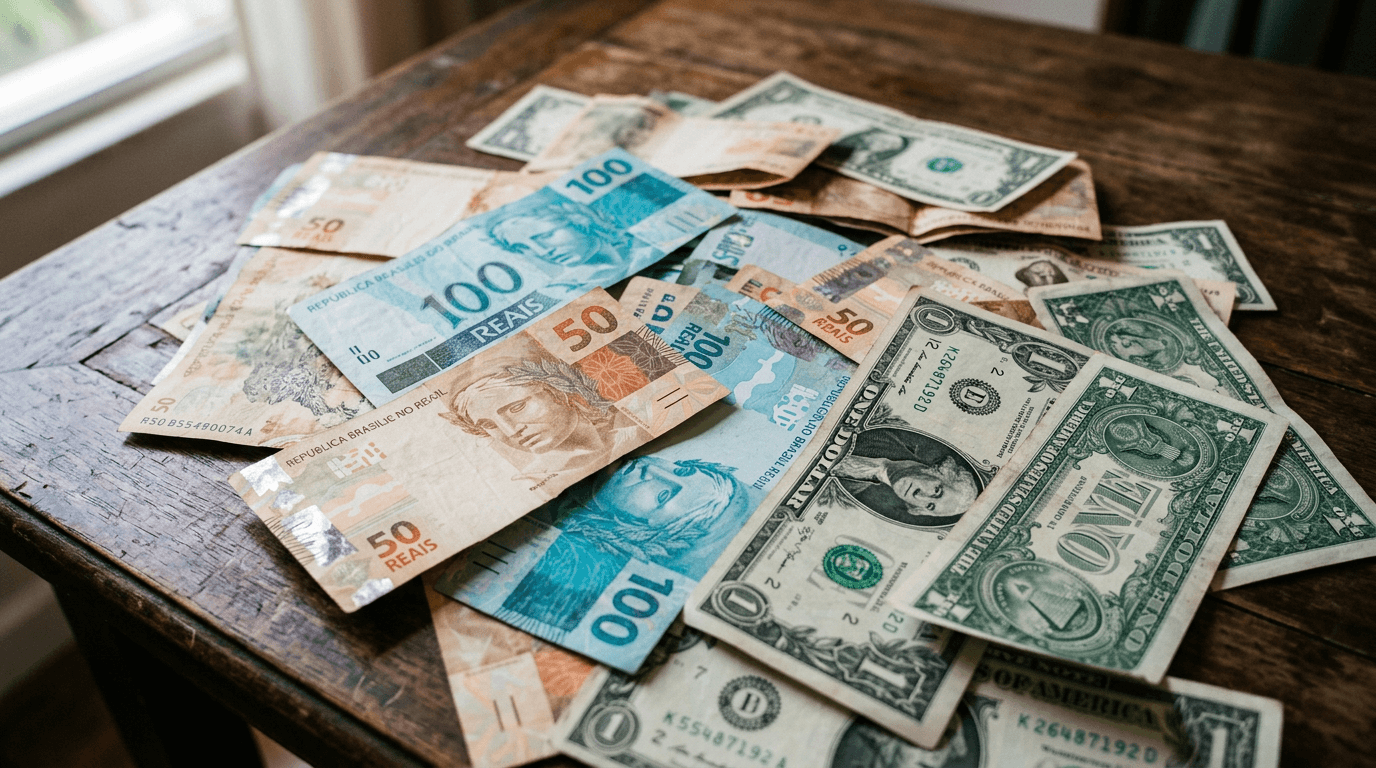
American retail investors holding international funds or multinational stocks in their brokerage accounts saw the value of their holdings shift this week without any individual company changing its business model. The mechanism behind this movement was a sharp fluctuation in foreign exchange markets following Brazil's presidential election, which directly altered how overseas corporate earnings and assets are translated back into US dollars.
The Banco Central do Brasil reference exchange rate, known as the PTAX, has experienced intense volatility as global markets digest the political transition. On Monday, October 26, 2026, the first trading day after the election, the US dollar closed at 5.40 reais, representing an 8.21% surge as the real plunged to as low as 5.60 reais per dollar during the session. By October 27, 2026, the real recovered some ground, strengthening back to approximately 5.36 per US dollar.
This currency rollercoaster directly followed a highly polarized presidential runoff. On Sunday, October 25, 2026, leftist incumbent President Luiz Inácio Lula da Silva secured reelection by defeating conservative Senator Flávio Bolsonaro, the eldest son of former President Jair Bolsonaro, with 51.79% of the valid votes. The immediate market sell-off reflected deep investor concern over future fiscal policy, public spending, and rising public debt under the incoming administration.
The subsequent rebound on October 27, 2026, occurred as some of the acute transition risks began to clear, even as Senator Bolsonaro left the country for the United States and his political party formally recognized the election results. To stabilize the broader financial markets, the Brazilian National Treasury also intervened by suspending regular fixed-rate and inflation-linked bond auctions, helping to calm the sovereign debt market after the benchmark 10-year yield surged.
For US investors, this currency swing demonstrates how political risk in South America's largest economy translates directly into dollar-denominated portfolio returns. When the Brazilian currency—the real (BRL)—strengthens, every dollar of revenue earned by Brazilian companies or held in Brazilian funds becomes worth more to an American investor, independent of the companies' actual operational performance. Conversely, a weakening real dilutes those returns.
Understanding translation effects
To understand how these foreign exchange movements flow through to US brokerage accounts, investors can look at how major international assets are structured. For example, the iShares MSCI Brazil ETF is a prominent exchange-traded fund listed in New York that tracks Brazilian equities. Because the fund holds assets denominated in Brazilian reais but trades in US dollars, its underlying net asset value fluctuates directly alongside the USD/BRL exchange rate.
The same translation mechanism applies to major individual Brazilian corporations that have shares listed in New York, such as state-controlled oil producer Petrobras, mining giant Vale, and digital banking platform Nu Holdings. When the real depreciates against the dollar, the dollar-equivalent value of these companies' local earnings and share prices decreases, even if their underlying business operations in Brazil remain unchanged. Conversely, a strengthening real acts as a tailwind for dollar-denominated valuations.