
Zero Rainfall in Brazil’s Soy Belt Elevates Risk for Key 2026/27 Crop Planting
Major soybean production centers in Mato Grosso, Bahia, and Goiás have registered zero rainfall over the last week, creating a movement alert for the upcoming planting season.
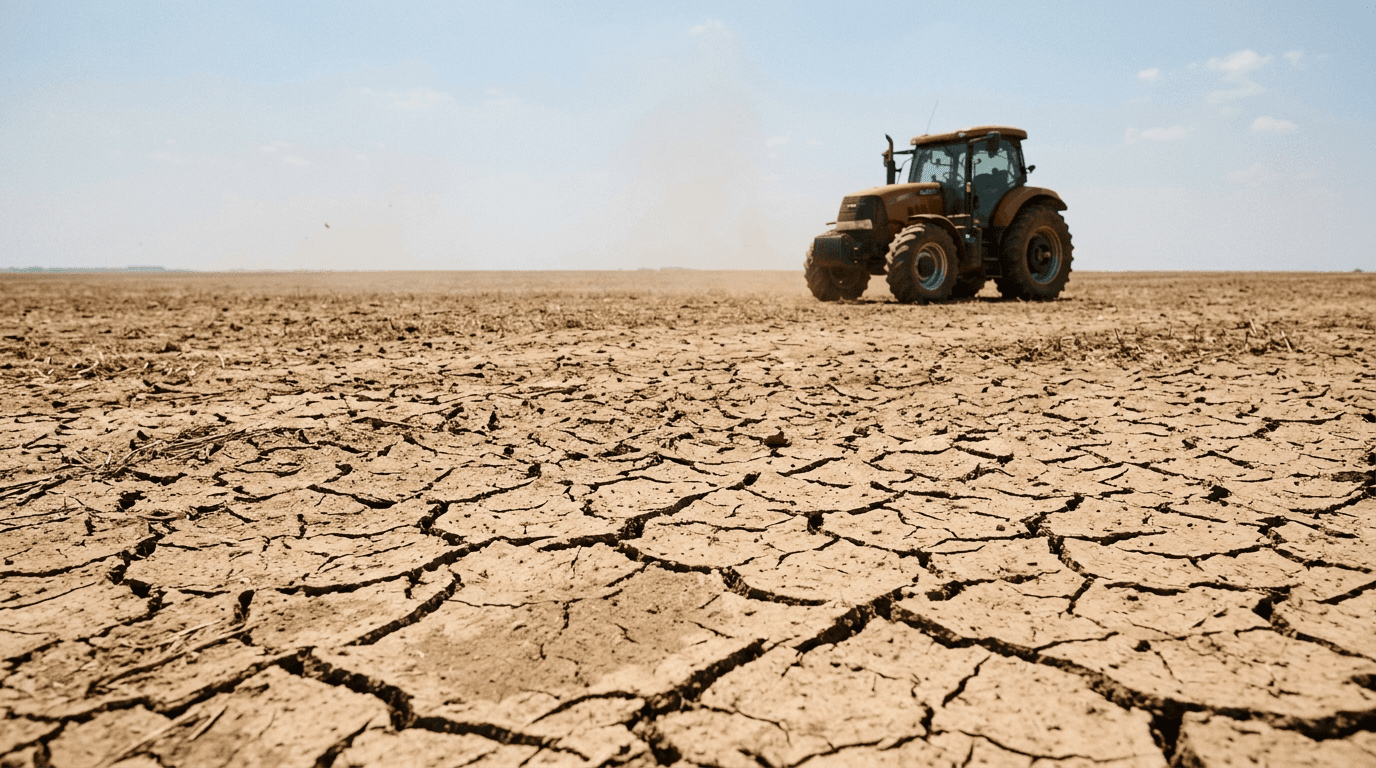
The start of Brazil’s 2026/27 soybean planting season is facing a heightened risk of delay after key agricultural cities registered near-zero rainfall over the past week, intensifying concerns over soil moisture replenishment across the world’s largest supplier of the oilseed. The critical soybean production centers of Sorriso in Mato Grosso and Luís Eduardo Magalhães in Bahia both recorded no measurable rain over the last seven days, while Rio Verde in Goiás registered just 0.3mm, according to BRZ News data. The drought in these areas, coupled with a six-day dry stretch in Cascavel, Paraná, places the crucial planting window, which typically opens in late September and October, under serious threat.
While August is historically a drier month in much of Brazil's Central-West, the current combination of intense dryness and above-average temperature forecasts for the region is a source of anxiety for farmers and global commodity traders. These four municipalities—Sorriso, Rio Verde, Luís Eduardo Magalhães, and Cascavel—collectively represent Brazil’s agricultural engine, spanning the high-tech grain fields of Paraná, the massive operations in Mato Grosso, and the rapidly growing agribusiness frontier in the Cerrado biome of Bahia, a region nicknamed the 'Wall Street of soybeans' for its outsized economic importance.
For the foreign reader, the significance lies in the mechanism: Brazilian farmers rely on the reliable start of the “rain window” in September and October to guarantee adequate soil moisture for soybean germination and early growth. If the necessary rains are delayed due to the sustained dry spell, farmers will be forced to wait before planting. This delayed start compresses the growing calendar, which not only impacts the yield potential of the main Brazil soybean crop but, more critically, pushes the planting of the highly valuable safrinha (second corn crop) into a riskier, drier weather period later in the year. The National Institute of Meteorology (INMET) forecast for August indicates that rainfall will be near or below the average across the Central-West, with temperatures remaining elevated, a scenario that exacerbates the current low-moisture conditions.
The lack of precipitation occurs even as market analysts had priced in a record production year, with the Brazilian Association of Vegetable Oil Industries (Abiove) trimming its current-year estimate slightly but still maintaining a high overall national output forecast of over 180 million metric tons for the 2026 crop. The immediate risk is not to the current harvest, which is already in storage, but to the coming season, which determines future global Brazil soybean supply. Traders are closely watching forecasts for early September, as any further delay in the re-establishment of consistent rain patterns will necessitate a re-evaluation of the yield potential for the 2026/27 Brazil harvest season.
What it touches The market reaction has been muted so far, with Chicago soybean futures trading at 1239.5 cents per bushel, up 0.24% today, reflecting a modest pricing-in of global supply risk. A significant crop issue in Brazil, the world's largest exporter, typically provides upward pressure on global prices and can influence the local currency, which currently trades at R$5.1619 to the U.S. dollar, as diminished crop prospects reduce the forecast for dollar inflow from exports.