
Why dry soil in Brazil's soybean belt is a warning for US food funds
Dry weather in Brazil's agricultural heartland threatens to delay soybean planting, risking global supply disruptions and shifting market dynamics.
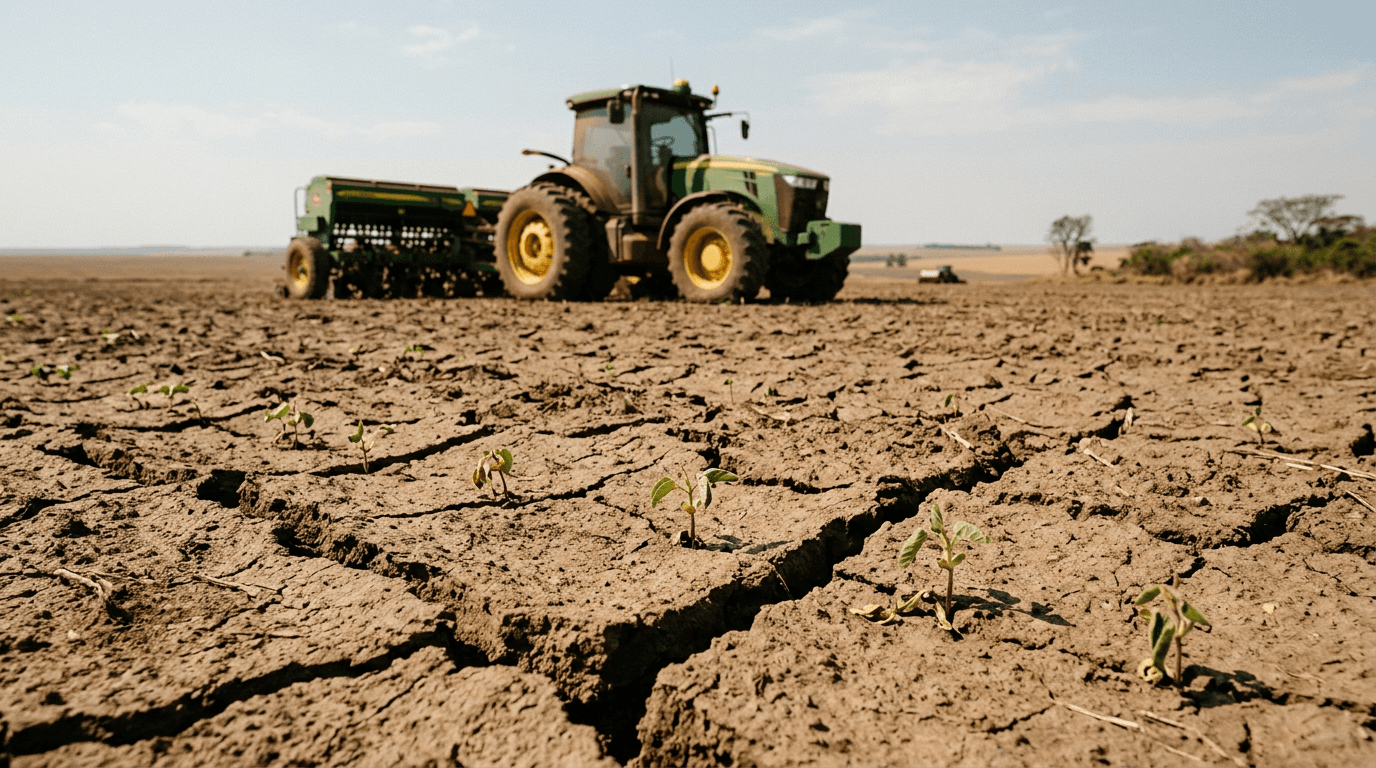
American retail investors holding agricultural exchange-traded funds or tracking grain futures are facing a sudden shift in supply expectations. After months of comfortable global supply projections, dry weather in South America is threatening to disrupt the early stages of the global agricultural cycle. Because the United States and Brazil dominate the global trade of animal feed and cooking oil, any delay in the southern hemisphere's crop can quickly translate into higher raw material costs for global food processors and tighter margins for US livestock producers.
The immediate pressure is mounting in Brazil's agricultural heartland. In Sorriso, a municipality in the state of Mato Grosso that stands as Brazil's largest individual soybean-producing hub, local fields have recorded five consecutive dry days and just 9.9 millimeters of cumulative rainfall over the last week, according to regional agronomic data. The situation is similarly parched further south in Rio Verde, the state of Goiás’s leading grain-producing hub and the second-largest soybean municipality in the country. Rio Verde registered five dry days of its own, with a mere 7.2 millimeters of rainfall over the same seven-day period.
These localized dry spells are critical because October is the peak of the Brazil soybean planting season. Farmers in the Cerrado—the vast tropical savanna biome that accounts for roughly 60% of Brazil's agricultural output—rely on consistent spring rains to soften the soil for machinery and ensure even seed germination. When the rains fail to materialize, growers are forced to pause planting. A delayed soybean harvest in early 2025 would not only squeeze global oilseed supplies during the winter but would also push back the planting of Brazil's subsequent "safrinha" corn crop, which is sown immediately after the soybeans are reaped.
This meteorological bottleneck comes at a time when speculative traders have been heavily positioned for cheap grain. According to the U.S. Commodity Futures Trading Commission (CFTC) Commitment of Traders report for the week ending October 13, 2026, non-commercial market participants held 356,266 long contracts compared to 85,167 short contracts in Chicago Board of Trade soybean futures. While speculative positioning remains net-long, persistent water stress in Mato Grosso and Goiás could trigger a rapid short-covering rally if local cooperatives are forced to downgrade their initial yield estimates.
For global markets, the margin for error is slim. While southern Brazilian regions like Cascavel, in the state of Paraná, have enjoyed a wet week with 152.4 millimeters of rain and only two dry days, the central-west soybean belt dictates the direction of global export pricing. If the dry weather in Sorriso and Rio Verde persists through the end of the month, the initial projections for a record-breaking Brazilian harvest will require downward revisions, directly impacting the balance sheets of multinational grain exporters.
In your brokerage app
The financial performance of the global grain trade is closely tied to these South American harvest volumes. For instance, the Teucrium Soybean Fund is an exchange-traded fund listed in New York that holds soybean futures contracts, making its net asset value sensitive to global crop disruptions. Additionally, Bunge Global SA, a major agribusiness and logistics company listed in New York, operates extensive sourcing and processing networks in Brazil's interior, meaning its transport margins and supply volumes are directly exposed to the timing of the regional harvest.