
Dry weather in Brazil soybean belt threatens global crop yields
Persistent dry spells in Brazil's agricultural hubs of Bahia and Mato Grosso threaten early soybean planting progress, risking global supply disruptions.
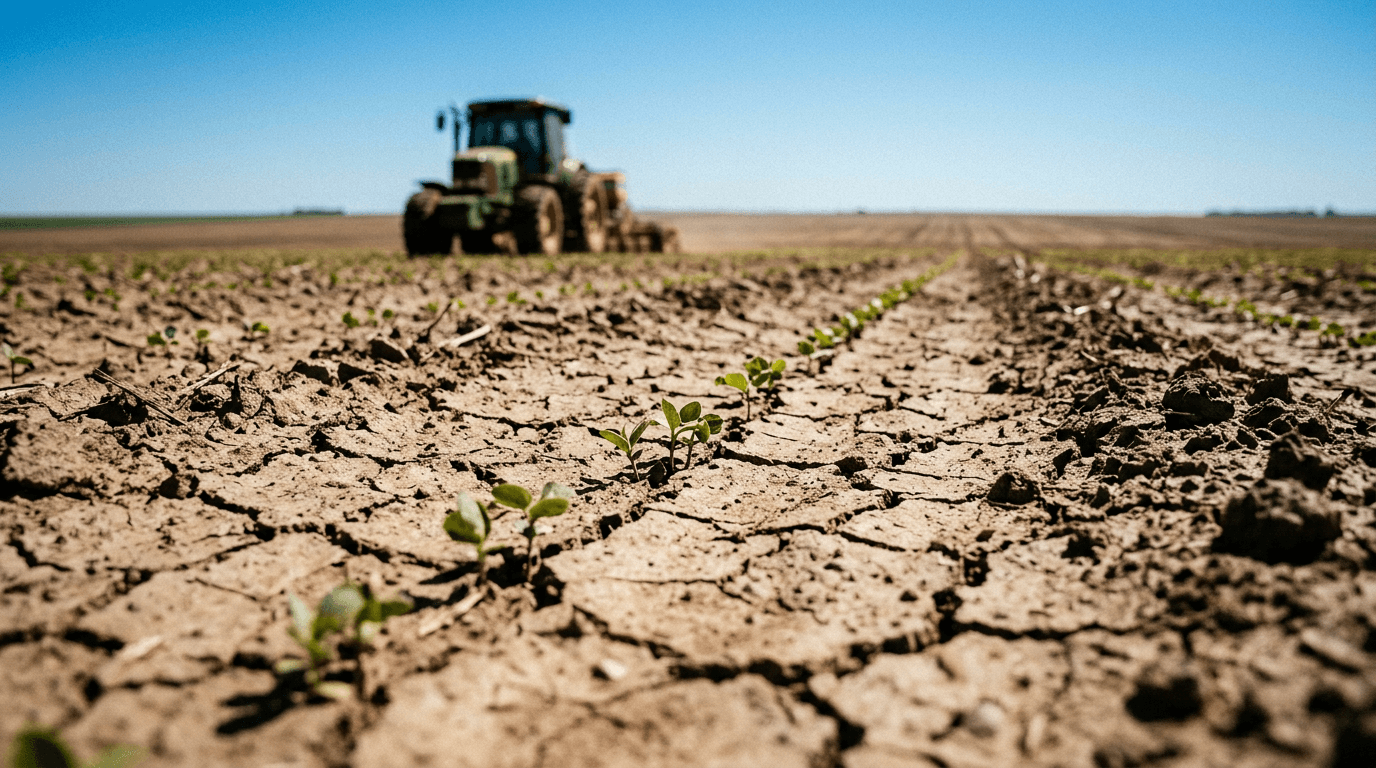
Global commodity traders are closely monitoring weather patterns in South America as persistent dry spells threaten the early progress of the world's largest oilseed exporter. For American retail investors holding agricultural exchange-traded funds or tracking food inflation, the moisture levels in central and northeastern Brazil are becoming the primary driver of global grain prices.
According to regional weather monitoring data, the critical agricultural hubs of Luís Eduardo Magalhães in Bahia and Sorriso in Mato Grosso both recorded five dry days over the seven-day period ending in mid-October 2026. During this week, Luís Eduardo Magalhães received just 22.4 millimeters of rainfall, while Sorriso, widely recognized as Brazil's "Soybean Capital," saw a meager 15.2 millimeters. This lack of consistent moisture creates severe water stress for newly sown seeds, which require reliable soil humidity to germinate and establish deep root systems.
The timing of this dry spell is particularly sensitive. Brazil's national supply agency, Conab, projected in its October 15, 2026 report that the country would produce a record 181.6 million tonnes of soybeans for the 2026–27 cycle. However, achieving this massive target depends heavily on a smooth planting window. When dry weather delays soybean planting, it compresses the entire agricultural calendar. This delay not only risks lowering overall soybean yields but also postpones the harvest, which in turn shortens the planting window for the subsequent "safrinha" corn crop grown on the same acreage.
Market positioning reflects a cautious outlook among institutional players. The Commodity Futures Trading Commission (CFTC) Commitment of Traders report for the week ending October 13, 2026, showed that non-commercial traders held 356,266 long contracts compared to 85,167 short contracts for Chicago Board of Trade soybeans. This heavy net-long positioning indicates that large money managers are leaning toward the upside, anticipating that any prolonged South American weather disruptions will tighten global supplies and drive prices higher.
While private consultancies like AgRural noted that national planting progress had reached roughly 16% by mid-October, the uneven distribution of rain means that localized crop stress remains high. If the dry spells in Bahia and Mato Grosso persist through the end of the month, farmers may be forced to replant damaged fields, escalating production costs that are already hovering near decade highs.
In your brokerage app
For retail investors seeking to understand how agricultural commodities trade, the Teucrium Soybean Fund teucrium.com is listed in New York. This exchange-traded fund is designed to track a benchmark of Chicago Board of Trade soybean futures contracts rather than the spot price of physical soybeans teucrium.com. It holds a laddered portfolio of three different futures maturities to reduce the impacts of rolling contracts, offering a way to observe grain market pricing dynamics through a standard brokerage account teucrium.com.