
US Soybean Futures Face Supply Risk as Dry Spell Hits Brazil Belt
A sudden dry spell in Paraná, Brazil's key southern agricultural hub, is compounding planting delays and threatening early-season soybean yields.
American grocery shoppers and livestock producers are highly sensitive to the cost of animal feed, which is heavily dictated by the global price of soybeans. When dry weather threatens major agricultural zones abroad, the shockwaves travel directly to Chicago futures markets, driving up the cost of everything from cooking oil to domestic beef and poultry.
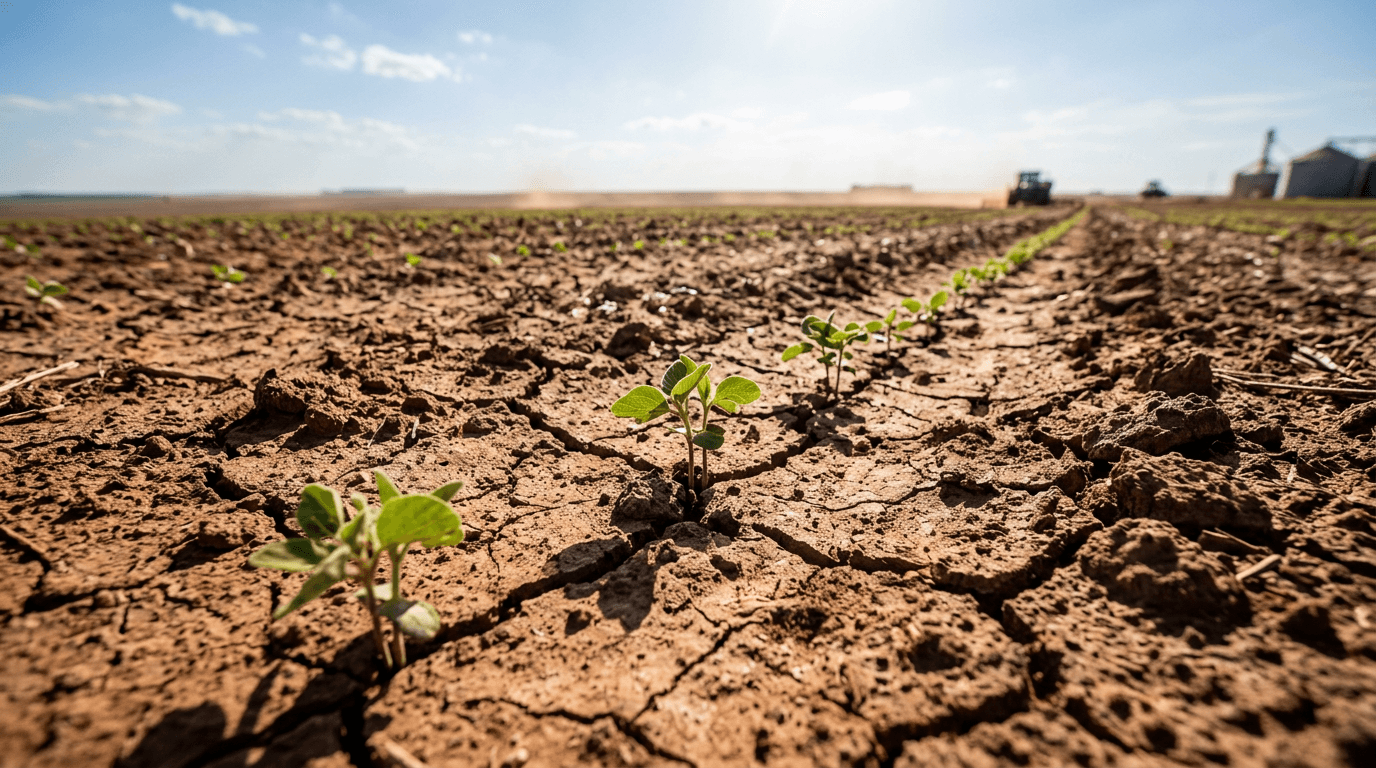
In Brazil, the world's largest exporter of the oilseed, a sudden dry spell in the key southern agricultural hub of Cascavel, in the state of Paraná, is raising crop-stress risks. According to regional meteorological data for the week ending October 26, 2026, Cascavel recorded five consecutive dry days and a meager 21.2 millimeters of cumulative rainfall. This sudden lack of moisture threatens recently germinated seeds in a region that typically anchors the country's early-season harvest.
This dry pocket represents a sharp turn for Paraná, where excessive rains earlier in October had already disrupted field operations. According to a report by the state's Department of Rural Economy (Deral) released on October 22, 2026, soybean planting in Paraná reached 47% of the projected 5.7 million hectares, lagging behind the three-year historical average of 55% for this period. The combination of early waterlogging followed by sudden dry spells creates uneven germination and plant rot in low-lying fields, compromising overall plant development.
The stakes extend far beyond the current soybean crop. Brazilian farmers rely on a tight double-cropping calendar. They must plant and harvest soybeans quickly enough to sow a second crop of corn, known as the safrinha, before the summer rains disappear. Any delay in the initial soybean harvest season pushes the safrinha planting window into early 2027, exposing the subsequent corn crop to high climate risks and potentially tightening global grain supplies across the board.
While other major agricultural regions like Sorriso in Mato Grosso and Rio Verde in Goiás have fared better—recording 57.4 millimeters and 68.5 millimeters of rain respectively over the same seven-day period—the localized stress in Paraná keeps commodity markets on edge. According to data from the US Commodity Futures Trading Commission (CFTC) for the week ending October 20, 2026, non-commercial traders held a heavily net-long position in Chicago Board of Trade soybean contracts, with 330,528 long positions compared to 83,932 short positions, reflecting active speculative interest in supply-side disruptions.
Soybean futures prices are publicly tracked on the Chicago Board of Trade (CBOT), where global supply and demand dynamics dictate daily price fluctuations.