
Why Brazil's uneven soybean planting is shaking global crop markets
Extreme weather splits in Brazil's key agricultural states are disrupting early soybean planting, threatening double-cropping schedules and shifting global supply expectations.
American retail investors tracking agricultural commodities are seeing a sudden shift in global supply expectations. While Chicago Board of Trade soybean futures sat at 1,253.5 cents per bushel on October 20, 2026, a growing weather divergence in South America is threatening to disrupt the global trade balance. The United States Department of Agriculture (USDA) attache in Brasilia projected on October 22, 2026, that Brazil will produce a massive 184 million metric tons of soybeans for the 2026–27 marketing year. However, achieving that record depends on a highly sensitive planting calendar that is currently splitting into two distinct weather extremes.
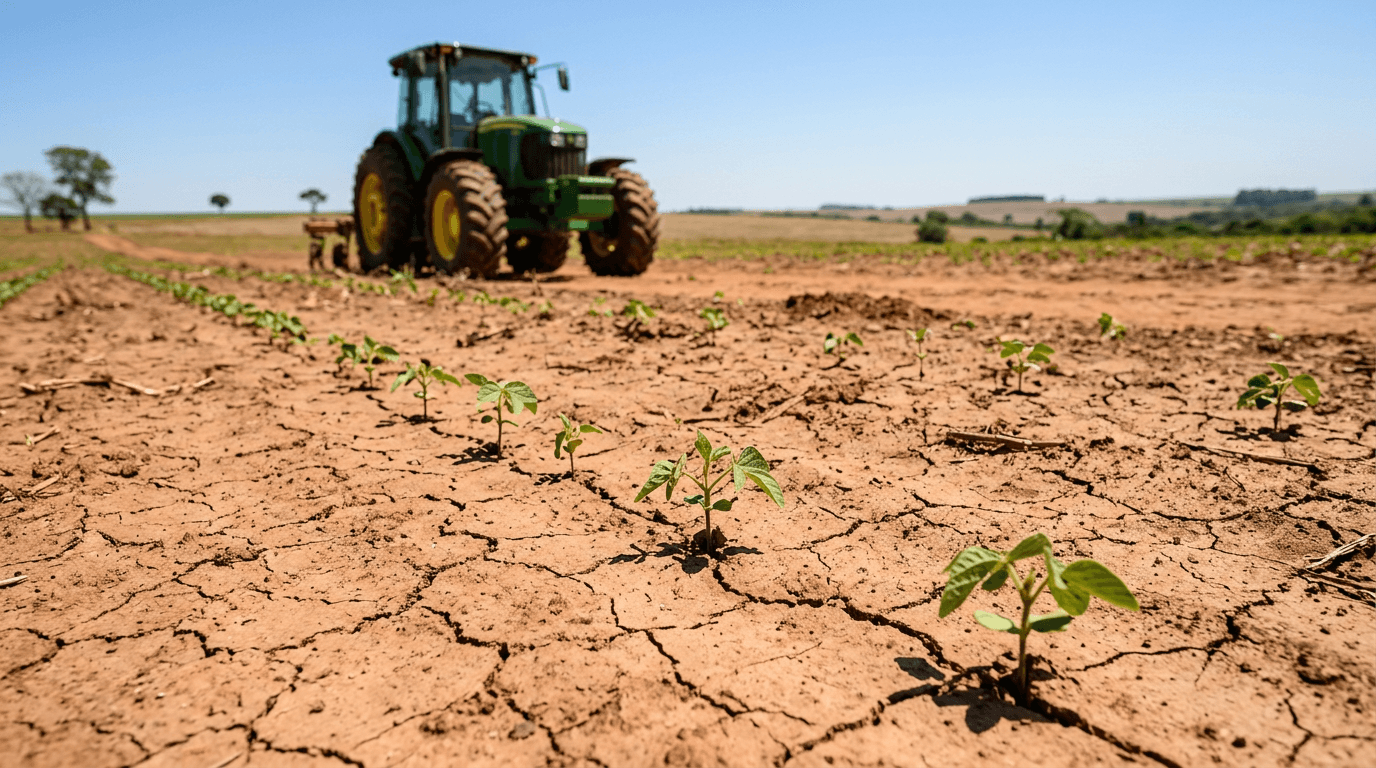
In the heart of Paraná, one of Brazil's most productive agricultural states, the municipal hub of Cascavel is facing a sudden dry spell. Local weather observations for the week ending October 26, 2026, show Cascavel recorded five dry days and a meager 21.2 millimeters of cumulative rainfall. This localized water stress is a sharp contrast to the excessive, persistent rain that saturated other parts of the state earlier in the month. The dry pocket in Cascavel raises early crop-stress risks for newly sown seeds, while other southern regions grapple with the opposite problem of waterlogged fields and plant rot.
This uneven start is already dragging down field operations. According to a report released on October 26, 2026, by Paraná’s state rural economy department, Deral, soybean planting in the state reached 47% of the projected area. This marks a significant slowdown from early October expectations and falls behind the 52% pace recorded at the same point last year. Nationally, agribusiness consultancy AgRural reported on October 26, 2026, that overall Brazilian soybean planting progress had reached 40%. While this is up from 26% the previous week, the regional imbalances are keeping growers on edge.
The real danger for global markets lies in the domino effect on Brazil's agricultural calendar. Farmers in Paraná rely on a tight double-cropping schedule. They must plant and harvest their soybeans early enough to sow a second crop of corn, known as the safrinha, before the dry season begins. Every week that soybean planting is delayed by localized dry spells or excessive rains in the south pushes the safrinha corn planting window later into 2027, exposing the subsequent corn crop to severe climate risks during its critical pollination phase.
In your brokerage app
For retail investors, these localized weather patterns and planting paces in South America are closely monitored because of their historical relationship with commodity pricing. Exchange-traded products, such as the Teucrium Soybean Fund listed in New York, hold underlying futures contracts whose values fluctuate based on global supply and demand dynamics. When planting delays or adverse weather threaten the yield of major global producers like Brazil, the anticipated reduction in future supply typically puts upward pressure on futures prices. Conversely, if weather conditions normalize and planting pace recovers to support a record harvest, the prospect of abundant supply can weigh on futures contract values.