
US Cotton Farmers Get Reprieve as Brazil's Record Crop Hits Bottleneck
Brazil's record cotton harvest is facing severe processing and ginning delays, offering US growers a brief market cushion amid intensifying global competition.
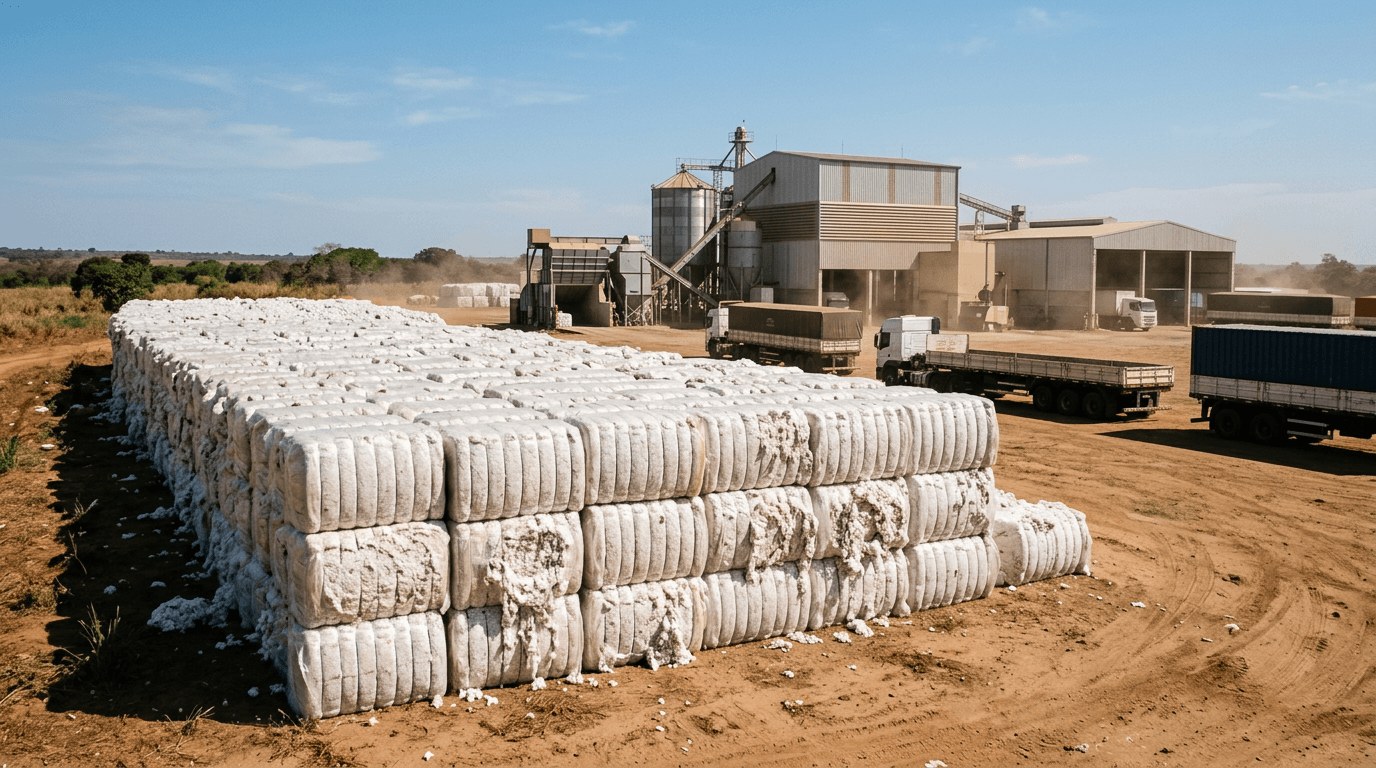
American cotton growers, who have steadily lost global market share to South American competitors, are receiving a temporary reprieve. While US farmers are wrapping up their own harvests, a massive processing bottleneck in South America is slowing down the flow of rival fiber to global textile mills, buying US exporters crucial time to secure international contracts.
The disruption is centered in Brazil, which recently surpassed the United States as the world's leading cotton exporter by shipping a record 3.37 million metric tons in the marketing year ending July 2026, according to the Brazilian Association of Cotton Growers (Abrapa). Although Brazilian farmers successfully harvested 95.6% of their massive 2025/26 crop area by mid-September 2026, the country's infrastructure has failed to keep pace. Data from the state crop agency, the National Supply Company (Conab), and private consultancy Agroconsult show that only 35% of that harvested fiber had actually been processed—meaning ginned and officially classified—by early September.
This widening gap between the field and the shipping container is shrinking the critical export window for Brazilian traders. Cotton cannot be exported as raw, dirty field modules; it must be ginned to separate the lint from the seed and then graded for quality. Because the processing lines are choked, international buyers are facing shipment delays. The backlog is already triggering legal friction, with trade houses and overseas spinning mills locked in contract disputes over who bears the financial liability for missed shipping windows and late-delivery penalties.
For US cotton farmers, the bottleneck is a welcome operational cushion, but it does not change the long-term competitive reality. Brazil’s rise to the top of the export market has been driven by highly mechanized, large-scale operations in the Cerrado savanna region, particularly in the states of Mato Grosso and Bahia. These farms boast high yields and advanced traceability programs that appeal to major textile hubs in China, Bangladesh, and Turkey.
The current logjam highlights the structural limits of Brazil's rapid agricultural expansion. While the country has proven it can grow record-breaking volumes of commodities, its internal logistics, storage capacity, and processing facilities remain highly vulnerable to seasonal gluts. Until these processing and port bottlenecks are resolved, global buyers will continue to rely on the more reliable, established logistics of the US supply chain to keep their spinning mills running.
In your brokerage app
For retail investors tracking agricultural commodities, the primary vehicle for exposure to global cotton prices is the Cotton No. 2 futures contract, traded under the ticker CT1:COM on the Intercontinental Exchange (ICE). While retail brokerages do not typically offer direct physical commodity trading, investors can monitor the iPath Series B Bloomberg Cotton Subindex Total Return ETN, which tracks these futures contracts, or look at diversified agribusiness exchange-traded funds like the VanEck Agribusiness ETF, which holds major global agricultural equipment and supply companies.