Soybean futures hold at $12.43 as regional dry spell strikes Brazil
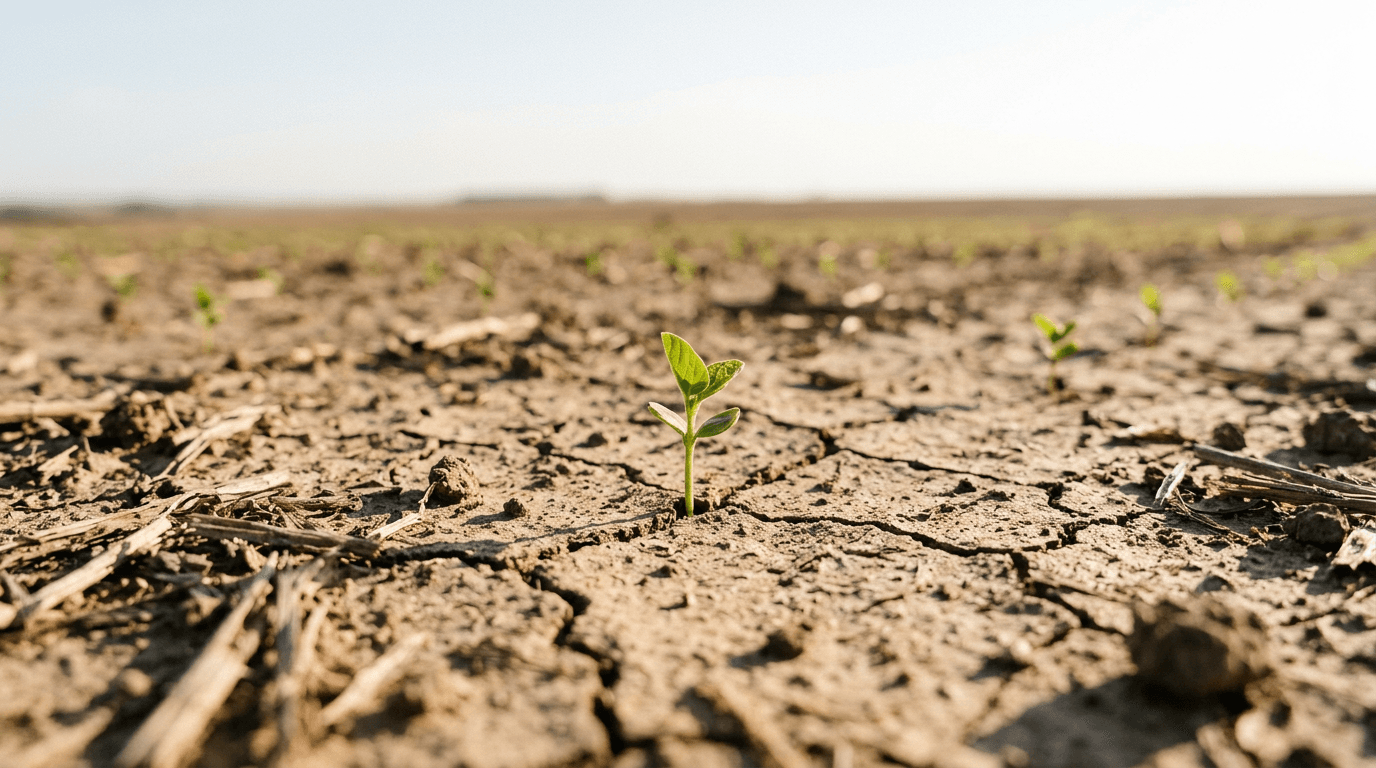
Chicago soybean futures hold steady as a localized dry spell in western Bahia, Brazil, leaves Luís Eduardo Magalhães with just 0.2mm of rain over seven days.
Key takeaways
- Chicago Board of Trade soybean futures settled down 0.06% at 1,243.25 cents per bushel, per market quotes on November 26, 2026
- Luís Eduardo Magalhães in Bahia recorded only 0.2 mm of rain across 7 dry days, per regional weather stations on November 26, 2026
- Non-commercial traders held 227,439 long soybean contracts versus 81,623 shorts, per CFTC on November 17, 2026
- The US dollar fell 1.45% against the Brazilian real to 5.7365 BRL, per market quotes on November 26, 2026
Chicago Board of Trade soybean futures—which dictate the retail cost of global feed and oilseeds—held near 1,243.25 cents per bushel on November 26, 2026, as traders monitored an emerging dry spell in Brazil's agricultural frontier. While main producing states in the Center-West and South have received ample rainfall, the agricultural hub of Luís Eduardo Magalhães in western Bahia has registered seven consecutive dry days with a mere 0.2 millimeters of precipitation, according to regional weather monitoring data on November 26, 2026. This localized moisture deficit raises early risks for crop stress in parts of the northeastern expansion zone.
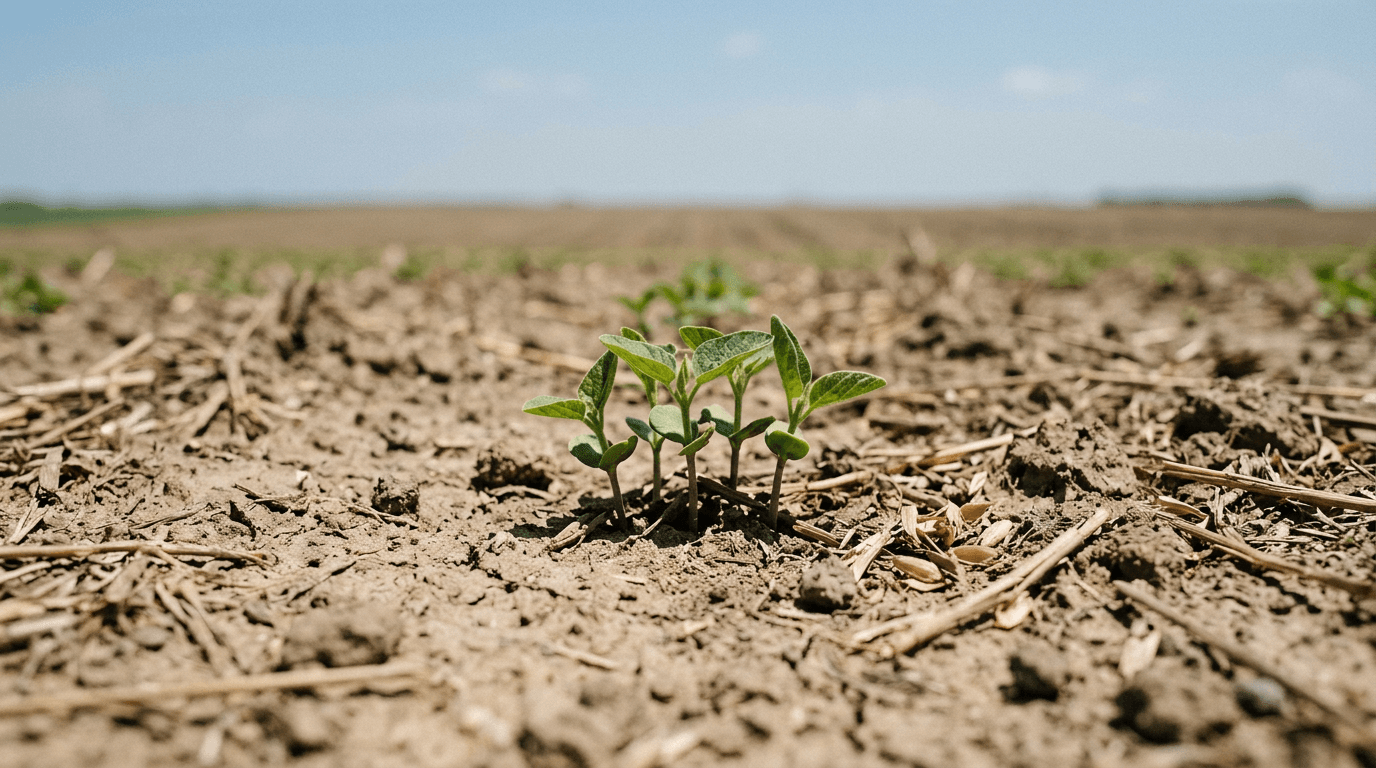
Luís Eduardo Magalhães is the primary agricultural center of western Bahia, a key piece of the "Matopiba" frontier (comprising Maranhão, Tocantins, Piauí, and Bahia) which has emerged over the last two decades as a crucial region for expanding soybean production. Unlike traditional growing states like Mato Grosso—where sowing is nearly complete under favorable conditions—this northern frontier is highly vulnerable to early-season dry patches, which can stress newly emerged seedlings and delay planting.
Regional disparities in rainfall
The regional nature of the dry spell keeps it from triggering a nationwide supply shock. In Brazil's primary soybean-producing regions, soil moisture remains highly favorable. For instance, Cascavel in Paraná state recorded 62.7 millimeters of rainfall over the same seven-day period with zero dry days, while Sorriso in Mato Grosso saw 29.2 millimeters, and Rio Verde in Goiás received 65.5 millimeters with just one dry day, per regional weather stations on November 26, 2026. On the domestic market, physical soybean prices in Paraná stood at 162.98 BRL per 60-kilogram bag on November 26, 2026, while prices at the Paranaguá port were quoted at 170.05 BRL per bag, according to data from the Center for Advanced Studies on Applied Economics (CEPEA) on November 26, 2026.
The localized weather stress comes amid strong speculative interest in agricultural commodities. According to the U.S. Commodity Futures Trading Commission Commitment of Traders report on November 17, 2026, non-commercial traders held a heavily net-long position in Chicago soybean contracts, with 227,439 long contracts compared to 81,623 short positions. Concurrently, the Brazilian real strengthened, with the USD/BRL rate falling 1.45% to trade at 5.7365 on November 26, 2026, per commercial currency rates.
Agribusiness analysts are monitoring whether December rains will arrive in time to benefit early-planted fields in Bahia and Piauí, where some planting operations had to be temporarily paused. Crop emergence over the next two weeks will determine if these regional delays translate into actual yield loss or simply a slightly later harvest window.
In your brokerage app
For retail investors looking at agricultural commodities, the iShares MSCI Brazil ETF (EWZ) holds major exposure to the country's macroeconomic health and large agribusiness-linked logistics companies. Direct plays on soybean prices are available via agricultural commodity ETFs like the Teucrium Soybean ETF (SOYB), which tracks Chicago Board of Trade soybean futures, or through shares of global agribusiness giants like Bunge Global SA (BG) and Archer-Daniels-Midland Co. (ADM) listed in New York, which dominate the export infrastructure in Bahia's Matopiba region.