
Rising grocery bills tied to dry spell in Brazil's soybean belt
Weather disruptions in Brazil's agricultural heartland threaten to tighten global grain supplies, raising concerns over food inflation.
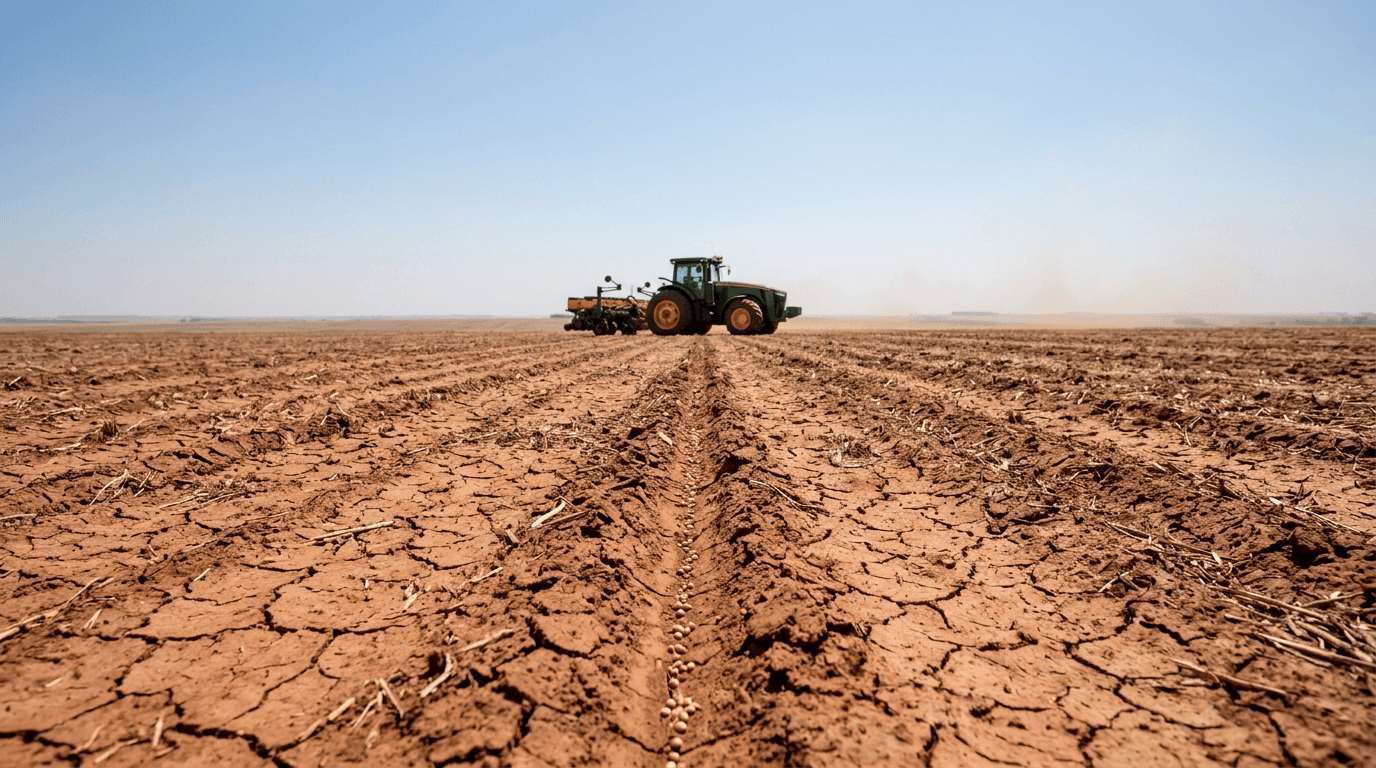
American retail investors tracking agricultural commodities or grocery store inflation are keeping a close eye on the Chicago Board of Trade. Early-season weather disruptions in South America are threatening to tighten global grain supplies. While U.S. consumer prices remain sensitive to supply chain shocks, the immediate catalyst for the next potential swing in food costs is developing thousands of miles away in the heart of South American farmland.
Brazil, the world's largest exporter of soybeans, is experiencing highly uneven weather as its critical planting window gets underway. In Sorriso, a municipality in the state of Mato Grosso known as the country's "Soybean Capital," fields are facing severe moisture deficits. According to regional meteorological data for the week ending October 13, 2026, Sorriso recorded five consecutive dry days and a meager 4.3 millimeters of rainfall. This localized dry spell is raising concerns about crop-stress risk during the vital germination phase.
The timing of this dryness is critical for the 2026/27 Brazil soybean planting season. While the southern state of Paraná has progressed rapidly due to abundant moisture, central-west states like Mato Grosso are struggling with inconsistent precipitation. Sowing in Mato Grosso reached 10.23% of the planned area by October 2, 2026, according to the Mato Grosso Institute of Agricultural Economics (Imea), trailing behind the pace of previous seasons. Local analysts warn that planting quickly into dry soil leaves newly sown seeds highly vulnerable to heat stress, which can ruin germination and force expensive replanting.
Diverging Forecasts Amid Political and Climate Risks
The National Supply Company (Conab), Brazil's state-run agricultural agency, released its first official survey for the 2026/27 cycle on October 15, 2026, projecting a record national soybean harvest of 181.6 million tonnes. However, private analytical firms remain cautious, with some dialing back expectations due to the slow start of the rainy season in the Center-West. This divergence highlights the high stakes for global supply, as any major yield reduction in Mato Grosso will directly impact global export volumes.
For foreign investors, these agricultural bottlenecks are amplified by the broader political and economic climate in Brazil. High domestic borrowing costs and elevated fertilizer prices have already pushed production costs to a decade high. Furthermore, as the country moves closer to its next major electoral cycle, political risk and fiscal debates continue to weigh on the Brazilian real, which traded at 5.082 per U.S. dollar on October 13, 2026. A weaker real typically incentivizes Brazilian farmers to export their crops aggressively to capture dollar-denominated revenue, but they cannot ship what does not grow.
If the dry spell in Sorriso and neighboring agricultural hubs persists, the resulting crop stress could force global grain buyers to rely more heavily on U.S. inventories. This would drive up Chicago soybean futures, which stood at 1,261.25 cents per bushel on October 13, 2026.
In your brokerage app
U.S. retail investors can monitor these agricultural dynamics through broad exchange-traded funds that track agricultural commodity indices or by following major global agribusiness firms listed in New York that manage international grain logistics and processing networks. These financial instruments are highly sensitive to global supply fluctuations, crop yield adjustments reported by foreign agricultural agencies, and currency swings that influence the export competitiveness of South American producers.