
Dry spell in Brazil's soybean belt raises crop-stress risks
Prolonged dry spells in Brazil's key soybean regions, including Mato Grosso and Bahia, threaten to delay planting and tighten global supplies.
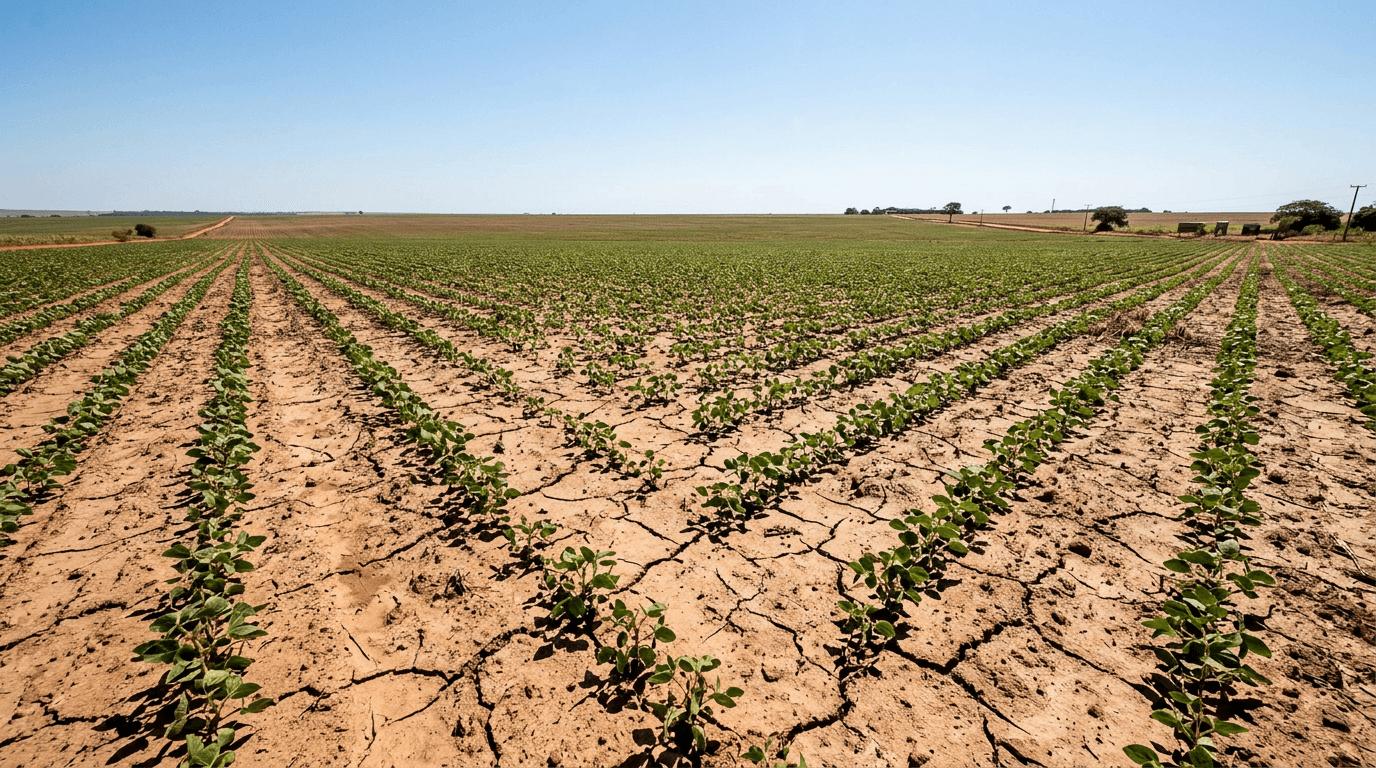
A persistent dry spell across Brazil’s primary soybean-producing regions is raising concerns over crop-stress risks and potential planting delays for the upcoming 2026/27 marketing year. As global agricultural markets closely monitor South American weather patterns, prolonged dry conditions in key agricultural hubs threaten to disrupt the early stages of the agricultural cycle, potentially tightening global supplies and driving up commodity prices.
According to the latest meteorological data, several critical soybean-producing municipalities are experiencing significant moisture deficits. In Sorriso, Mato Grosso, the country's top-producing state, there have been 7 consecutive dry days, with cumulative rainfall over the last week measuring a mere 0.1mm. Similarly, Rio Verde in Goiás and Luís Eduardo Magalhães in Bahia have both registered 7 dry days with absolutely no rainfall (0.0mm) over the past week. Meanwhile, Cascavel in Paraná recorded 5 dry days, though it received a more substantial 102.7mm of rainfall during the same seven-day period.
This regional dryness comes at a critical time as market participants prepare for the next South American planting window. While Brazil recently wrapped up a record 2025/26 soybean harvest—with government crop agency Conab pegging the final output at 180.57 million metric tons—analysts warn that a delayed start to the 2026/27 soy planting could have a domino effect, narrowing the ideal window for the subsequent second corn crop (safrinha).
The dry weather has also caught the attention of financial markets and commodity traders. In the futures market, the latest Commitment of Traders (COT) data shows non-commercial traders holding 215,618 long contracts versus 102,811 short contracts for soybeans. For corn, COT positions stand at 478,153 long and 377,173 short, while coffee contracts show 59,414 long and 33,791 short. As dry conditions persist, any adjustments to production forecasts by the USDA or Conab could trigger volatility in both soybean futures and the USD/BRL currency pair, which heavily influences Brazilian export competitiveness.