
Dry Weather Pauses Soybean Planting in Key Brazilian Regions as Water Stress Builds
Farmers in Brazil's top soybean states, notably Mato Grosso and Goiás, are seeing soil moisture diminish rapidly, forcing a halt to early planting operations due to extended dry spells.
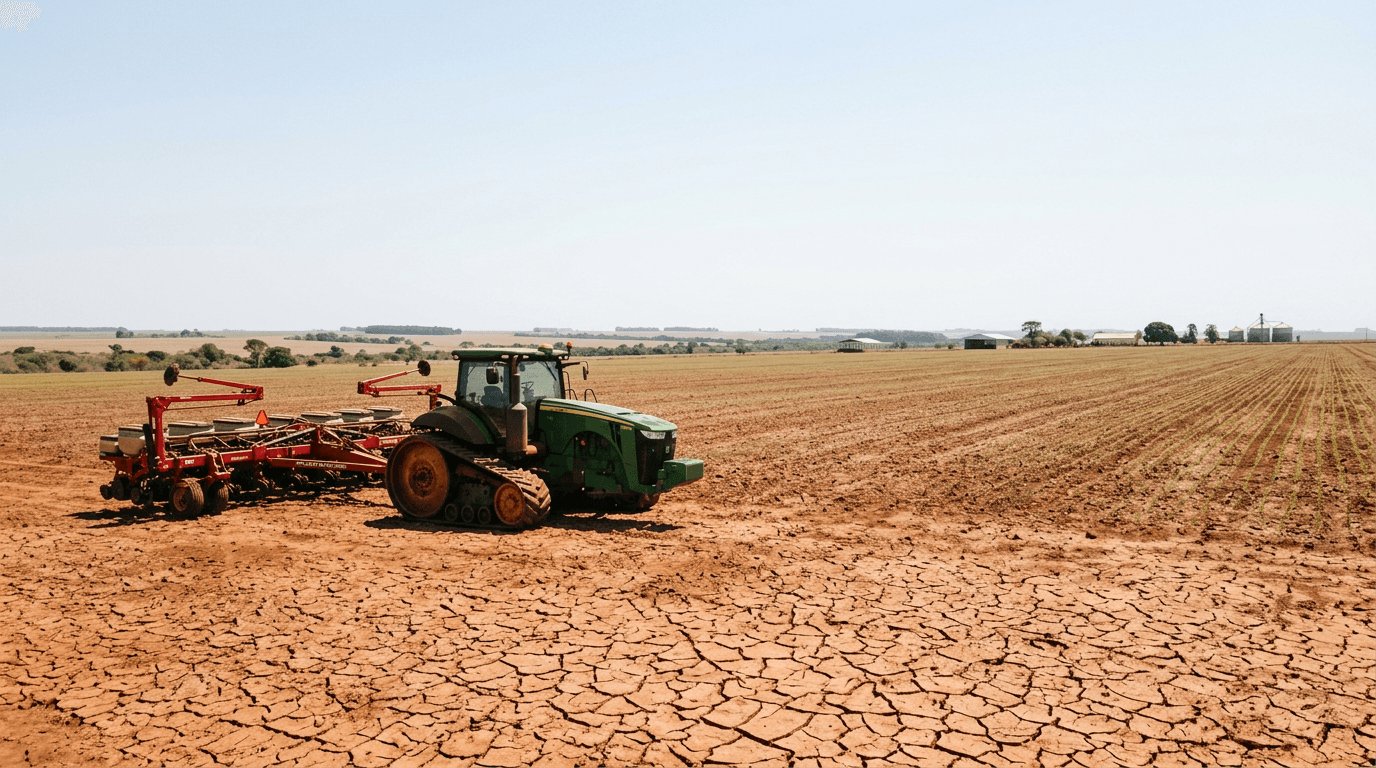
A critical dry spell is taking hold across Brazil's central soybean belt, halting early planting operations and raising the risk of crop stress in the world's largest soy producer. Farmers in key agricultural states are watching anxiously as the lack of rain threatens to delay the start of the 2026/27 crop season, a period when initial moisture is essential for strong germination.
The problem is most acute in Sorriso, in the top producing state of Mato Grosso, where the seven-day accumulated rainfall was a scant 1.5 millimeters, following six consecutive dry days. While soybean planting in Mato Grosso officially began on September 7 after the mandated “sanitary void” period ended, many producers are now pausing to avoid planting seeds into dry soil, a common risk that leads to uneven emergence and poor stand counts.
The same trend is visible in Goiás and the far northeastern frontier known as Matopiba. In Rio Verde, Goiás, the region has recorded only 4.0mm of rain over the last seven days and five dry days. Further east, Luís Eduardo Magalhães in Bahia, a crucial hub for the Matopiba region, has seen seven consecutive dry days with a negligible 0.6mm of rainfall in the last week. The region is already accustomed to tight moisture balances, and the current dry conditions are draining the soil's moisture reserves ahead of the typical October planting window, making the crops more vulnerable to stress later in the season.
The current situation represents a major concern because early, successful planting of soybeans is essential for maximizing the yield of the second, or safrinha, corn crop that follows. A late soybean harvest pushes back the optimal planting window for safrinha corn, which is highly exposed to dry weather if planted too late in the season. This mechanism links a delayed start for the current soybean crop to a potential loss of production for the subsequent corn crop.
Farmers are likely to resume planting aggressively once significant, stable rainfall returns to establish the wet season. However, any extended delay past early October could compress the planting timeline across the main growing areas, a development that historically introduces volatility into global agricultural markets. The Brazilian Real is trading at 5.169 per U.S. dollar, and the potential for a tighter supply could influence the global commodities complex.
What it touches
The risk of delayed planting in Brazil has immediate implications for the global supply of feed and edible oils. Soybean futures on the Chicago Board of Trade, which are trading at 1,298.75 cents per bushel, could see upward pressure if the weather models fail to show a return to substantial rain soon. The delayed start affects major global buyers, particularly China, which relies heavily on Brazil's massive soybean exports.
Latest articles
NASDAQ · PRO
Brazil Commits R$23 Billion to National AI Plan, Anchoring Supercomputer in Northeast for Tech Sovereignty
Published
Markets · PRO
Speculators Amass Massive Soybean Bet as Brazil’s Planting Season Begins
Published
Politics · PRO
Broad Coalition Warns Presidential Candidates Against Undermining Brazil’s Dual IVA Tax Reform
Published