
Dry Weather in Paraná and Bahia Threatens Early Brazil Soybean Planting
A dry spell in the key Brazilian soybean regions of Cascavel, Paraná, and Luís Eduardo Magalhães, Bahia, is risking recently planted seeds and delaying the start of the 2026/27 crop.
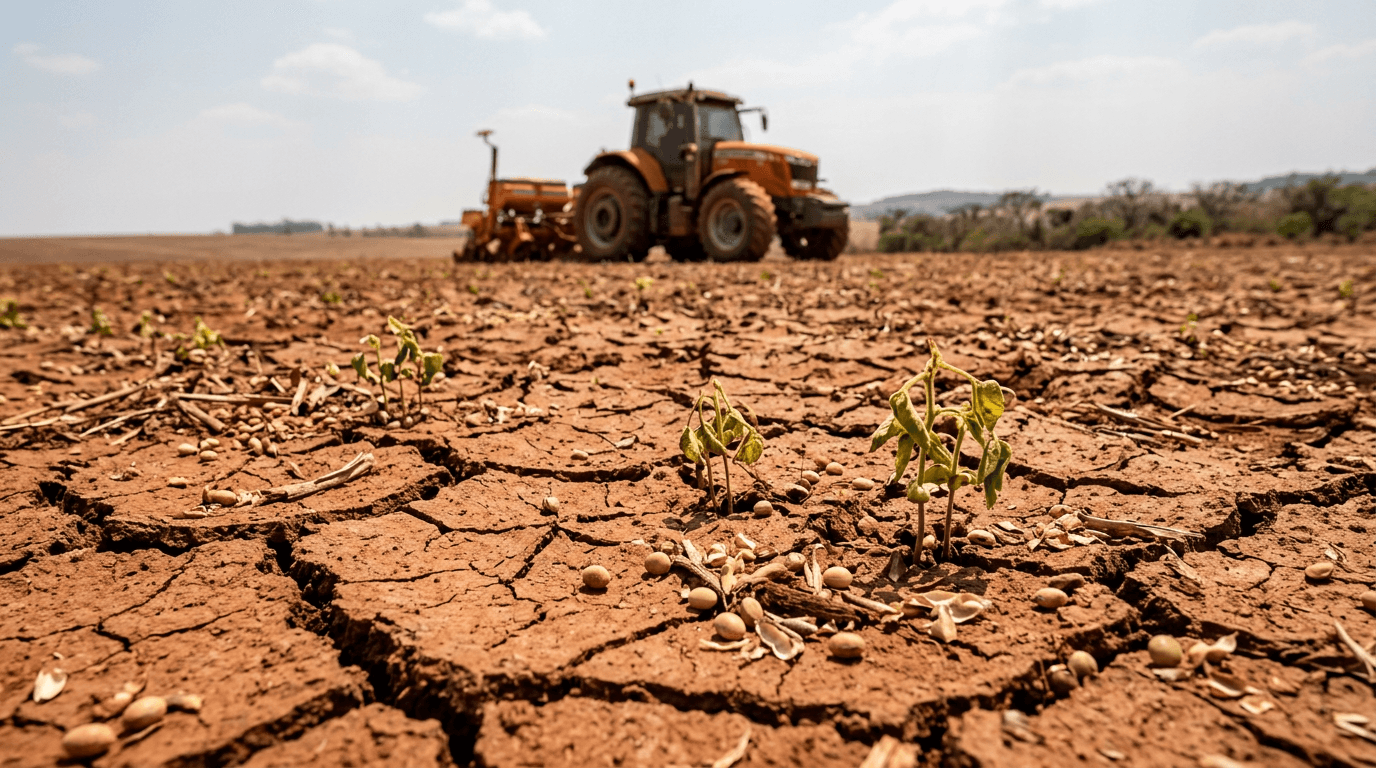
A dry spell is creating crop stress for the nascent 2026/27 Brazil soybean crop and is forcing major planting delays in two key production states, Paraná and Bahia. The conditions are particularly severe in the western part of the agricultural frontier, where the municipality of Luís Eduardo Magalhães, Bahia, has received only 0.5 millimeters of rain over the last seven days, coupled with seven consecutive dry days. Meanwhile, Cascavel in western Paraná, a region known for its early planting, has recorded only 46.1mm of rain over the past week, following five dry days, an amount insufficient to sustain new growth.
The dryness comes at a critical time for Brazil’s agricultural calendar. With the country just emerging from the government-mandated phytosanitary fallow period, the 2026/27 soybean planting season is barely underway; agribusiness consultancy AgRural reported that only 1.2% of the national area was planted as of last week.
The impact of the weather differs between the two major areas. In Cascavel, Paraná, the planting window opened earlier in the month, meaning farmers who planted early—testing the soil moisture—now face a high risk of poor seed germination and seedling failure. This western region of Paraná is a crucial source of early harvest volumes for the global market. In the northeastern state of Luís Eduardo Magalhães, Bahia, the challenge is primarily a planting deterrent, with farmers holding back until sufficient and sustained rainfall arrives to guarantee the costly seed and fertilizer investment. The local climate in Bahia is also being compounded by high temperatures, with forecasts showing daytime highs near 100°F (38°C) and little to no chance of rain in the coming days.
Brazil is the world's largest exporter of soybeans, and any widespread delay in the start of the season increases the overall risk of supply issues later in the year, especially if the planting window is compressed. Farmers are now closely watching long-range weather models for the arrival of stable, consistent rain fronts that would allow them to confidently proceed with planting their fields.
What it touches
The risk to early-season brazil soybean production has a direct, if moderate, influence on global commodity markets. Reduced confidence in a large, early harvest from Brazil’s top regions can support Chicago Board of Trade (CBOT) soybean futures, which were last trading at 1327.0 cents per bushel. The domestic Brazilian currency, the Real, is also exposed, with the USD/BRL rate moving to 5.1111, as weather uncertainty affects the outlook for a major source of the country’s foreign export revenue.