
Dry Spell Stalls Start of Brazil’s Massive Soybean Planting Season in Key States
Low rainfall in major production hubs like Mato Grosso and Bahia is forcing farmers to delay the start of the 2026/27 Brazil soybean crop planting cycle, raising initial supply concerns.
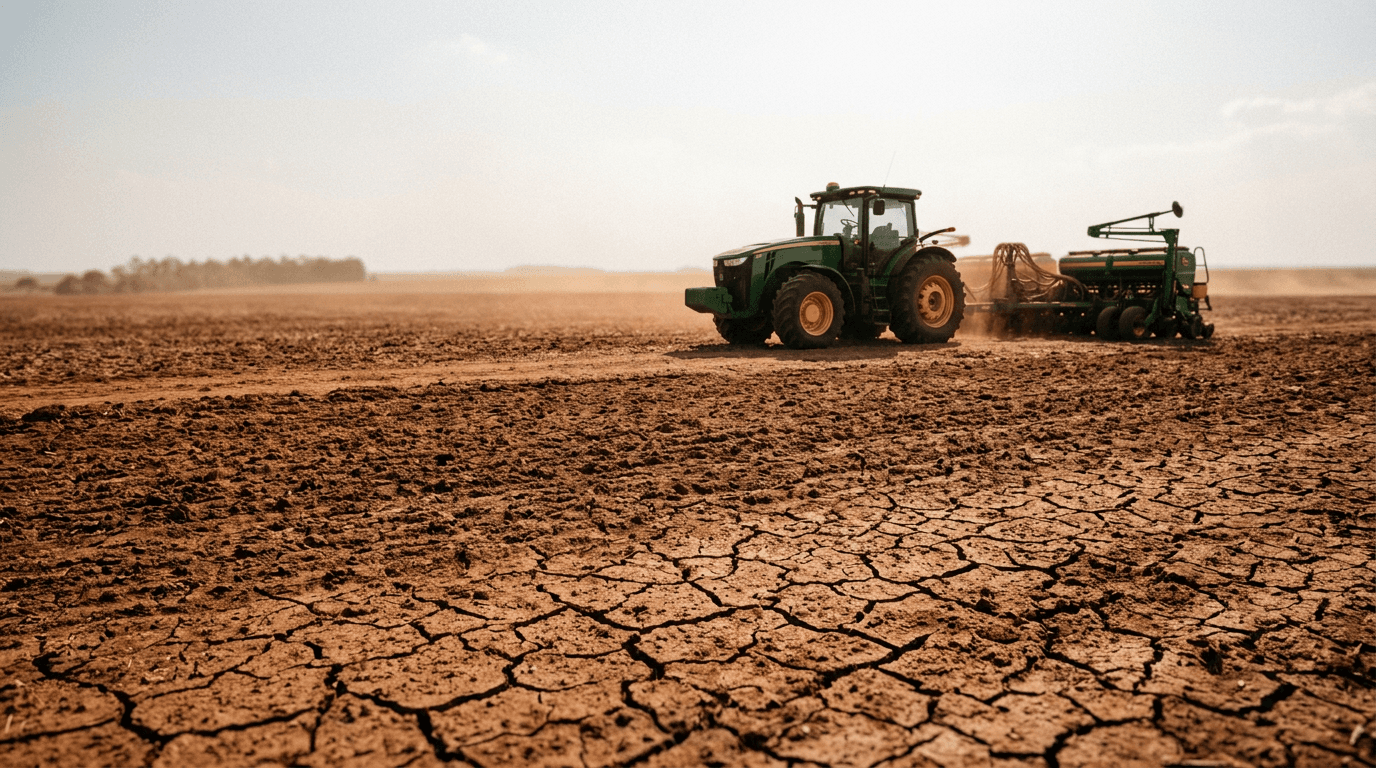
A dry spell is stalling the start of Brazil’s 2026/27 brazil soybean planting season in the country’s central and northeastern agricultural belt, forcing farmers to wait for sufficient moisture before committing seed to the soil. In the crucial farming hub of Sorriso, Mato Grosso—the world’s largest soybean-producing municipality—rainfall over the past seven days was just 2.5mm, following six dry days. The situation is equally critical in the Northeast’s agricultural frontier, where Luís Eduardo Magalhães in Bahia recorded only 1.9mm over the same period.
This water stress is occurring just as the planting calendar opens across Brazil’s main agricultural states, which recently lifted the mandated "sanitary void"—a minimum period when no live soybean plants are permitted to grow, designed to control the highly destructive Asian rust fungus. While national planting progress is typically slow in late September (estimated at 1.2% nationally as of September 21), a delay in the onset of the regular wet season is a major risk, as soybeans require adequate moisture for successful germination and early establishment.
The four major producing states of Mato Grosso, Bahia, Goiás, and Paraná are all showing signs of the prolonged dry spell. Besides Sorriso and Luís Eduardo Magalhães, Rio Verde in Goiás reported 14.3mm over seven days after five dry days, indicating significant moisture deficits. In the country’s South, Cascavel in Paraná saw a more favorable 23.6mm of rain, but the situation is most acute in the Center-West and Northeast, where the near-total lack of rain is preventing fields from reaching the minimum moisture level needed for full-scale planting.
A significant planting delay has consequences beyond the immediate brazil soybean crop yield. The timing of the soybean harvest directly dictates the planting window for the highly valuable safrinha—or second corn crop—which is planted immediately after the soybeans are cleared. Delays now compress that tight window, raising the risk of the safrinha crop facing dry or cold weather late in its cycle. Farmers and analysts are now closely watching weather forecasts for October, when the bulk of the planting is scheduled to occur, hoping for the widespread, soaking rains needed to allow field operations to begin.
What it touches
The uncertainty over Brazil's production outlook—the country is the world's largest soybean exporter—affects global agricultural markets. Potential supply tightness resulting from delayed planting and early crop stress provides a measure of support for soybean futures contracts traded in Chicago, which currently stand at 1314.5 cents per bushel.