
Dry Spell Hits Brazil's Key Soybean Belt, Raising Crop-Stress Alarms
A lack of rainfall and consecutive dry days in major producing hubs across Mato Grosso, Goiás, and Bahia is raising concerns about delayed soybean planting and potential early-season crop stress.
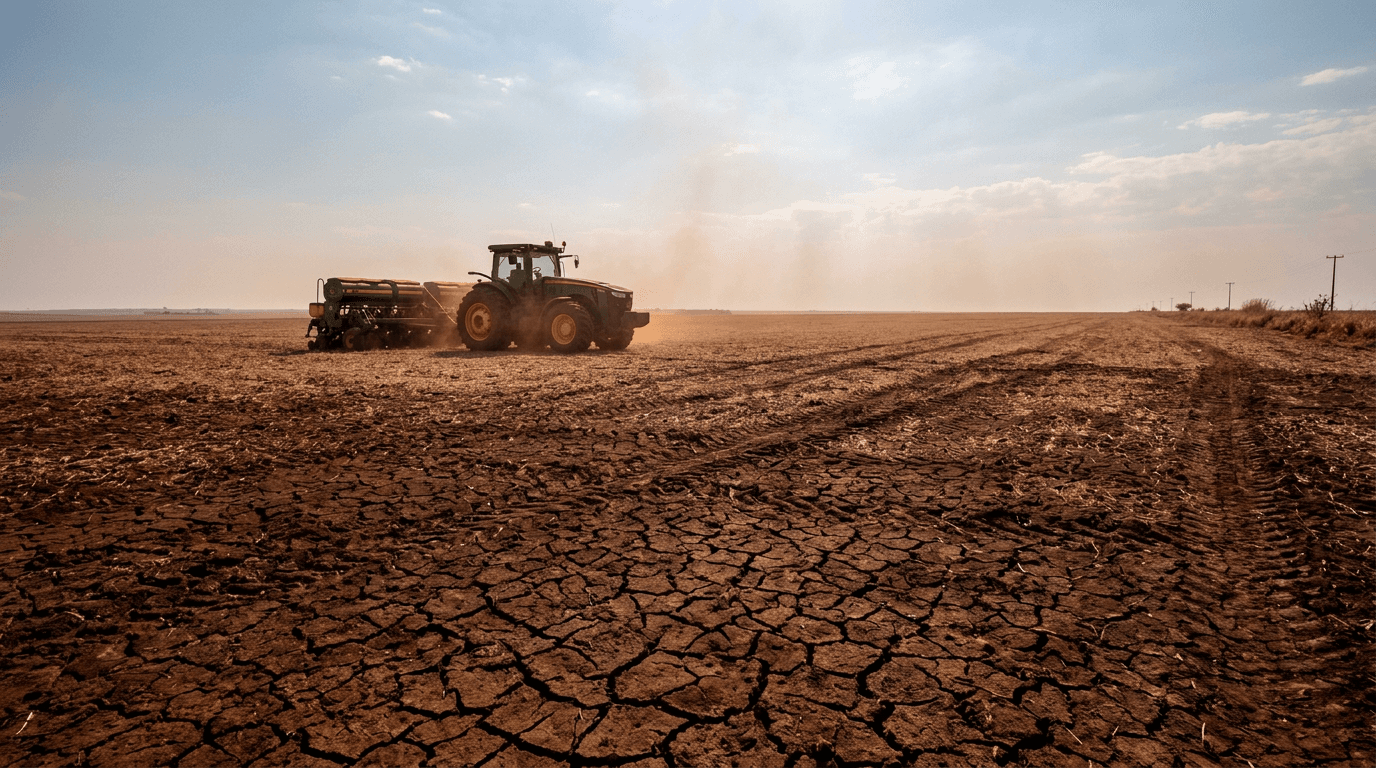
The start of Brazil’s 2026/27 soybean season is facing an immediate hurdle as a prolonged dry spell grips key producing regions, threatening to delay planting and cause early crop stress for the world’s largest exporter of the oilseed.
In the crucial agricultural frontier regions, rainfall over the last seven days has been negligible. Sorriso, the self-proclaimed "soybean capital" in Mato Grosso, recorded just 1.6 millimeters of rain and has endured six consecutive dry days. The situation is more severe in Luís Eduardo Magalhães, a major hub in the Matopiba region of Bahia, which has seen zero rainfall over the last week and seven consecutive dry days. Even the important central hub of Rio Verde in Goiás has logged five dry days, receiving only 14.3 millimeters of rain over the past week.
This lack of moisture is especially problematic as farmers in the Center-West and Northeast typically begin their planting operations in September and October. The primary mechanism of concern is that without adequate soil moisture, producers will be forced to postpone planting, or risk poor seed emergence and costly replanting. Meteorologists have previously warned that October and November could be unusually dry and hot in the central-northern states, which are responsible for the vast majority of Brazil's massive soybean output.
Sorriso, Mato Grosso, is situated in Brazil's top-producing state for soybeans, while Luís Eduardo Magalhães anchors the Matopiba region, a critical area of agricultural expansion spanning Maranhão, Tocantins, Piauí, and Bahia. Any delay or stress in these regions can have an outsized impact on the national harvest forecast. While early-season stress does not guarantee a crop failure, it sets a lower ceiling on the ultimate yield potential and adds pressure for favorable weather later in the growing cycle. Farmers are now anxiously awaiting a return to consistent rainfall before committing their seeds to the dry soil.
The immediate outlook suggests this dry pattern may persist in the central part of the country, meaning the planting window for the new crop will remain precarious. Producers are watching weather models closely, with the hope that significant moisture arrives soon to stabilize planting activity and prevent irreversible damage to the world's most critical soybean supply chain.
What it touches
The prospect of tightening supply from Brazil, the world’s largest soybean exporter, helped boost futures prices. Soybean contracts traded on the Chicago Board of Trade rose 0.19% to 1299.0 cents per bushel. The Brazilian real also reflected the overall market tension, weakening slightly against the U.S. dollar, with the USD/BRL rate climbing 0.63% to 5.0912.