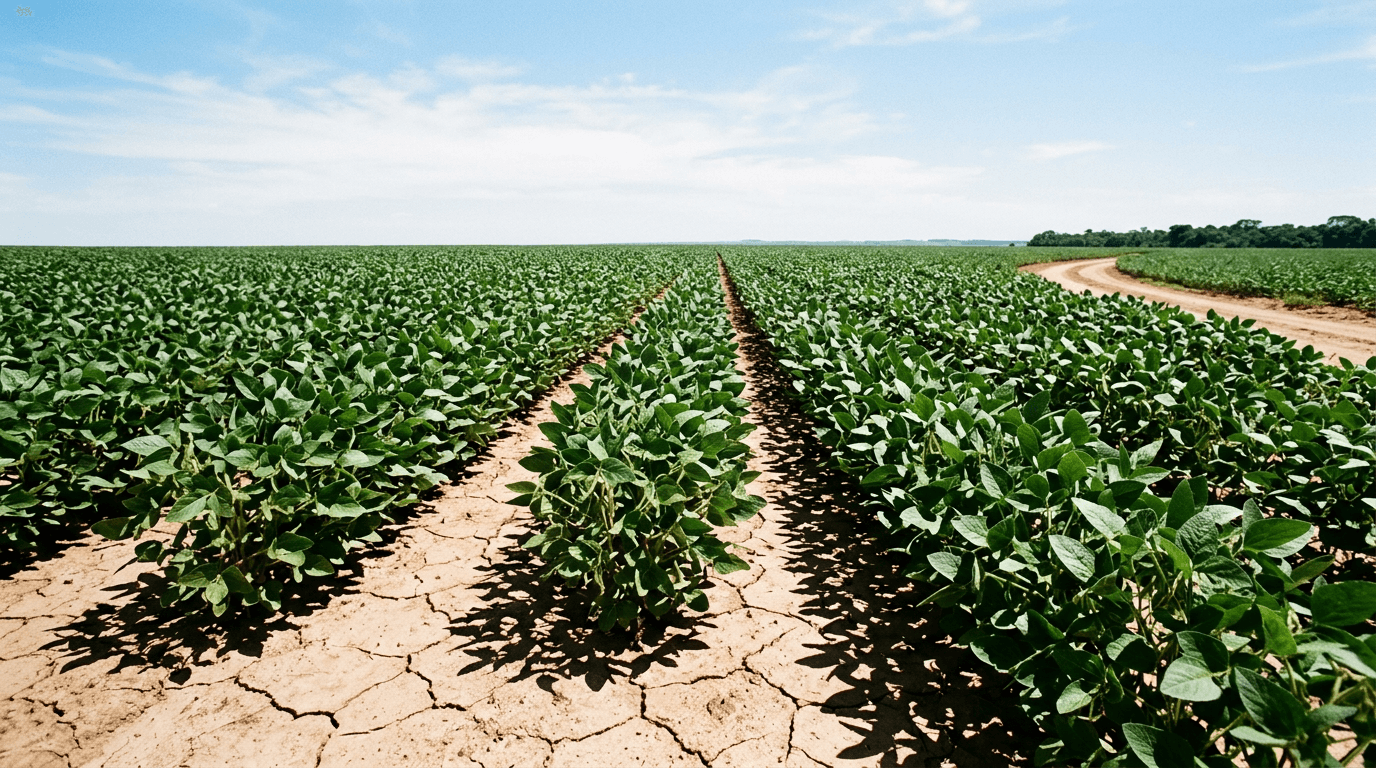
Rising grocery bills loom as dry weather hits Brazil's soybean belt
Dry weather in Brazil's critical MATOPIBA agricultural frontier threatens to delay soybean planting, potentially driving up global food commodity prices.
Global food commodity markets are flashing warning signs as dry weather threatens to drive up the cost of everyday consumer goods, from cooking oil to livestock feed. Soybean futures on the Chicago Board of Trade (CBOT) stood at 1,237.5 cents per bushel on October 28, 2026, as traders closely monitored weather patterns in South America. Because soybeans are a primary protein source for global poultry and pork production, any disruption in the fields quickly translates to higher prices at American supermarket checkout lanes.
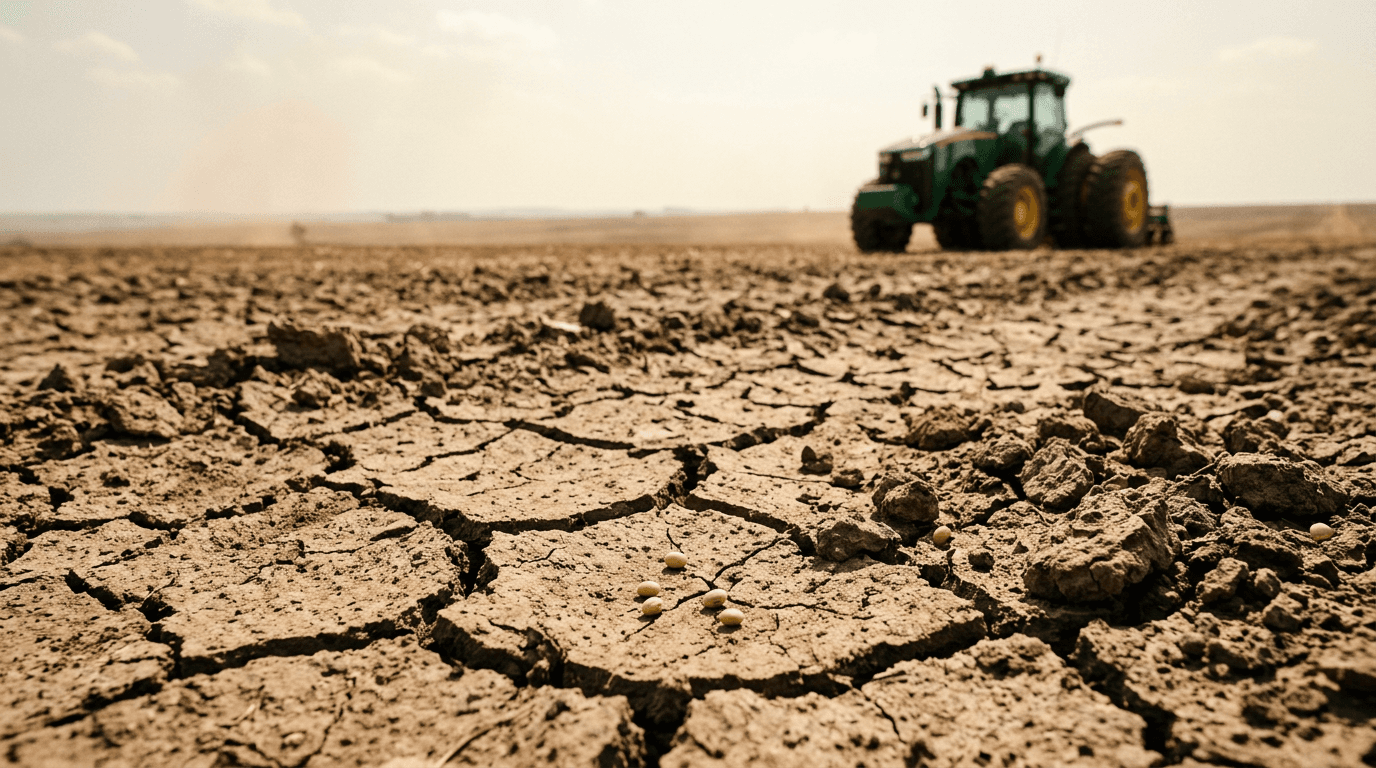
The immediate source of anxiety is the agricultural municipality of Luís Eduardo Magalhães, located in the western portion of Bahia state. According to regional monitoring data for the week ending October 28, 2026, the critical farming hub registered five dry days and a meager 6.3 millimeters of total rainfall over the seven-day period. This dry spell is stalling the start of the local planting window, leaving delicate seeds vulnerable to poor germination in parched soils.
Luís Eduardo Magalhães is the beating heart of MATOPIBA—an acronym for the fast-growing agricultural frontier encompassing the states of Maranhão, Tocantins, Piauí, and Bahia. Over the last decade, this region has transformed from an under-explored savanna into a high-intensity grain machine. Today, MATOPIBA accounts for approximately 14% to 19% of Brazil's national soybean output. A localized drought here carries massive implications for global trade, as Brazil is the world's largest exporter of the oilseed.
While neighboring regions have fared better—with Rio Verde in Goiás recording 96.3 millimeters of rain and Sorriso in Mato Grosso receiving 53.3 millimeters over the same seven-day period—the dryness in Bahia creates a bottleneck. If Bahia's farmers are forced to delay their primary soybean crop, it compresses the entire agricultural calendar. This delay threatens to push the subsequent "safrinha" (second-season) corn and cotton crops into a highly unfavorable dry window next year.
Speculative money is already positioned for volatility. According to the Commodity Futures Trading Commission (CFTC) Commitment of Traders report for the observation date of October 20, 2026, non-commercial institutional traders held 330,528 long contracts compared to 83,932 short contracts in CBOT soybeans. This heavy net-long positioning indicates that the financial markets are highly sensitive to any further crop-stress reports coming out of northeastern Brazil.