
Brazil Soybean Planting Slows as Two-Decade Land Boom Grinds to a Halt
High production costs and tight profit margins have brought Brazil's historic soybean acreage expansion to a standstill for the 2026/27 season.
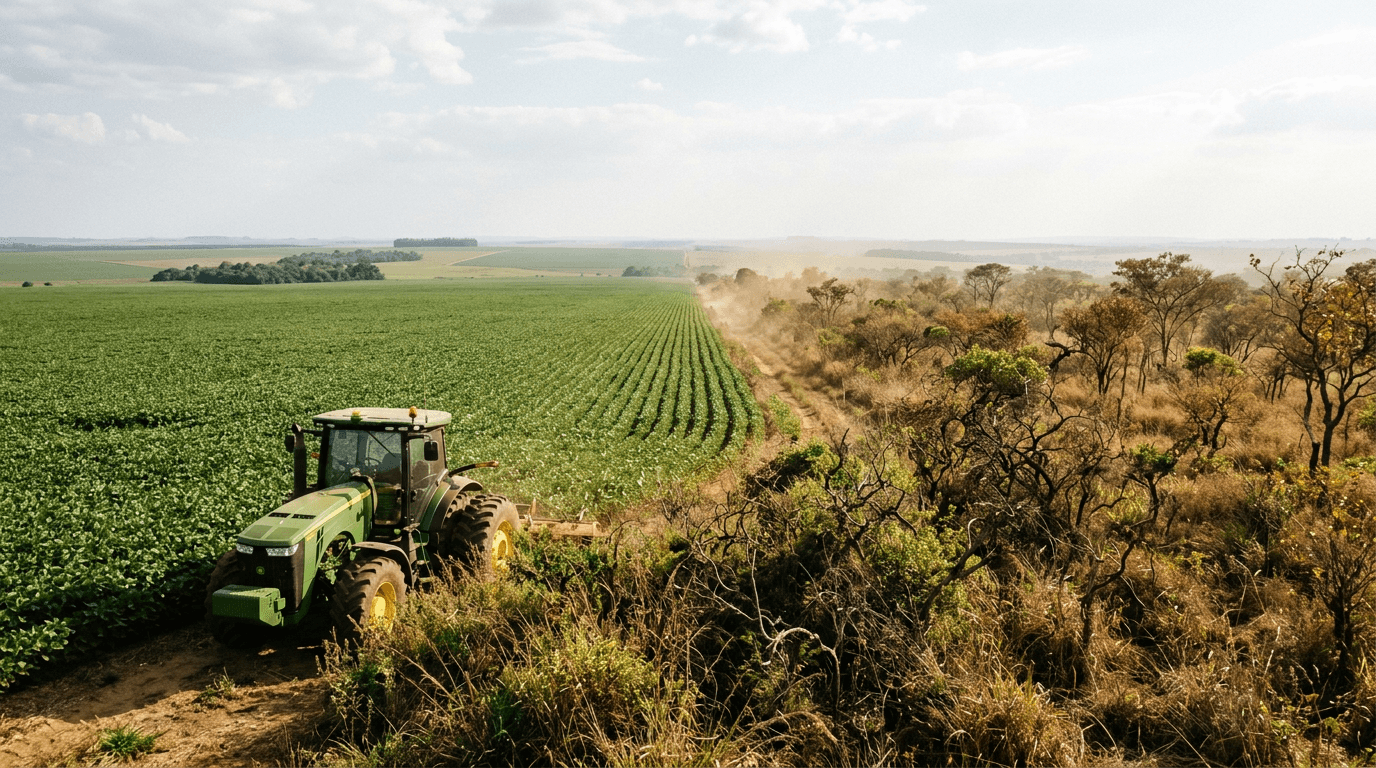
The rapid expansion of Brazil’s agricultural frontier is hitting a historic bottleneck. After more than two decades of continuous growth that transformed the country into the world’s undisputed agricultural powerhouse, Brazilian farmers are virtually halting the expansion of new land for the 2026/27 crop year. The sudden pause signals a fundamental shift in how the global food supply chain must meet future demand.
Data from national supply agency Conab and private consultancies like Agroconsult indicate that Brazil's soybean planted area for the 2026/27 season will hover around 49 million hectares. This represents a year-on-year expansion of less than 1%, marking the slowest rate of growth in twenty years. Between 2000 and 2026, Brazil’s soybean acreage expanded by an average of 4% to 5% annually, allowing the country to capture a dominant 60% share of global soybean exports.
The abrupt slowdown is driven by a combination of high domestic interest rates, elevated fertilizer costs, and severely compressed profit margins. According to Agroconsult, the country typically adds up to 1.5 million hectares of new planting area each year. However, with capital costs remaining high and global crop prices trading well below their pandemic-era peaks, farmers are shifting their strategy from buying and clearing new land to maximizing yields on their existing acreage.
Efficiency Over Expansion
This strategic pivot marks a turning point for the Cerrado, Brazil's vast tropical savanna, and the edges of the Amazon basin, where much of the land-clearing boom has occurred over the past 20 years. Instead of taking on heavy debt to convert pastures into cropland, producers are focusing on precision agriculture, soil health, and biological inputs to squeeze more bushels out of every hectare.
However, relying entirely on productivity gains exposes the global market to heightened weather risks. Without a buffer of newly planted fields, the total volume of the brazil soybean harvest will depend heavily on the climate. For the 2026/27 cycle, early planting progress has faced uneven rains and extreme heat in central states like Mato Grosso, while southern states like Paraná have dealt with excess moisture.
As the planting season progresses, international buyers are watching closely. While the U.S. Department of Agriculture (USDA) still projects a record Brazilian crop of 186 million metric tons based on trendline yields, local consultancies like Pátria AgroNegócios warn that tighter margins and climate volatility could drag the actual volume down to 173.7 million tons. For a world accustomed to an ever-expanding ocean of Brazilian beans, the era of easy supply growth has officially ended.
What it touches
The stagnation of Brazilian acreage directly affects the Teucrium Soybean Fund (SOYB), which tracks the benchmark Chicago Board of Trade soybean futures. With the world's largest exporter capping its land growth, global soybean prices are expected to become highly sensitive to any localized weather disruptions in South America, increasing volatility for agricultural exchange-traded funds and food processing companies.