
Brazil soybean planting faces dry spell in Bahia agricultural hub
A persistent dry spell in Luís Eduardo Magalhães, a key hub in Bahia, leaves soils parched as Brazil's critical soybean planting season gets underway.
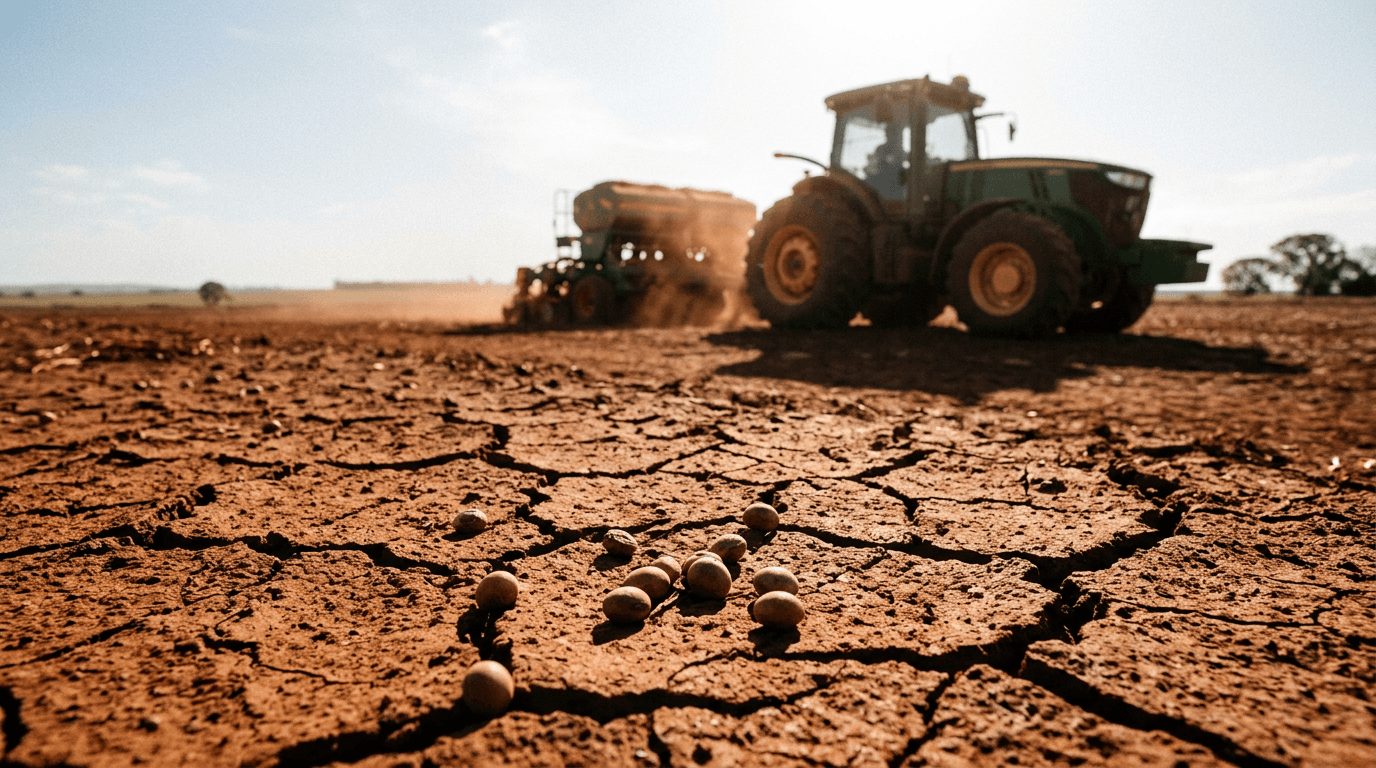
A persistent dry spell in the western plains of Bahia state is raising concerns for local farmers as Brazil's critical soybean planting season begins. In the key agricultural hub of Luís Eduardo Magalhães, weather stations recorded five consecutive dry days and a meager 6.9 millimeters of total rainfall over the seven-day period ending in early October. The lack of moisture is forcing growers in this eastern agricultural frontier to weigh the risks of sowing seeds in parched soils.
Luís Eduardo Magalhães is the economic engine of western Bahia, a region that has transformed over the past three decades from a barren savanna into one of the most productive agricultural zones in the country. The city sits in the heart of Matopiba—an acronym for the states of Maranhão, Tocantins, Piauí, and Bahia—which represents Brazil's newest and fastest-growing agricultural frontier. Unlike the traditional southern farming states, Matopiba relies heavily on timely seasonal rains, as only a small fraction of its vast fields are equipped with modern irrigation systems.
Agronomists warn that starting the brazil soybean planting process under these conditions, a practice locally known as "dry planting" or "dusting in," carries high risks. If seeds are sown into hot, dry soil and receive only light, scattered showers, they may absorb just enough moisture to swell but fail to fully germinate, causing the seed to rot. While other key soybean-producing regions like Cascavel in Paraná received a generous 142.8 millimeters of rain, the central-west and northern regions remain parched, leaving the overall progress of the Brazil soybean crop highly uneven.
According to data from private crop consultancy AgRural, Brazilian farmers had planted 7.3% of the expected soybean area by early October, lagging behind the 9% pace recorded at the same point last season. The slower pace reflects uneven weather rather than any pullback in farmer intent. Despite the sluggish start, Brazil's national supply agency, Conab, still projects a record 2026/27 soybean harvest of roughly 181.6 million tonnes, though realization of this target depends heavily on weather normalization through November.
What it touches
The uncertainty over Brazil's production outlook—as the world's largest soybean exporter—directly affects global agricultural markets. Potential supply tightness resulting from delayed planting and early crop stress in hubs like Bahia has kept Chicago Board of Trade soybean futures sensitive to South American weather runs, while also influencing the export-driven valuation of the Brazilian real (BRL) against the US dollar.