
Brazilian Electoral Court Postpones Key Deepfake Decision, Leaving AI Rules Uncertain for 2026 Election
Brazil’s Superior Electoral Court delayed a ruling on the legal limits of labeled AI content, a decision critical for the 2026 election.
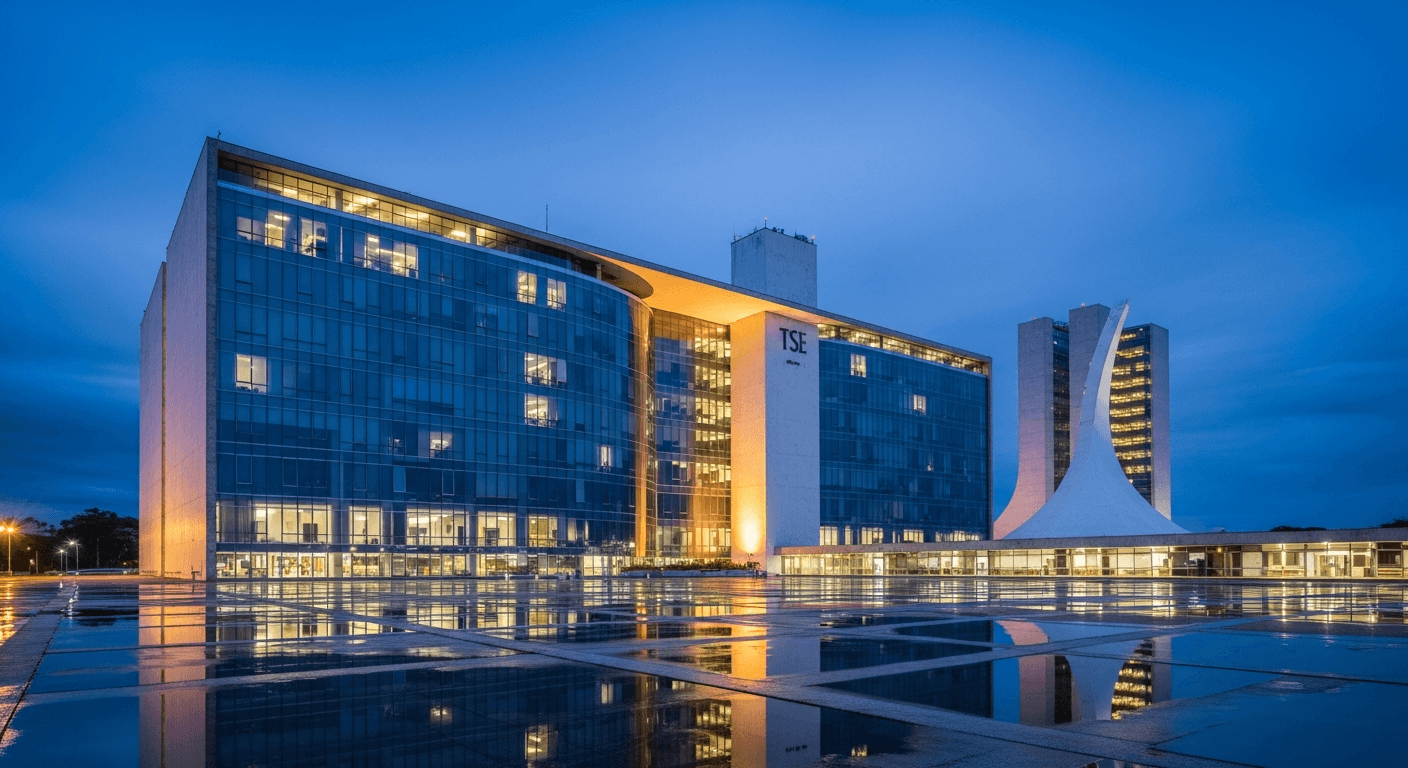
The Superior Electoral Court (TSE) of Brazil on Thursday postponed a crucial decision that would define the legal limits of artificial intelligence (AI) in the 2026 election, leaving a key regulatory question unanswered just as political campaigns begin to ramp up. The court, which is the nation’s top electoral body and has wide-ranging powers to enforce election rules, was debating a high-profile case involving an AI-generated video of former President Jair Bolsonaro when the decision on how to rule was pushed back due to a lack of consensus among the ministers,,. The delay means candidates and technology platforms will operate under an ambiguous interpretation of AI regulation as the election cycle accelerates.
The core debate stems from a video used by the Liberal Party (PL) at a recent convention, which featured a synthetic digital version of Bolsonaro—who is currently ineligible for public office—appearing to endorse his son, Flávio Bolsonaro, for president,. While the TSE already prohibits deepfakes used to harm or favor candidates and requires all AI-generated content used for electoral political propaganda to be clearly labeled, the Liberal Party argues its video should be legal because it was explicitly identified as synthetic, comparing the digital avatar to a political caricature,. The question before the TSE is whether an AI avatar of a high-profile, barred politician is considered a deepfake that misleads voters, even when labeled,.
Brazil’s proactive stance on regulating AI in politics is watched globally, setting a precedent for other democracies fighting digital disinformation. The court’s existing framework, arguably one of the most detailed in the world, already bans deceptive deepfakes, requires labeling, and even imposes strict liability on digital platforms for failing to remove content that violates the rules,. The postponed ruling on the Bolsonaro case will clarify the court’s definition of a deepfake and determine if the mere existence of a realistic AI surrogate—even a labeled one—of an ineligible candidate is an unacceptable threat to electoral integrity,.
The TSE is now expected to return to the debate on the legal limits of labeled synthetic content as early as the week of August 17, 2026. A final ruling is necessary to provide clarity for both campaigns and Big Tech companies, which have signed agreements with the TSE to combat misinformation. Until the court provides a definitive interpretation, the boundaries for using sophisticated generative AI tools in one of the world's most polarized political environments will remain contested.