
Brazil Charts Independent AI Course with Tax Breaks as US, China Launch Bilateral Dialogue
Brazilian President Lula calls for global AI rules at UN, contrasting with the new US-China AI channel, while Brazil offers major tax breaks for data centers.
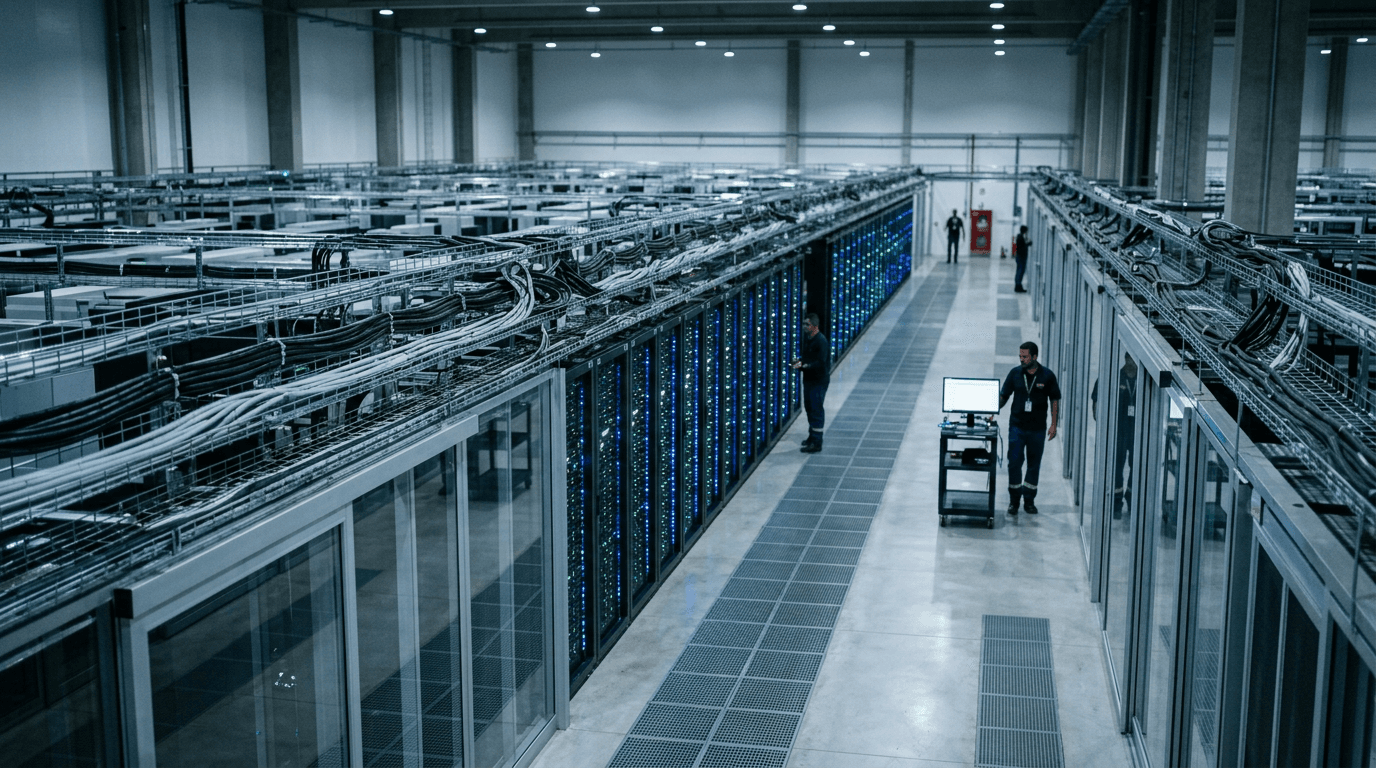
Days after Brazilian President Luiz Inácio Lula da Silva used the global stage of the UN General Assembly to demand international rules for Artificial Intelligence, Washington and Beijing moved to establish a bilateral communication channel between the world’s two largest technological powers. The contrast highlights Brazil's two-pronged strategy: advocating for multilateral AI regulation while simultaneously launching a significant domestic policy designed to attract the data centers needed to compete in the coming AI economy.
The United States and China confirmed on September 24 that they had conducted their first high-level talks on AI in New York, agreeing to continue a recurring "US-China AI dialogue" focused on national security and discussing a proposed incident-notification mechanism. This security-focused, bilateral approach between the two AI superpowers was underscored by the presence of numerous American tech chiefs—including the CEOs of Nvidia and OpenAI—at the state dinner in Washington, D.C., later that week. Meanwhile, on September 22, Lula opened the UN General Assembly by stating it would be “an unforgivable historical omission” not to regulate Big Tech and AI, sharply criticizing what he called “a handful of techno-oligarchs” for promoting a race with no ethical boundaries and bypassing the UN.
Brazil's call for global accountability is now backed by a major domestic play to make the country a crucial hub for the digital infrastructure powering AI. On September 15, President Lula signed Law No. 15.504/2026, which establishes the Special Tax Regime for Data Center Services, known as Redata. The new regime grants a suspension of federal taxes—including the Import Tax, PIS/Cofins, and IPI (Excise Tax)—for up to five years on the purchase and import of Information and Communication Technology (ICT) equipment intended to be used as fixed assets in new or expanded data centers.
The law explicitly defines eligible projects as including those for cloud computing, high-performance computing, and, crucially, the training and inference of artificial intelligence models. The government estimates the tax waivers will total R$5.2 billion in foregone revenue in 2026 alone, signaling the scale of the investment Brazil is prepared to make. To benefit from Redata, data center operators must meet several requirements, including allocating at least 10% of their new capacity to serve the domestic market and adhering to new environmental commitments, such as using 100% renewable or low-emission electricity and meeting water-use efficiency standards.
By combining its diplomatic push for global, multilateral AI rules with a substantial tax incentive regime to build domestic infrastructure, Brazil is positioning itself against the bilateral approach taken by the US and China. The new Redata regime suggests Brazil's strategy is to avoid being a mere consumer of foreign-developed AI, instead betting that it can become a significant player in the creation and inference of AI models for the Latin American market, while challenging the lack of global oversight at the UN General Assembly.
Raj Patel covers technology in Brazil for BRZ News.
Latest articles
Markets · PRO
Close Brazil Presidential Polls Intensify Fiscal Risk Debate Ahead of October Vote
Published
Politics
Lula Urges Overhaul of UN Security Council, Challenges Global Order in UN Speech
Published
Small Caps
Brazil’s Small Cap Index Trades at Steep Discount as High Interest Rates Choke Growth
Published