
Lula Urges Overhaul of UN Security Council, Challenges Global Order in UN Speech
Brazilian President Lula used his UN General Assembly opening address to call for immediate reform of the Security Council and champion multilateralism.
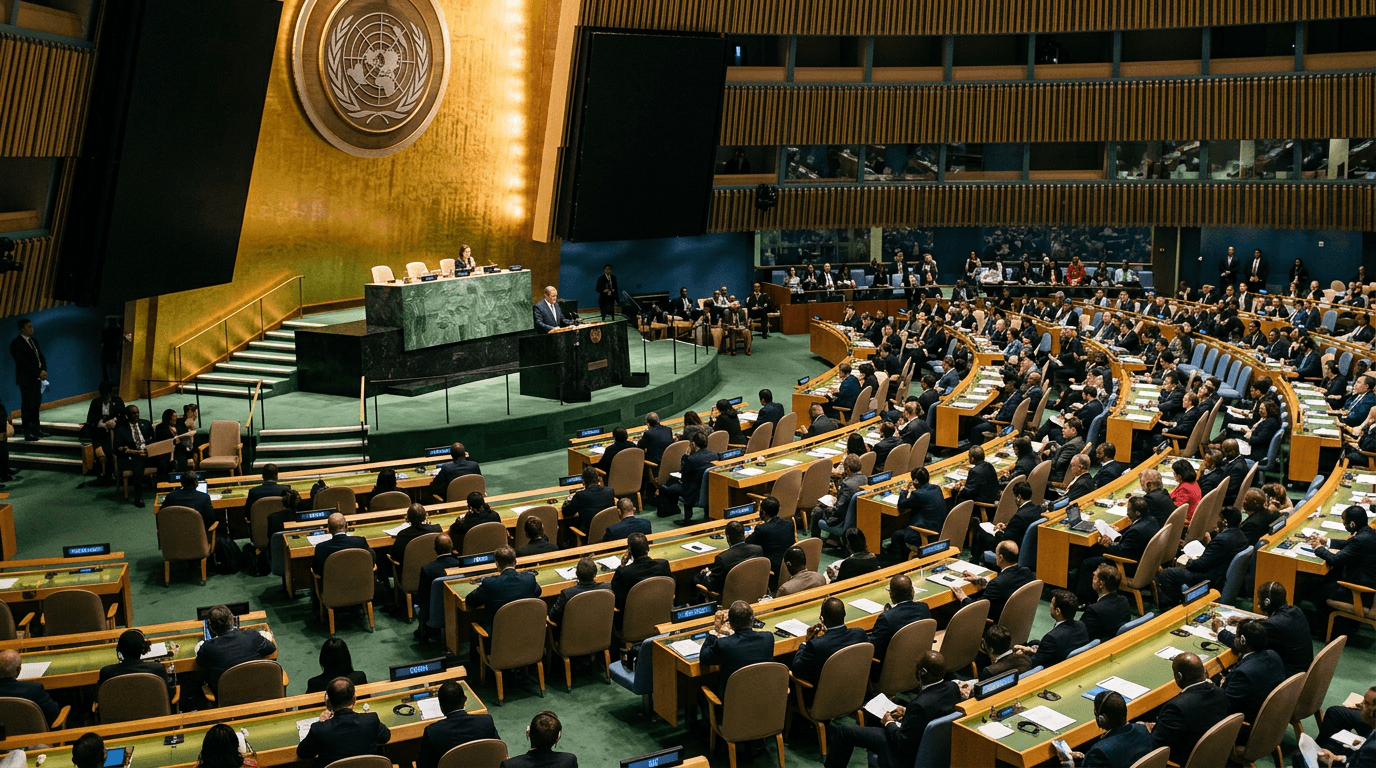
Brazilian President Luiz Inácio Lula da Silva opened the high-level debate of the United Nations General Assembly (UNGA) on Tuesday, delivering an urgent call for the expansion and reform of the UN Security Council (UNSC), arguing its current structure is failing to maintain global peace and security. Speaking from the UN podium in New York, the Brazilian leader framed the world's current geopolitical challenges as a choice between "multilateralism or unilateralism, democracy or extremism, sovereignty or subordination," positioning Brazil as a central voice for a more multipolar world order.
Brazil traditionally speaks first at the UNGA, a custom that provides the nation a unique platform to set the tone for the annual session. Lula used that spotlight to attack the institution's core power structure. He criticized the veto power held by the five permanent members—the US, UK, France, Russia, and China—calling it an "original sin" that has allowed for the "privilege of insensitivity". His call for reform is a long-standing Brazilian foreign policy goal, one it pursues alongside Germany, India, and Japan, known as the G4, which collectively seek permanent seats on the council. Lula argued the current exclusion of Latin America and Africa from permanent membership is an "unacceptable echo of domination from the colonial past".
The President pointed to the recent escalation of geopolitical disputes, stating that the UN's credibility has "never been lower" and that the world is being held hostage by the Security Council’s inaction. He advocated strongly for negotiated solutions to conflicts, repeatedly emphasizing the need for dialogue and an absolute respect for state sovereignty and non-interference in internal affairs. This stance aligns with Brazil’s diplomatic position of non-alignment and its push against perceived interventionism from great powers, which implicitly contrasts with aspects of the current foreign policy of the United States and its Western allies.
By demanding an end to the "immobility" of the Security Council, Lula firmly placed Brazil as a leading advocate for the Global South, emphasizing cooperation with Africa and Latin America in particular. His address marked a clear return to a foreign policy aimed at securing Brazil's place as a global leader—one that acts independently from traditional blocs. The push for UNSC reform will continue through the G4 coalition, but achieving consensus remains difficult, as any change to the Council’s structure requires an amendment to the UN Charter, a process that can be blocked by any of the five current permanent members.
Related coverage
Politics · PRO
Lula Proposes Up to Six Years in Prison for Online Betting Operators in Brazil
Published
Politics · PRO
Brazil Formally Challenges US Tariffs Up to 37.5% at WTO, Citing Discrimination
Published
Politics
Brazil Finance Minister Durigan Defends Fiscal Framework Days Before Pivotal Election
Published