
Azul Slows Recovery Pace as High Fuel Costs Squeeze Margins
Brazilian airline Azul S.A. faces a delayed financial recovery timeline due to high jet fuel costs, despite successfully completing its Chapter 11 restructuring.
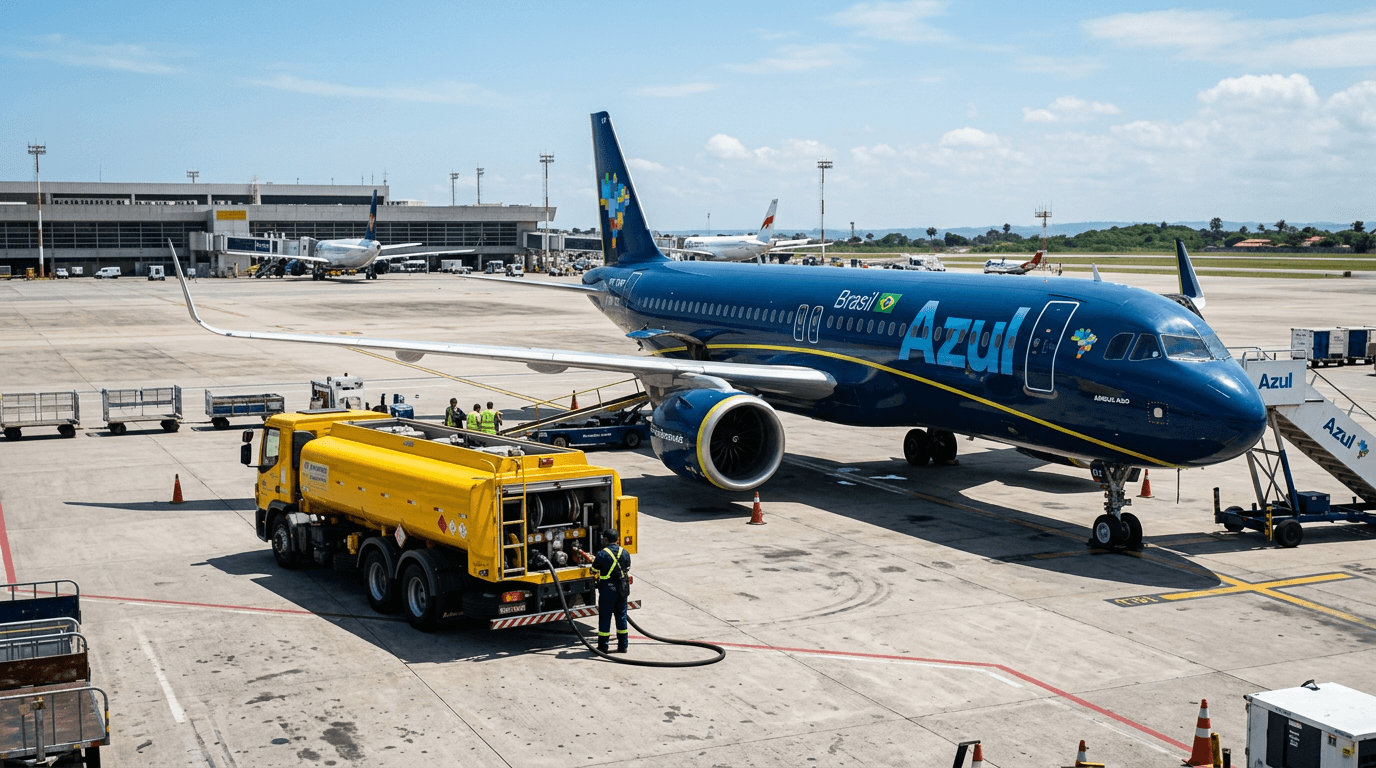
U.S. retail investors holding shares of international carriers are facing a longer wait for margin recovery as persistent jet fuel costs squeeze global aviation. The pressure is particularly acute for post-restructuring plays, where high energy prices are forcing airlines to delay their growth plans.
In Brazil, the country's largest airline by cities served, Azul S.A., has officially pushed back its financial recovery timeline ksl.com. On October 20, 2026, Azul’s Chief Financial Officer Antonio Carlos Garcia stated on the sidelines of an industry conference that the airline's full recovery has been delayed by at least a year due to high jet fuel costs ksl.com. To manage these persistent price pressures, Azul has secured up to R$2 billion (approximately $350 million) in three-year fuel financing investing.com. The credit line is backed by the Brazilian government's Export Guarantee Fund (FGE) and managed by the Brazilian Agency for Guarantees and Fund Management (ABGF) investing.com.
This government-backed credit line is designed to provide crucial breathing room for domestic operations ionanalytics.com. The ABGF acts as a guarantor, covering credit risk to help the airline purchase fuel under more favorable terms. This facility runs alongside a separate R$2.66 billion, five-year loan agreement that Azul signed with Brazil's state development bank, BNDES, under the National Civil Aviation Fund (FNAC) program investing.com. Azul drew the first R$1.3 billion tranche of that BNDES loan on September 29, 2026, using a portion to prepay higher-cost debt stocktitan.net.
The fresh liquidity is a vital runway extension for an airline that recently underwent a massive financial overhaul. Azul officially emerged from Chapter 11 bankruptcy protection on February 20, 2026, after successfully executing a court-approved plan that reduced its total debt and lease obligations by approximately $2.5 billion whitecase.com. The restructuring was supported by major aircraft lessors and strategic partners, including United Airlines and American Airlines, which committed equity investments to support the reorganized business whitecase.com.
Despite the cleaner balance sheet, the airline is taking a highly conservative approach to capacity. Azul expects to finish 2026 with flight capacity about 5% below 2025 levels, focusing on stabilizing its network rather than aggressive expansion ksl.com. While the airline has successfully passed on roughly 60% to 65% of its fuel cost increases to passengers through higher fares, executives recognize that further fare hikes could dampen travel demand ksl.com.
In your brokerage app
Azul S.A. is listed in New York as an American Depositary Receipt (ADR) under the ticker AZUL. While the newly secured government-backed financing helps stabilize the airline's immediate liquidity, the delayed recovery timeline highlights the ongoing operational risks that high fuel costs pose to the carrier's bottom line.