
Shorter Brazil Workweek Forces US-Listed Retailers to Adapt
Brazil has officially banned six-day workweeks, mandating a transition to a 40-hour limit with no salary cuts that will raise labor costs for retail and service operators.
American retail investors holding shares of major e-commerce, payment, or retail companies operating in Latin America must prepare for a structural shift in labor costs. On October 16, 2026, the Brazilian National Congress officially promulgated Constitutional Amendment No. 141/2026, putting an end to the country's traditional six-days-on, one-day-off work schedule, locally known as the "6x1" shift. The landmark reform mandates a transition to a five-day workweek with two paid days off, while strictly prohibiting any reductions in employee salaries.
The sweeping labor reform, which originated as a legislative proposal to amend Article 7 of Brazil's Federal Constitution, will directly impact an estimated 30 million workers. According to the legislative text, the transition will occur in phases to give employers time to adjust. Starting December 17, 2026—exactly 60 days after the amendment's publication—the maximum weekly working limit will drop from 44 hours to 42 hours, and workers will immediately become entitled to a second weekly paid day off. One year after that initial drop, the standard workweek will reach its final mandatory limit of 40 hours.
The political momentum behind the amendment accelerated rapidly in the weeks leading up to its promulgation. Leftist President Luiz Inácio Lula da Silva championed the reform as a core pillar of his platform. Facing a highly competitive presidential runoff scheduled for October 25, 2026, against conservative Senator Flávio Bolsonaro, Lula's administration successfully pushed the bill through the legislature. In a dramatic political pivot, Senator Bolsonaro reversed his long-standing opposition to the bill just days before the final vote, acknowledging that the vast majority of working-class Brazilians demanded the end of the 6x1 schedule. The Senate ultimately approved the amendment by a lopsided 75-to-1 margin on October 14, 2026, leaving only former Vice President Hamilton Mourão voting in opposition.
Rising Overhead in Retail and Logistics
While celebrated by labor unions as a historic victory for worker dignity, the reform introduces immediate operational hurdles for businesses. The National Confederation of Commerce of Goods, Services and Tourism (CNC) had actively lobbied against a rigid, constitutionally mandated 40-hour limit, warning that it would inflate overhead and force service-sector employers to restructure shifts or hire additional staff to maintain continuous weekend coverage. Because the amendment invalidates any existing collective bargaining agreements that conflict with the new rest-day rules, companies cannot negotiate their way out of the 5x2 schedule.
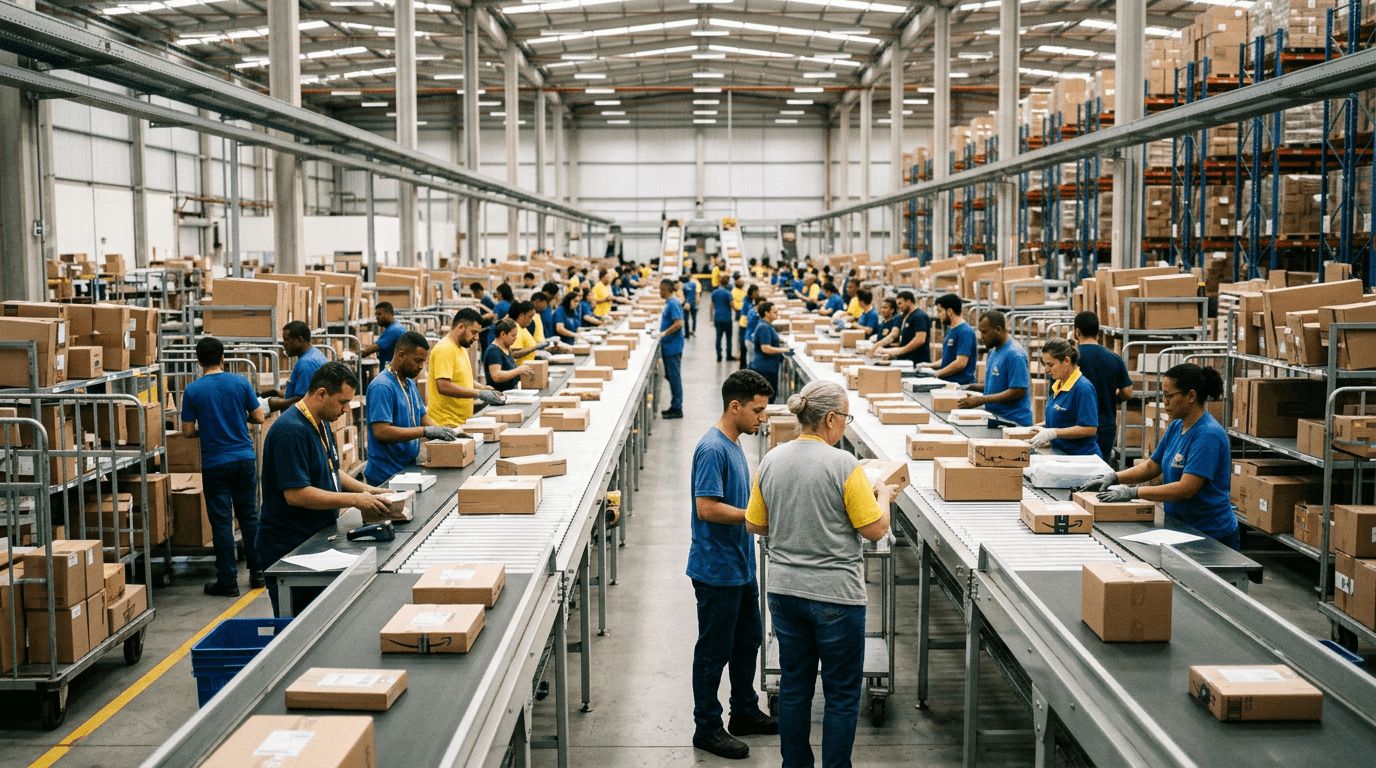
For global investors, the primary concern lies in how high-volume, labor-intensive operators will absorb these costs. E-commerce logistics networks, customer service hubs, and brick-and-mortar retail chains in Brazil have historically relied on the 6x1 schedule to keep fulfillment centers and storefronts running through the weekend. Companies will now have to choose between paying overtime rates for weekend coverage or expanding their payrolls to cover the newly mandated second rest day.
In your brokerage app
If you hold shares of Latin American e-commerce giant Mercado Libre, which is listed in New York and operates massive logistics networks across Brazil, or Brazilian payment processors StoneCo and PagSeguro, also listed in New York, their operational margins may face near-term pressure as these service-heavy businesses adapt to the new labor schedule. Similarly, retail-focused exchange-traded funds, such as the iShares MSCI Brazil ETF, which holds broad exposure to Brazilian consumer discretionary and financial equities, will reflect how the broader corporate sector navigates this mandatory transition.