
Emerging Market Funds See ESG Risk Ease as Amazon Clearing Plummets
Brazil's Amazon deforestation fell 41.8% to a historic low, reducing regulatory and reputational risks for global retail investors holding broad emerging market index funds.
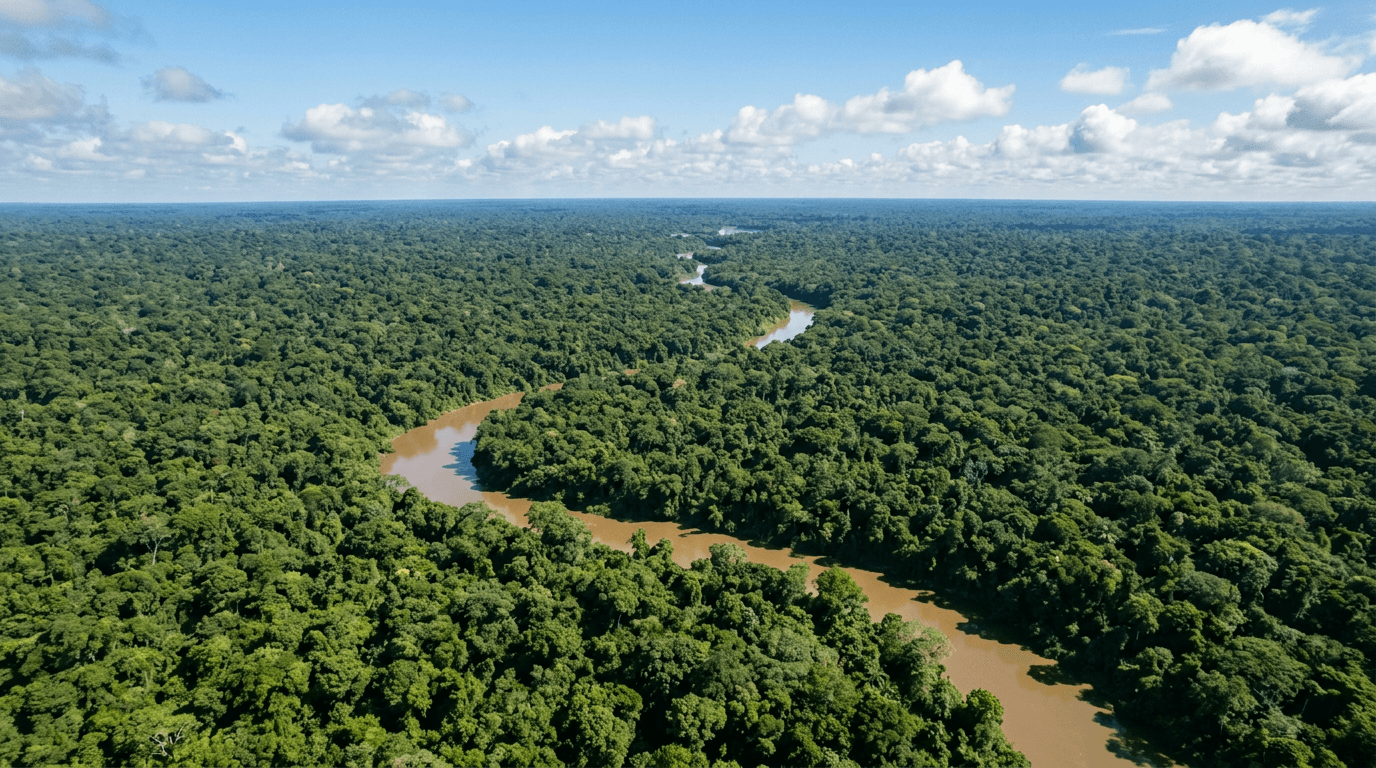
Global retail investors holding broad emerging market index funds in their retirement or brokerage accounts are quietly seeing a major source of environmental, social, and governance (ESG) risk decrease. For years, international asset managers face intense pressure over the environmental footprint of the countries and large corporations they back. Now, a dramatic shift in South America is altering the risk equation for these passive portfolios.
On October 16, 2026, the Brazilian government announced that annual deforestation in the Amazon rainforest fell by 41.8% over the past year to 3,335 square kilometers. According to official satellite data compiled by Brazil’s National Institute for Space Research (INPE), this represents the lowest level of forest clearing since satellite monitoring began in 1988. The neighboring Cerrado savanna biome, a major hub for global soy and beef production, also registered its lowest annual deforestation since 2001, falling to 5,516 square kilometers.
This environmental turnaround is a direct consequence of shifting political priorities in Brazil. Under the administration of President Luiz Inácio Lula da Silva, who took office in January 2023, the government revived the Action Plan for the Prevention and Control of Deforestation in the Legal Amazon (PPCDAm). The plan, which had been shelved under former President Jair Bolsonaro, restored funding to environmental agencies and authorized satellite-driven enforcement on the ground. Under this policy framework, Amazon deforestation has fallen 71.2% since 2022.
For global investors, these figures carry direct regulatory weight. The European Union and various U.S. states have tightened supply-chain laws, threatening to penalize companies and financial institutions linked to illegal deforestation. By curbing forest loss to historical lows, Brazil is lowering the compliance and reputational risks for the multinational agricultural, mining, and banking giants that dominate Latin American equities.
However, the long-term outlook remains tied to political volatility. Brazil is currently in the midst of a highly polarized presidential election cycle, with a run-off scheduled for October 25, 2026, between the incumbent Lula and challenger Flávio Bolsonaro. Conservation groups warn that a change in leadership could lead to a rollback of environmental enforcement, potentially reversing these gains and reviving ESG concerns for international capital.
In your brokerage app
If you hold broad emerging market index funds such as the iShares Core MSCI Emerging Markets ETF (IEMG) or the Vanguard FTSE Emerging Markets ETF (VWO), Brazil represents a significant portion of your portfolio's Latin American exposure. A reduction in systemic ESG risks helps stabilize the regulatory outlook for major Brazilian holdings within these funds, including financial giant Itaú Unibanco and exchange operator B3, both of which are listed in New York and heavily weighted in regional indices.