
Public Clash Between Top Justices Deepens Brazil Constitutional Crisis, Elevating Political Risk
A public dispute between Supreme Court Justices Alexandre de Moraes and André Mendonça over a banking probe has intensified an institutional crisis, fueling political uncertainty ahead of the October elections.
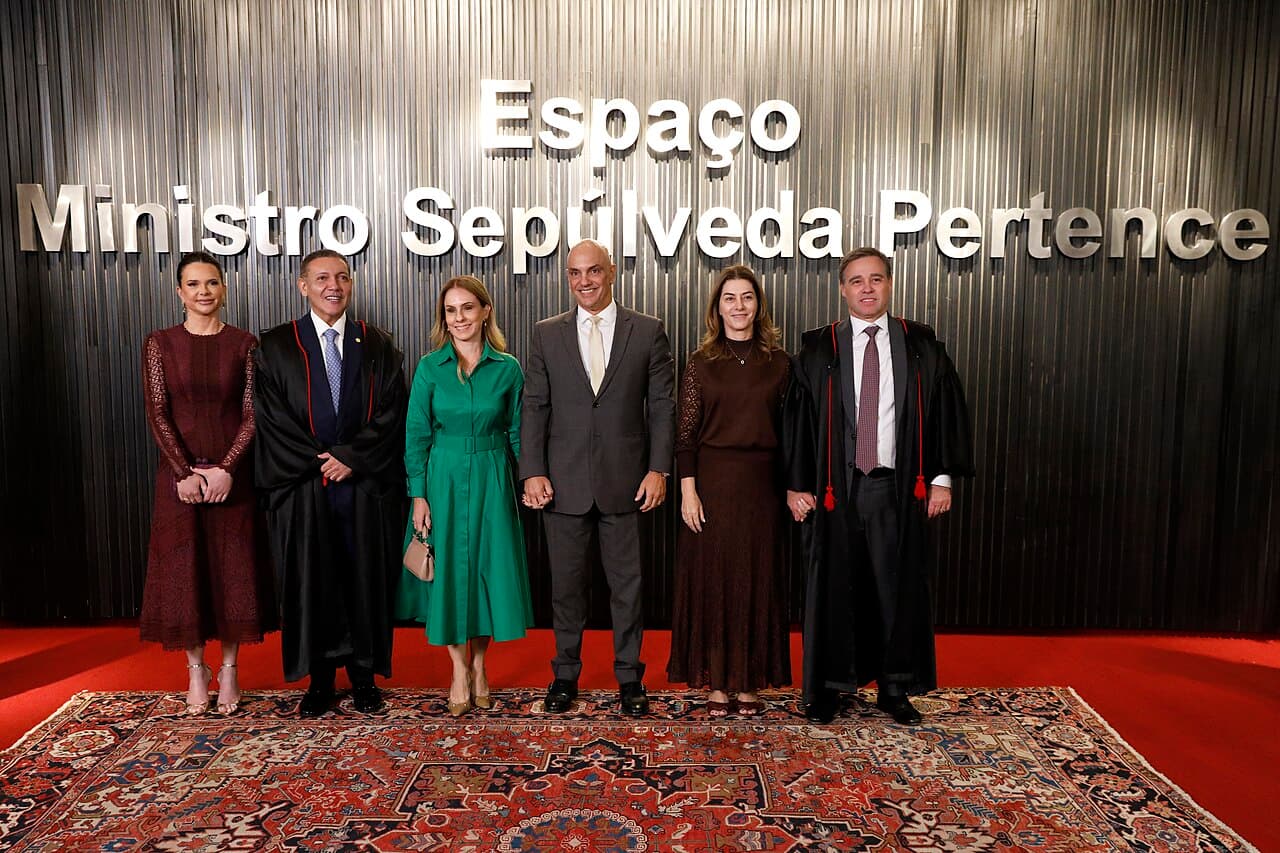
A public and escalating feud between two of the Supreme Federal Court’s most prominent justices, Alexandre de Moraes and André Mendonça, has plunged Brazil’s highest court into a severe institutional crisis, raising the political risk premium for the country just weeks before national elections. The dispute, centered on an investigation into the failed lender Banco Master, has resulted in the two justices requesting sanctions against one another, undermining the court’s credibility and forcing the cancellation of multiple deliberation sessions.
The immediate trigger was Justice Mendonça unsealing federal police documents that appeared to show Daniel Vorcaro, the disgraced former owner of Banco Master, repeatedly seeking advice from a contact identified as Justice de Moraes. The unsealed documents also referenced a contract worth approximately R$130 million (about $26 million) between the bank and the law firm of Moraes’s wife. Justice Mendonça, who was appointed by former President Jair Bolsonaro, made the information public earlier this month. Justice de Moraes, a major figure in Brazilian jurisprudence known for his role in securing the conviction of former President Bolsonaro for a coup attempt, immediately retaliated by asking Chief Justice Luiz Edson Fachin to investigate Mendonça for alleged abuse of authority and political targeting.
The public exchange of accusations between the two justices—both high-profile figures with clear political alignments—has damaged the court’s standing as a neutral arbiter. Mendonça previously served as Bolsonaro’s Solicitor-General, while Moraes is seen by some as a symbol of institutional resistance to the far-right movement. The scandal itself involves the collapse of Banco Master’s private banking arm, which left behind over $7 billion in debt and has embroiled numerous politicians and officials. The deepening crisis has created a vacuum of institutional stability, which is amplifying political fault lines as Brazil heads toward its pivotal October presidential and congressional elections.
Chief Justice Fachin is attempting to contain the damage, calling for the full 10-member court to discuss the allegations at a session next week. The outcome of that meeting, and whether the justices can restore a functional working relationship, will determine the immediate path of the crisis. Continued instability at the Supreme Court is seen as a key factor injecting new uncertainty into the tight election race between the incumbent and the leading right-wing opponent.
What it touches
The sudden escalation of the institutional crisis has been cited by analysts as contributing to political uncertainty, which weighs on Brazilian financial assets. The heightened domestic political risk is reflected in greater volatility for the benchmark Ibovespa stock index and in the perceived risk premium on Brazilian debt.