
Brazil’s Supreme Court Finalizes Rejection of ‘Marco Temporal’ Land Law
The STF confirmed that Indigenous land rights are pre-existing, striking down the time-limit rule backed by agribusiness.
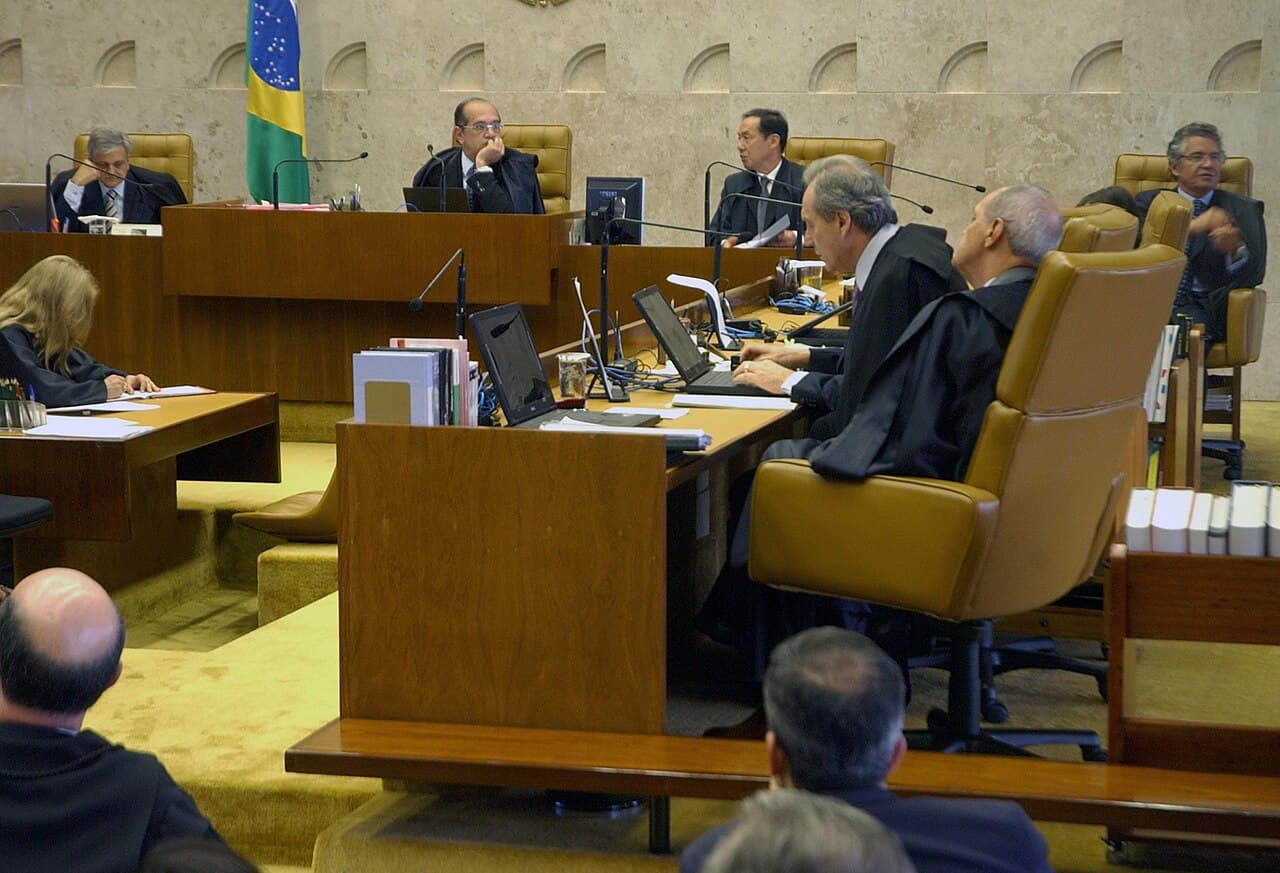
Brazil’s Supreme Federal Court (STF), the country’s highest constitutional authority, has finalized its definitive ruling against the Marco Temporal, or “time-limit” thesis, for Indigenous land demarcation. The decision confirms that Indigenous territorial rights are “originários”—pre-existing and not dependent on the date the current Constitution was promulgated on October 5, 1988, dealing a major blow to the powerful Brazilian agribusiness lobby that had pushed for the restriction. The ruling effectively neutralizes the central provision of Law 14.701/2023, which the National Congress had passed to re-establish the time-limit after the STF first rejected the doctrine in 2023, setting the final legal framework for land ownership in the country.
The Marco Temporal thesis argued that Indigenous peoples could only claim land if they were physically occupying it, or were in active dispute over it, on the day the 1988 Constitution took effect. Critics of the doctrine, including the STF Justices, argued that this requirement ignored the historical reality of Indigenous communities being forcibly expelled or displaced from their ancestral lands through state or private actions long before 1988, placing an impossible burden of proof on those seeking to reclaim their territories. By reaffirming the unconstitutionality of this criterion, the court has prioritized the constitutional guarantee of original land rights over legislative attempts to impose a fixed cut-off date.
For Indigenous communities, the ruling is a monumental victory that secures the legal basis for hundreds of new and pending demarcation processes across the country. For the agribusiness sector, which has been the strongest proponent of the time-limit, the final framework generates significant legal uncertainty for certain land assets, particularly those on the frontiers of the Amazon and Cerrado biomes that are under active dispute. The decision confirms that these land rights now depend solely on anthropological and historical proof of traditional occupation, not a specific date.
In a critical concession, however, the STF decision includes a mechanism for compensation: private landholders who can prove they held ‘good-faith’ possession of the land prior to October 5, 1988, and who are forced to leave due to a demarcation, may be indemnified for the value of the bare land, not just for any improvements they made. While this provision attempts to balance the rights of private landholders, the need to compensate owners could slow down the finalization of new Indigenous territories by increasing the financial and administrative cost for the federal government.
The focus now shifts from the judicial to the executive branch, with the responsibility for implementing the new wave of land demarcations falling to the federal government and the National Indigenous People Foundation (FUNAI). The pro-agribusiness caucus in Congress—the so-called ‘Ruralista’ bloc—is likely to continue seeking legislative workarounds, potentially through constitutional amendments or further legal challenges to specific demarcation cases, signaling that the political fight over land tenure and Indigenous rights is far from over.
What it touches The ruling has a direct, long-term impact on land tenure security across Brazil’s agricultural and forestry sectors, particularly in areas of frontier expansion. The elimination of the Marco Temporal increases the potential for reclassification of privately held rural properties into Indigenous territories, a factor that could influence land valuations and investment risk assessments for projects dependent on long-term land stability in the affected regions.