
Meta Faces UN Scrutiny Over Alleged Bias in Brazil Election Runoff
UN human rights experts accuse Meta of algorithmic bias and restricting campaign content just days before Brazil's dead-locked presidential runoff.
The social media feeds and artificial intelligence tools that millions of global tech users interact with daily have run into a major regulatory and political storm in Latin America’s largest economy. A group of United Nations human rights experts has publicly accused Meta, the parent company of Facebook, Instagram, and WhatsApp, of using its algorithms and AI systems to disproportionately restrict political expression during a highly polarized presidential race.
On October 21, 2026, the UN experts issued a formal statement raising concerns that Meta's content moderation, recommendation, and AI systems have compromised the fairness of the election. The allegations come at a critical moment for the tech giant, as Brazil is Meta's second-largest global market and is just days away from its October 25, 2026, presidential runoff. The election is locked in a dead heat, with both candidates tied at 50% of valid votes according to the latest Datafolha poll.
The UN statement cited international election observers who documented temporary campaign account suspensions, reduced visibility, and unequal AI image generation capabilities across Meta's platforms. While the UN document did not name the candidates, the complaints align with accusations from the campaign of incumbent President Luiz Inácio Lula da Silva. Lula's lawyers filed a complaint with the Superior Electoral Court (TSE) after WhatsApp's artificial intelligence tool reportedly refused to generate images containing "Lula," while generating campaign materials normally for his conservative rival, Senator Flávio Bolsonaro.
Regulatory and Political Risks Mount
For Meta, the dispute carries significant operational and legal risks in a country known for its aggressive judicial oversight of social media platforms. The TSE, Brazil's electoral authority, has already ordered Meta to apply identical rules to both candidates. Under Brazilian law, the court has the power to impose heavy daily fines or even temporarily suspend digital services that fail to comply with electoral equity rules.
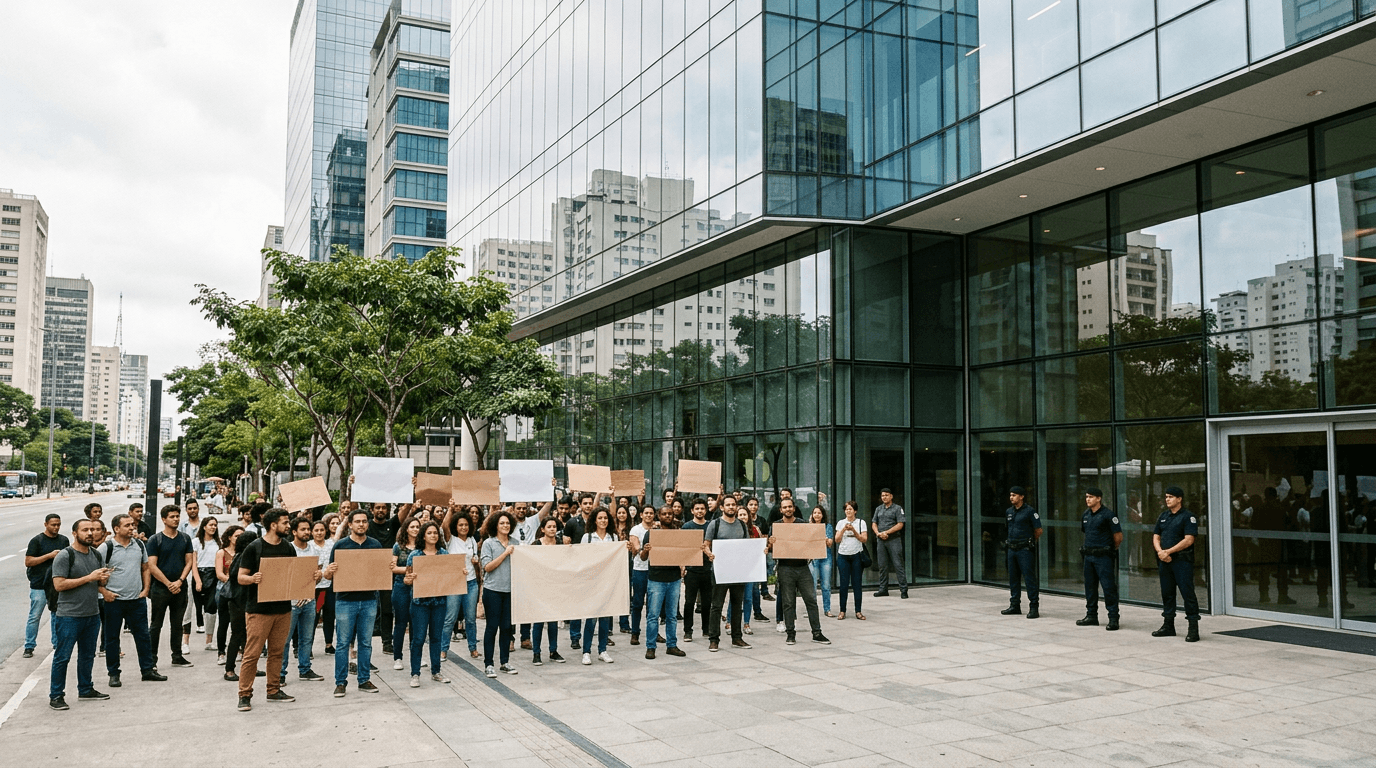
The political tension has also spilled into the streets. On October 19, 2026, civil society groups and social movements staged protests in front of Meta’s Brazilian headquarters in São Paulo, accusing the tech company of systematic election interference. Meta has denied favoring any candidate and stated that it is working to ensure its platforms remain neutral and secure during the election.
As the October 25 vote approaches, the outcome of this regulatory clash could set a precedent for how global social media companies operate under tight electoral scrutiny in emerging markets.
In your brokerage app
Meta Platforms, Inc., listed in New York, is highly exposed to regulatory developments in Brazil, which serves as one of its most critical international user bases. Investors tracking the company's regulatory risks can monitor its performance directly or through broad-market exchange-traded funds like the iShares Global Tech ETF, which holds a significant allocation of the social media giant.