
Brazil’s Landmark VAT Reform Enters Mandatory Test Phase, Demanding Immediate Operational Overhaul for Companies
Foreign and domestic companies in Brazil face a critical compliance deadline as the country's dual VAT system (CBS and IBS) is now in a mandatory test period.
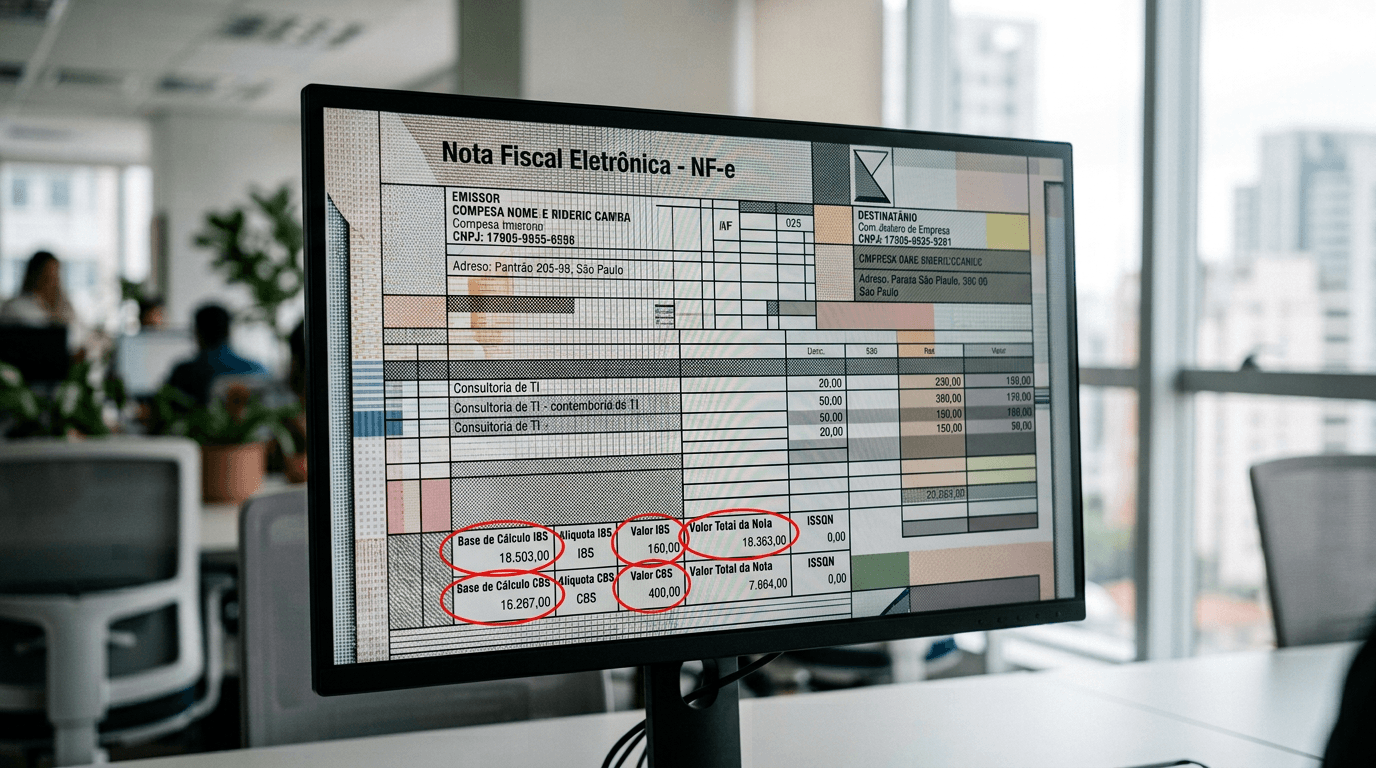
The most significant change to Brazil's tax code in decades is demanding immediate operational compliance from businesses across the country, as the new dual Value-Added Tax (VAT) system has entered its mandatory test phase. Under the terms of the historic reform, both foreign and domestic companies must now issue electronic invoices with new fields to accommodate the federal Contribuição sobre Bens e Serviços (CBS) and the state/municipal Imposto sobre Bens e Serviços (IBS).
The long-awaited overhaul, formalized by Constitutional Amendment No. 132/2023, is designed to replace five of Brazil's notoriously complex consumption taxes—PIS, Cofins, IPI, ICMS, and ISS—with a single, non-cumulative VAT structure aligned with international standards. The goal is to eliminate the existing "tax-on-tax" or cascading effect, which has long been cited as a primary source of high compliance costs and legal uncertainty that discourages foreign investment.
The year 2026 serves as the official test period for the new structure, with mandatory reporting beginning in January. As of August 2026, companies operating under the standard profit regimes face penalties for failing to correctly populate the new CBS and IBS fields on their electronic fiscal documents (NF-e). During this phase, businesses must apply a symbolic combined test rate of 1% (0.9% for CBS and 0.1% for IBS) on their invoices.
Critically, the symbolic collection is offset against existing tax liabilities, meaning companies are not paying a new tax but are required to perform the full computational and documentation process. For a foreign-owned business, the key challenge is the mandatory operational overhaul—not the tax calculation itself—as it requires a complete update of enterprise resource planning (ERP) and invoicing systems, as well as staff training, to ensure compliance with the new electronic document layouts.
While the testing is mandatory now, the full transition will be gradual and multi-year. The next major milestone is set for 2027, when the federal CBS is scheduled to fully replace PIS and Cofins, marking the start of actual tax collection under the new regime. The phase-out of the state and municipal taxes (ICMS and ISS) will begin in 2029 and is scheduled to be completed only by 2033, creating a seven-year period during which the old and new tax systems will run in parallel.
Related coverage
Politics
Brazil Electoral Court Bans Use of Bolsonaro’s Image Suggesting Current Campaign Support
Published
Politics · PRO
Public Infighting Among Justices Exposes Deep Crisis in Brazil Supreme Court Ahead of Election
Published
Politics
Supreme Court Crisis Amplifies Election Risk as Dino Delays Decision on Moraes Probe
Published