
Brazil Supreme Court Suspends Historic Vote on Investigating Justice Alexandre de Moraes for Banker Ties
The STF halted a vote on whether to investigate Justice Alexandre de Moraes over his alleged links to jailed banker Daniel Vorcaro.
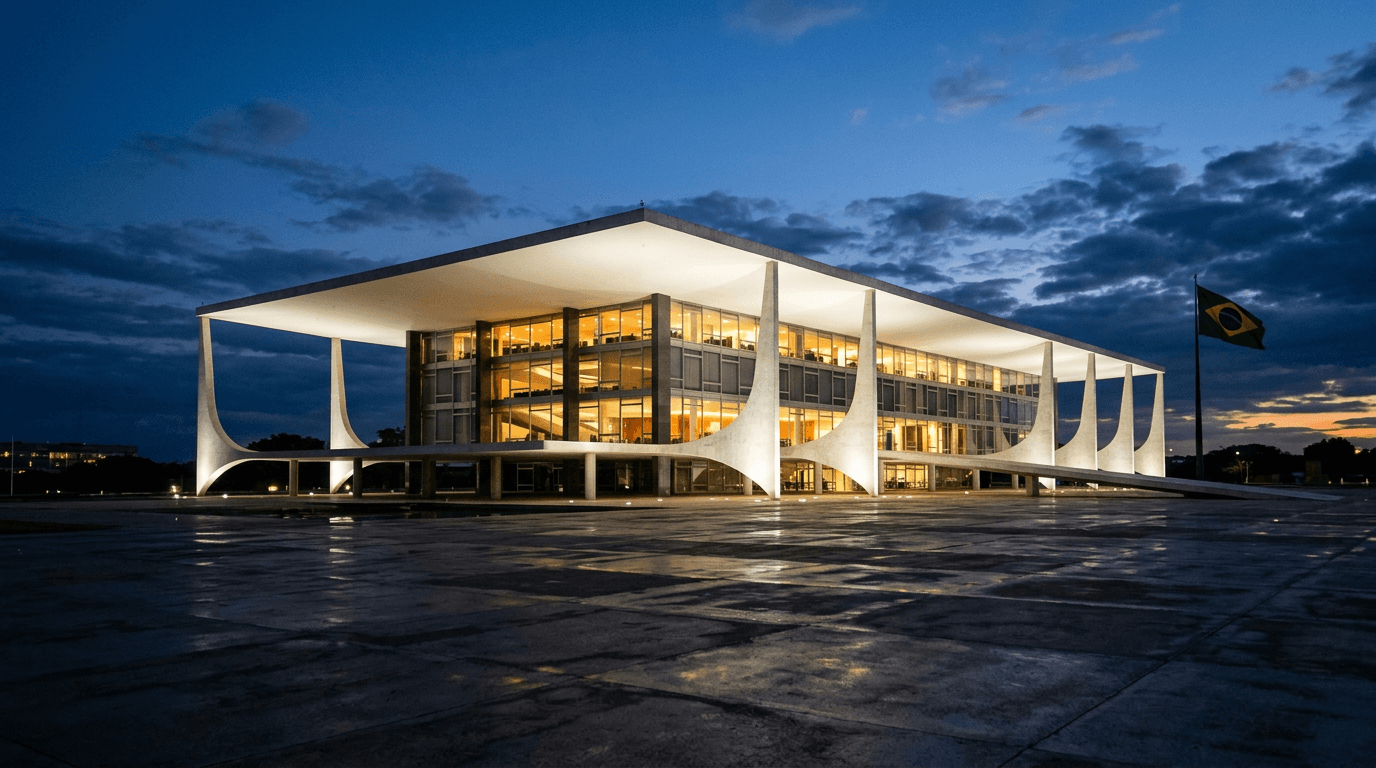
The Supreme Federal Court (STF) of Brazil has suspended a historic vote on whether to launch an investigation into one of its most powerful members, Justice Alexandre de Moraes, over his alleged ties to a jailed banker, pushing a major test of institutional integrity into limbo for up to 90 days. The unprecedented session, the first time the country's highest court met to decide on the formal investigation of one of its own, was halted by a pedido de vista, or request for review, from Minister Flávio Dino after hours of intense internal confrontation among the justices. The halt means the decision on a potential probe into Moraes is now unlikely to be resolved until after Brazil’s upcoming general elections.
The crisis centers on a Federal Police (PF) report that surfaced 52 messages exchanged between Justice de Moraes and Daniel Vorcaro, the former owner of the failed Banco Master who is currently jailed on charges of financial fraud. The PF report suggests Vorcaro, while under investigation, sought de Moraes’s intervention to halt probes into his bank and even asked for guidance on avoiding a preventive detention order. Adding to the gravity of the allegations, reports also cite a contract between Banco Master and the law firm of de Moraes’s wife, Viviane Barci, though the Justice denies any irregularity or favorable treatment of the former banker.
For an international audience, the case represents a crucial test for the STF, a court that already wields immense political power, often making decisions that impact the legislative and executive branches. Justice de Moraes, in particular, is a polarizing figure known for heading major anti-corruption and anti-misinformation inquiries. The session itself quickly devolved into public clashes and sharp reproaches between justices, revealing a deep internal division in the court over the handling of the matter. The procedural debate was further complicated by a motion to combine de Moraes's case with a separate investigation into Justice André Mendonça, who had commissioned the Federal Police report that revealed the communications.
Minister Flávio Dino's request for review, made amid the heated debate, immediately suspends the proceedings, with court regulations allowing the case file to be held for up to 90 days before the vote is slated to resume. This deferral prevents the STF from immediately demonstrating its capacity for self-correction and has led to criticism that the court is struggling to enforce ethical standards on its own members. The political drama is now expected to hang over the judiciary and the political class through the election season, maintaining high tension around the court's institutional integrity.
What it touches The prolonged uncertainty over the Supreme Court’s ability to resolve an internal ethics investigation is expected to be factored into Brazil’s general country risk premium. Heightened institutional tension and a perception of internal conflict at the highest level of the judiciary can raise governance concerns for international investors, potentially increasing the risk premium associated with Brazilian assets until the matter is resolved.
Related coverage
Politics
Lula Kicks Off UN General Debate with Call for Multilateralism and Security Council Overhaul
Published
Politics · PRO
Federal Prosecutors Seek to Suspend Petrobras’ Amazon Oil Discovery License
Published
Politics
Presidential Candidate Caiado Proposes Hard-Line Fiscal Cap, Targets Congressional Amendments to Lower Brazil Interest Rates
Published