
Brazil Supreme Court Faces Institutional Crisis Amid Judge Scandal and Push to Close 'Fake News' Inquiry
High-level corruption claims and public tension among justices threaten the credibility of Brazil's Supreme Federal Court.
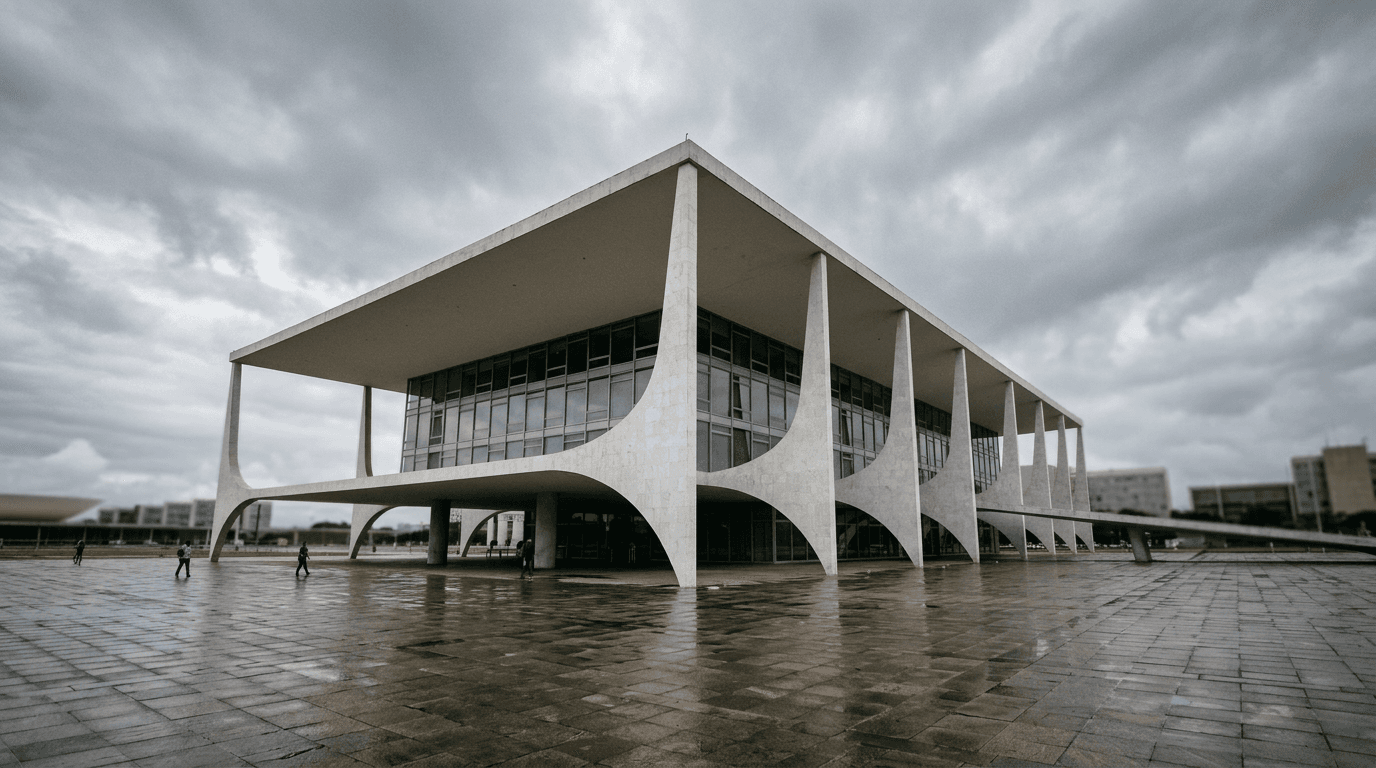
Brazil’s Supreme Federal Court (STF) is facing its most severe institutional crisis in years, driven by explosive corruption allegations against a sitting justice and a public push by the court’s President to end a long-running, controversial inquiry into the spread of disinformation. The core of the tension is focused on Justice Alexandre de Moraes, the country’s most powerful and polarizing judge, who is under intense scrutiny following the unsealing of police documents that suggest a close relationship with an arrested banker at the center of a major financial fraud scandal. The uncertainty surrounding the integrity and stability of the Brazil Supreme Court injects significant institutional risk into the country’s political landscape.
The crisis intensified with the declassification of a Federal Police report showing text messages between Justice de Moraes and Daniel Vorcaro, the former head of the now-collapsed Banco Master, who is currently jailed on fraud charges. While de Moraes has not publicly commented, the messages reportedly show the banker seeking advice from the Justice on legal matters and other issues. This has triggered a public confrontation between Moraes and fellow Justice André Mendonça, who ordered the documents to be unsealed. The Attorney General’s Office (PGR), however, weighed in on the procedural side, asking the STF to annul the investigation that uncovered the messages, arguing that Mendonça acted improperly by ordering a probe into a peer. The scandal has led to calls from legal experts and opposition figures for Moraes’s resignation or impeachment, posing a direct threat to the court’s credibility just as the country heads toward a major election.
Adding to the instability, STF President Justice Edson Fachin publicly called for the immediate closure of the five-year-old “fake news” inquiry (Inquérito No. 4781) as part of a strategy to restore the court's battered public image. The inquiry, which has been under the rapporteurship of Justice de Moraes since its inception in 2019, was opened by the court itself to investigate threats and disinformation against its members, bypassing the traditional process where the Public Prosecutor's Office (PGR) must request an investigation. For international observers, the long-running probe has been a symbol of potential judicial overreach and has drawn criticism for its broad scope and for leading to actions against political opponents and journalists. Fachin has been in discussions with Moraes to find a consensual way to close the investigation, a move that would signal an end to a divisive chapter in the court’s history.
This confluence of events—a high-stakes corruption scandal involving its most visible member and internal disputes over the court’s controversial investigatory powers—highlights a central risk for Brazil’s judiciary: the increasing concentration of individual power, a phenomenon critics refer to as "ministrocracia". The challenge for President Fachin is to de-escalate these internal tensions and close the inquiry without sacrificing the court’s institutional authority. The concrete next step to watch is the STF’s decision on the PGR’s request to annul the police report concerning the Moraes-Vorcaro contact, which will immediately signal the court’s appetite for internal accountability.
What it touches The crisis at the apex of Brazil’s justice system, which oversees corruption investigations and all major political cases, directly impacts the perception of country risk and the rule of law. Heightened institutional uncertainty translates into a higher risk premium for the nation’s assets. While the effects are broad and not focused on any single asset, the general instability contributes to volatility in the country’s sovereign debt and may place upward pressure on the currency (USD/BRL).