
Brazil Supreme Court Crisis Escalates as Chief Justice Edson Fachin Strips Moraes of ‘Fake News’ Inquiry
An unprecedented institutional clash in Brazil’s Supreme Court has sidelined the political agenda, centered on the controversial Justice Alexandre de Moraes.
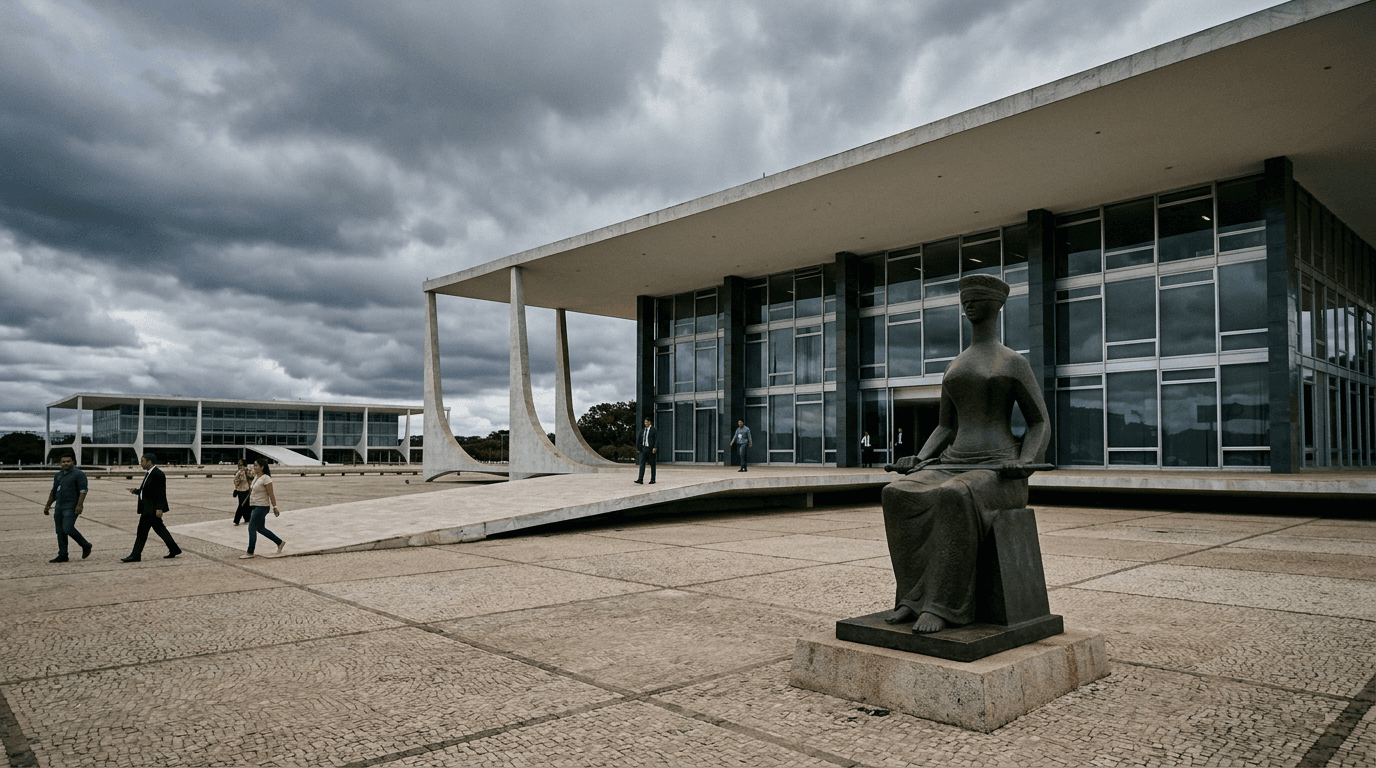
The institutional conflict within Brazil’s Supreme Federal Court (STF) has been confirmed as the country’s top political risk after Chief Justice Edson Fachin took extraordinary measures to rein in his colleagues, including the highly consequential removal of Justice Alexandre de Moraes from the controversial "Fake News Inquiry." On Wednesday, Fachin suspended rival decisions by Justices André Mendonça and Flávio Dino concerning the command of the Federal Police (PF), effectively restoring the position of the current PF Director-General, and immediately convened a full-bench vote to resolve the deepening crisis. The judicial escalation, described by analysts as the biggest institutional crisis in the STF since Brazil’s return to democracy, is consuming the political landscape just weeks before the October presidential election, overshadowing the government's economic and legislative agenda.
The judicial infighting centers on a corruption investigation known as the Caso Master (Banco Master), which has exposed a public feud between Moraes and Mendonça—two Justices seen as occupying opposite political poles. The dispute erupted after Mendonça released police documents suggesting that the former president of the failed Banco Master, Daniel Vorcaro, had sought legal advice from Moraes, whose wife's law firm reportedly held a R$130 million (approx. $25 million) contract with the bank. This material led Moraes to request an investigation into Mendonça for abuse of authority. In a separate but related move, Mendonça ordered the removal of the PF's Director-General over allegations of illegal monitoring, a decision that Justice Dino immediately reversed, prompting Fachin to suspend both conflicting orders to restore order to the federal law enforcement agency.
Fachin’s most significant move, however, was taking the rapporteurship of the seven-year-old “Fake News Inquiry” (Inquiry 4781) away from Justice Alexandre de Moraes. The inquiry, which investigates threats and disinformation against the STF and its members, has been a source of immense controversy since its 2019 inception, having been criticized by international and domestic organizations for its indefinite scope and for allowing Moraes to act as investigator, prosecutor, and judge in cases involving political opponents. Fachin’s decision is viewed as an attempt to de-politicize the sensitive case and force an institutional closure by submitting the entire dispute to the collective decision of the Supreme Court.
The unprecedented situation has drawn a rare public intervention from President Luiz Inácio Lula da Silva, who publicly referred to the situation as a "crisis" in the Judiciary. Lula called for an end to the secrecy surrounding the Caso Master investigation, criticizing the use of "selective leaks" and using the moment of institutional instability to advocate for a "profound reform" of the Brazilian judicial system, adding significant weight to the political gravity of the crisis.
The immediate focus now shifts to the extraordinary plenary session convened by Fachin for September 15, when the Justices of the Supreme Federal Court will vote on the full-court review of the escalating internal conflict. The outcome of this vote will determine whether the court can contain its internal divisions and address the serious ethics questions raised against one of its most powerful members, or if the high court will remain paralyzed by a crisis that has effectively stalled the country’s political progress.
What it touches The escalating institutional friction directly increases the perception of political instability, raising Brazil’s institutional risk premium for international investors. Furthermore, the judicial crisis is dominating the political discourse and legislative bandwidth in Brasília, threatening to permanently sideline the government’s efforts to advance long-awaited fiscal reform measures, impacting the long-term outlook for the Brazil economy.