
Brazil Mines Rare Earths to Challenge China’s Global Grip, Targeting EU Supply Chain
Viridis Mining & Minerals is positioning its Colossus project in Minas Gerais to become a critical alternative source of rare earth elements for the European Union, aiming to reduce Western dependence on China.
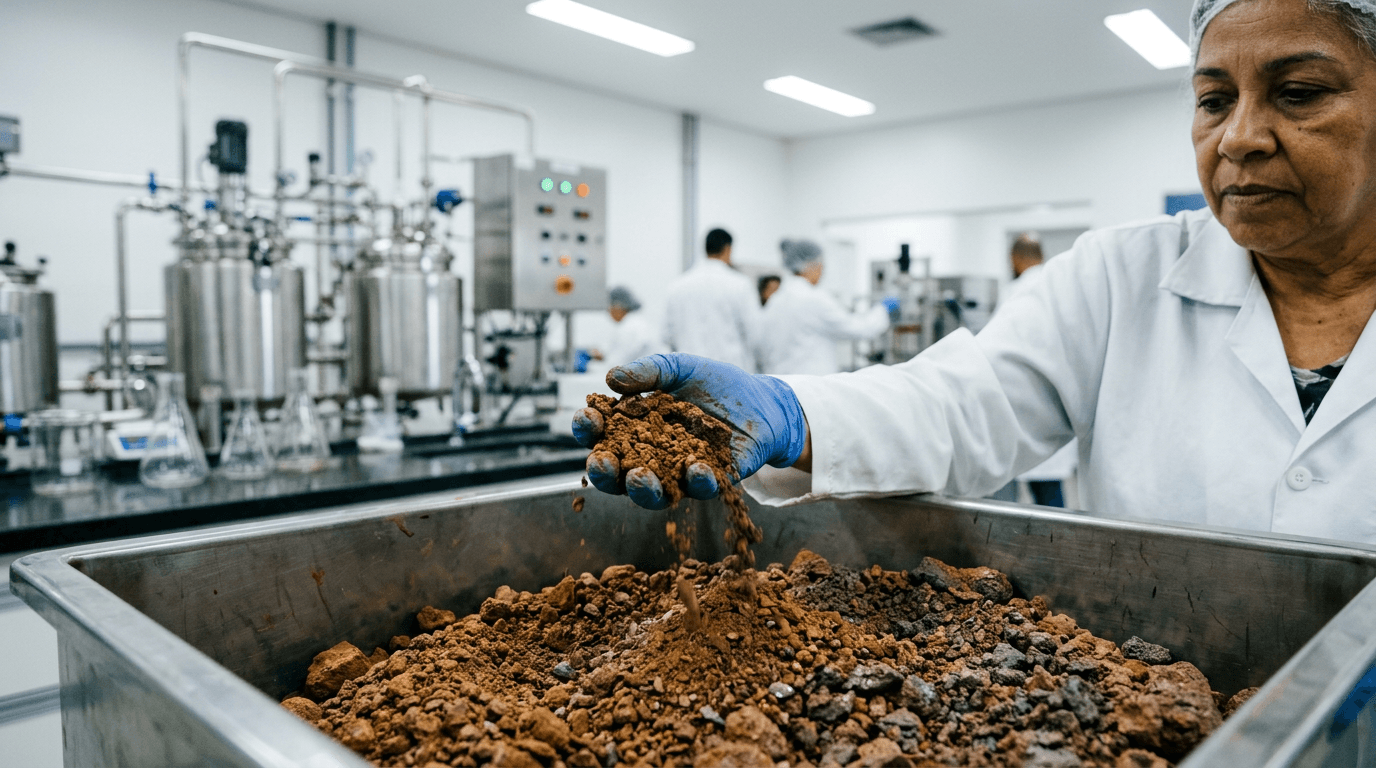
A major Brazilian rare earth project is rapidly advancing, explicitly aiming to help the European Union break China’s decades-long near-monopoly on the supply of critical minerals essential for electric vehicles, defense systems, and wind energy. Viridis Mining & Minerals, an Australian-listed company with its flagship Colossus project in Brazil, is positioning itself as a strategic alternative supplier.
The company recently inaugurated a rare earth research and processing center in Poços de Caldas, a municipality in the southeastern state of Minas Gerais, a historic hub of Brazilian mining. The facility is a crucial step for the US$360 million Colossus project and is designed to process ionic clays, a deposit type similar to those dominant in China. This move is a direct response to a strategic need in the West, as China currently controls about 91% of global rare earth separation and refining capacity.
The Colossus development is already cemented by a key partnership with the Belgian-French multinational chemical company Solvay. Under a Letter of Intent, Viridis will supply rare earth feedstocks from Brazil to Solvay’s processing plant in La Rochelle, France, which will then separate and refine them into the high-purity oxides required for modern technology. This collaboration moves the supply chain beyond the extraction of raw ore, aligning with Brazil’s own strategic push to retain more value domestically.
Brazil, which holds the world’s second-largest rare earth reserves behind China, views this as a chance to become a major player in the global energy transition. The Brazilian government is backing the effort: in September, the country’s development bank, BNDES (Banco Nacional de Desenvolvimento Econômico e Social), approved R$77.5 million (approximately €13.1 million) in long-term public financing for the research and processing center. European Commissioner for International Partnerships Jozef Síkela visited the facility, calling Brazil the EU’s most strategic partner in Latin America for critical minerals.
Viridis is targeting commercial production from its main plant in the second half of 2028, pending a final investment decision, which would enable the company to supply key feedstocks for permanent magnets—including neodymium, praseodymium, dysprosium, and terbium—to the European market. Securing a stable, non-Chinese source of these materials is a top priority for Brussels, as geopolitical tensions have amplified the risk of export bans and supply chain disruptions.
What it touches
The project’s progress is a bellwether for foreign investment in Brazil’s critical minerals sector, signaling its potential as a reliable Western-aligned alternative in a geostrategic market. Success at the Colossus project, which received an equity injection from One Investment Management and a financing package from BNDES, could accelerate further development and financing for other mining companies with assets in the country, increasing Brazil's integration into global supply chains for the EV and clean energy components industries.
Related coverage
Politics
Brazil’s Centrão Bloc Quietly Signals Support for Flávio Bolsonaro in Runoff Against Lula
Published
Politics
Lula Attacks UN Credibility, Demands Security Council Reform and Warns Against Foreign Interference
Published
Politics · PRO
Brazil’s Green Energy Push Faces Social Risk as Farmers Sue French Wind Operator Voltalia in Northeast
Published