
Brazil Approves National Rare Earths Policy, But New State Oversight Adds Investor Uncertainty
Brazil's Congress passed a major new policy for critical minerals, offering R$7 billion in incentives while creating a council to scrutinize foreign deals.
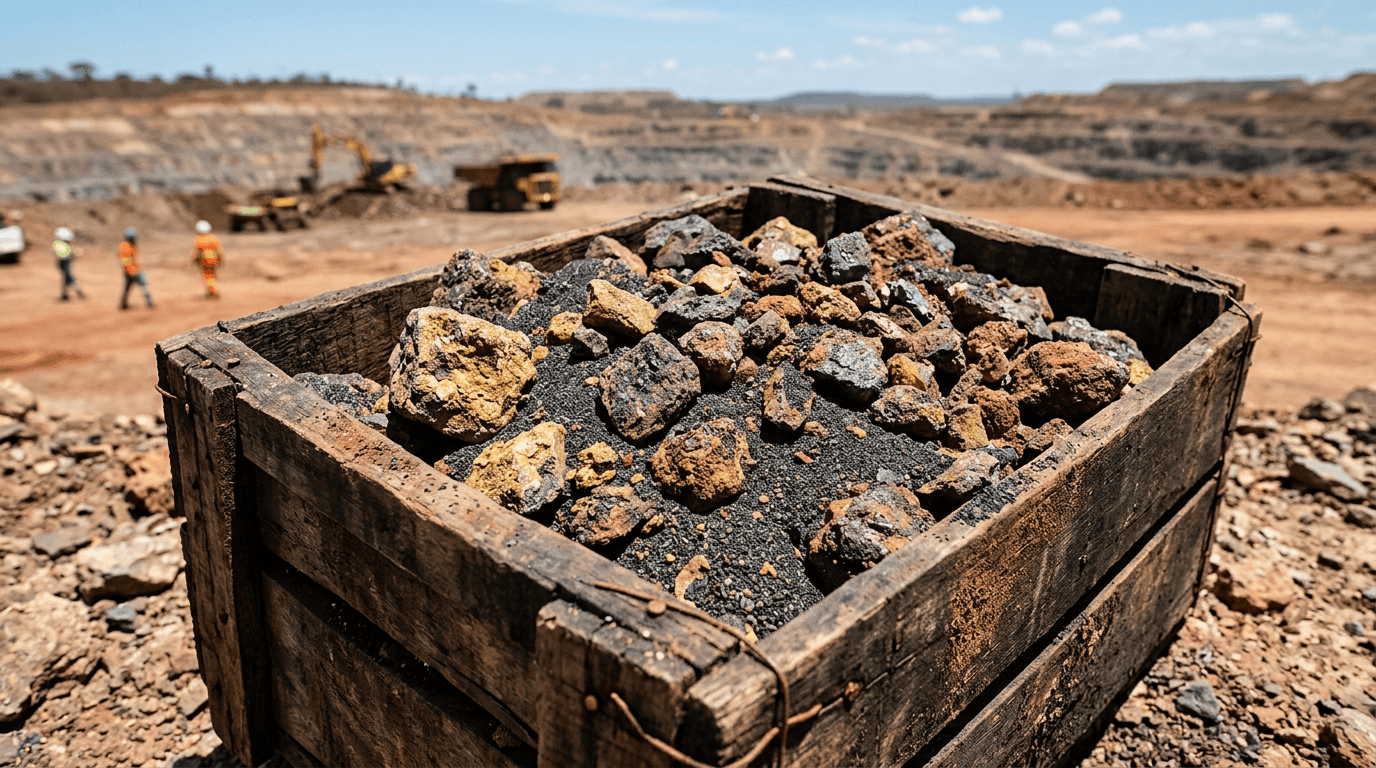
Brazil’s Congress has given final approval to a sweeping national policy for critical and strategic minerals, including rare earths, opening up the strategic sector to foreign capital while simultaneously introducing new regulatory controls that analysts warn could create legal uncertainty for investors. The Senate on September 2 approved Bill No. 2,780/2024, which establishes the National Policy on Critical and Strategic Minerals (PNMCE), a move that now sends the legislation to President Luiz Inácio Lula da Silva for sanction. The new framework is central to Brazil’s ambition to become a major alternative to China in the global supply of materials essential for the energy transition and advanced technologies, leveraging what the country holds as the world’s second-largest rare earth reserves.
The policy aims to shift Brazil away from a “dig-and-ship” economy by coupling a legal framework with significant financial incentives for industrialization within the country. The package includes a total of up to R$7 billion (approximately $1.37 billion) in government-backed support, consisting of a R$2 billion Mineral Activity Guarantee Fund and R$5 billion in federal tax credits over five years, specifically to encourage domestic processing and transformation projects. Brazil’s strategic goal is not merely to extract the raw materials, but to capture the more valuable downstream industrial activity, such as manufacturing permanent magnets for electric vehicles and wind turbines.
However, the new oversight mechanism embedded in the PNMCE is the primary point of friction for prospective foreign investment. The law creates the National Council for the Industrialization of Critical and Strategic Minerals (CIMCE), which will formulate policy, determine priority projects, and introduce government approval—known as homologação—for certain corporate transactions. This includes the acquisition or disposition of mineral rights and off-take or supply contracts involving critical minerals, which some experts argue places significant decision-making power over commercial projects in a political realm. A key concern is that this expanded state oversight could be used to restrict foreign participation, potentially undercutting the legal certainty and predictability that the mining sector requires to attract long-term, multi-billion-dollar investments.
For international companies seeking to reduce reliance on the current, China-dominated supply chain, the immediate challenge will be navigating this new layer of regulatory engagement. Brazil’s vast geological potential is clear, but the path to realizing that potential remains long and expensive, demanding the creation of a domestic processing capacity that currently does not exist. The final text is now on President Lula’s desk, who has 15 working days to sign the bill into law, though a full or partial veto is also an option. Investors will be watching closely to see how the government balances the need to exert national sovereignty over these strategic assets against the imperative of attracting the foreign capital and technical expertise required to turn its massive reserves into an industrial reality.
What it touches The policy impacts the outlook for the entire Brazilian mining sector, particularly companies involved in lithium, nickel, and rare earth exploration and development in the country. The long-term success of the PNMCE, especially the establishment of domestic processing capacity, would boost the country’s appeal as a destination for Foreign Direct Investment (FDI) aimed at securing diversified mineral supplies.